

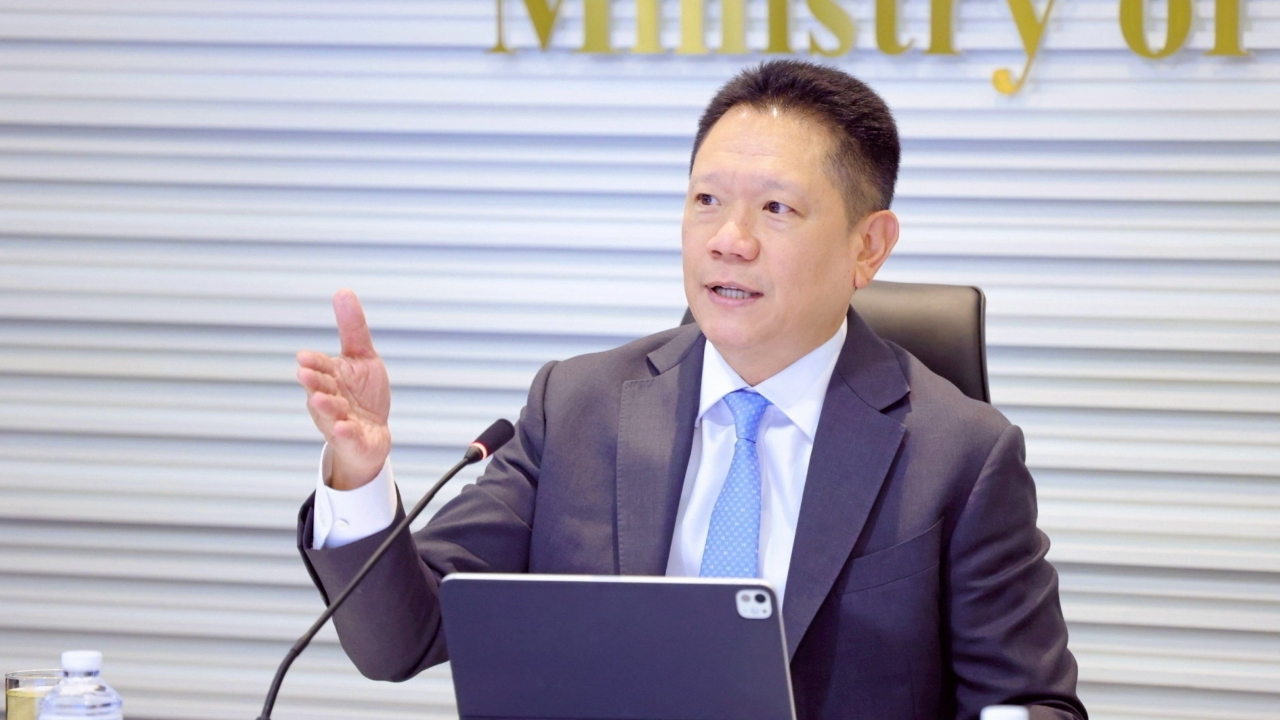
A committee has been set up to screen the 400 billion baht loan decree addressing the energy crisis, with Lavaron serving as chair. The initiative highlights the “5T” principles focusing on transparency and targeted relief, while pushing Thailand to transition to clean energy within one year.
On 6 May 2026 GMT+7, reporters reported that following Cabinet approval of the draft royal decree authorizing the Ministry of Finance to borrow funds to address impacts from the energy crisis and to drive the country’s energy transition, with a budget of 400 billion baht,
the next step is for the Ministry of Finance to implement the Cabinet’s resolution to establish a committee to screen the loan spending, with the main goal of reviewing projects proposed for loan funding and overseeing the implementation of projects financed by the loan to ensure alignment with objectives, addressing immediate issues and restructuring the national economy. The project proposal and screening process must be transparent and verifiable at every stage.
Regarding the composition of the loan spending screening committee under the Cabinet’s resolution, the Permanent Secretary of the Ministry of Finance will serve as committee chair, with members including senior executives from economic agencies and external experts: the Secretary-General of the National Economic and Social Development Council (NESDC), the Director-General of the Budget Bureau, the Comptroller General, the Director of the Fiscal Policy Office (FPO), up to three external experts appointed by the Finance Minister, and the Director of the Public Debt Management Office (PDMO) as committee member and secretary. Representatives from NESDC and FPO will serve as assistant secretaries.
The committee’s duties include ensuring that projects under the draft loan decree comply with Ministry of Finance regulations approved by Cabinet. Implementation must be prudent, transparent, and auditable.
The committee has the authority to review and screen loan spending projects before submission to Cabinet, oversee project execution, and report progress every three months. It will also set reserve fund limits for contingency expenses related to project management as outlined in the decree’s appendix. The committee can advise Cabinet on loan spending decisions, appoint subcommittees as needed, and carry out other tasks assigned by Cabinet or the Prime Minister.
Additionally, the committee is responsible for reporting annual loan borrowing under the decree to Parliament within 60 days after fiscal year-end, detailing the loan amounts, spending purposes, and achieved or expected benefits.
Concerning loan fund management, the Cabinet also assigned the Public Debt Management Office (PDMO) to manage borrowing, disbursements, public debt risk, project monitoring and evaluation, debt repayment, and other related activities under this loan decree.
At the same time, Cabinet mandated the Office of the Public Sector Development Commission (OPDC) to collaborate with PDMO to establish mechanisms for overseeing public debt risk management and project monitoring and evaluation, ensuring effective, transparent, and verifiable project outcomes.
/ Lavaron Saengsanit, Permanent Secretary of the Ministry of Finance, stated that for the loan spending mechanism under this decree, the Ministry of Finance will issue two regulations next week: one on project screening criteria and another on monitoring and evaluating fund use. External experts will join the committee to ensure transparency. The evaluation will be based on the “5T” principles: targeted assistance, energy transition to reduce national energy vulnerability, economic transformation for adaptation to the new era, transparency and auditability with systematic monitoring and reporting, and collaborative economic driving involving all sectors.
“In this energy crisis, no country globally generally subsidizes energy prices to shield its people. Instead, countries let prices float and implement targeted relief measures. Moreover, the government aims to accelerate the transition to clean energy within one year to ensure energy security and reduce long-term costs.”