

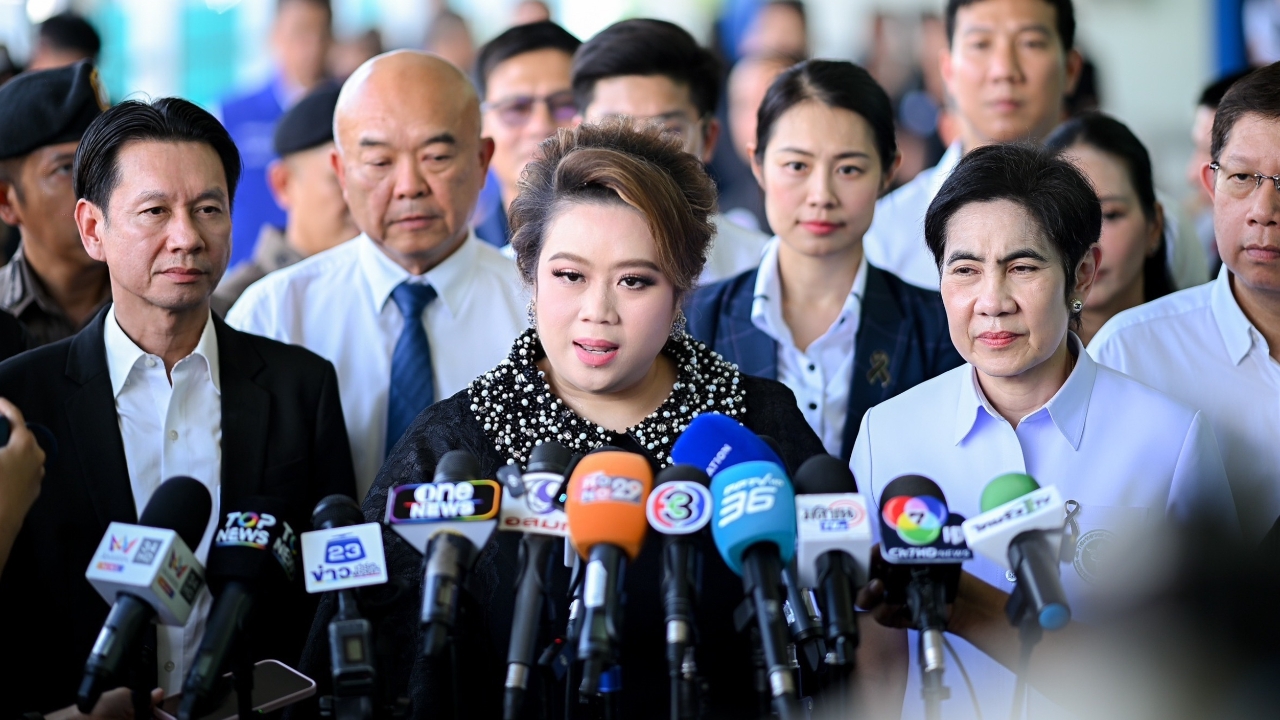
The Minister attached to the Prime Minister's Office revealed preliminary unofficial test results of the canned fish showing it to be "tilapia," pending further confirmation. She expressed surprise that the producer claimed the product was an experimental substitute for raw materials, emphasizing that producing fake food is a criminal offense that cannot be settled out of court.
6 May 2026 GMT+7 Ms. Supamas Isarapakdi, Minister attached to the Prime Minister's Office, gave an interview after visiting Samut Sakhon Province to inspect and follow up on canned fish production amid social media reports that the raw materials did not match the label. She said this case has attracted significant public attention, and the information given to consumers was inaccurate since the raw material was not mackerel as stated on the label. Initially, over 10,000 cans already produced have been seized, and all products have been ordered recalled from the market due to potential widespread impact—not only affecting one producer but also undermining confidence in the canned food industry as a whole.
Regarding the producer's explanation that it was an experimental production to find a substitute for mackerel using tilapia, she said it sounds strange because even if it was an experiment, it should not have been sold to consumers. Further investigation is needed to verify whether the claims are true. The producer stated that the fish species is not significantly different and the price is not much cheaper, yet they still wanted to experiment. This makes it necessary to examine carefully if there are contradictions with the facts.
Ms. Supamas also stated that this case aggravates the public, and committing one offense does not mean prosecution will be limited to a single law. Relevant agencies have seized all suspected products with unregistered ingredients and incorrect labeling, ordered all products recalled, and are reviewing production documents, which clearly show evidence that tilapia was used instead of mackerel.

In addition, samples have been collected for two types of testing: species identification by the Department of Fisheries, where preliminary unofficial results indicate tilapia, and safety testing for contamination such as microbial and heavy metals, along with an inspection of the production site, which initially meets hygienic standards. Regarding suspicions that the fish might be black-chinned tilapia, Ms. Supamas said, "We must await official confirmation of the test results."
As for penalties under the Food and Drug Administration (FDA), the case initially violates the Food Act for producing fake food punishable by imprisonment from 6 months to 10 years, includes fines for incorrect labeling, and fines for unsanitary production facilities. Additional prosecution will follow if other contaminants are found. Furthermore, consumers who have received compensation for damages have been addressed, but under the Food Act, this offense cannot be settled out of court as it is a criminal case. Therefore, officials will proceed with legal action against the producer's company.
