

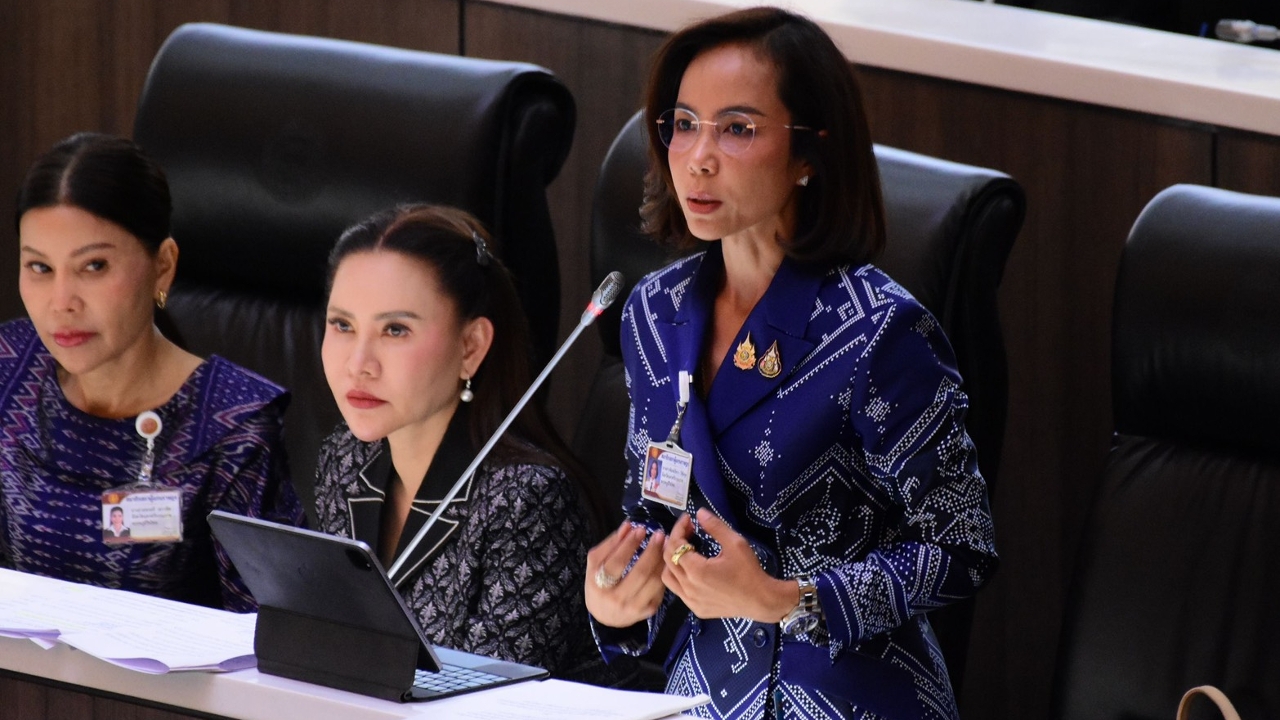
Pimpatra reveals Thailand's prison crisis of severe overcrowding, highlights "imprisonment of the poor," calls for comprehensive reform to restore dignity to individuals returning to society, and proposes six urgent agendas to reform Thailand's penal system.
On 6 May 2026 at the Parliament, Ms. Pimpatra Wichaikul, Member of Parliament for Nakhon Si Thammarat from the Bhumjaithai Party, spoke in support of a motion by Dr. Boonyapa Nachaiwiang Punnanittha requesting the House of Representatives to establish a special committee to study justice, quality of life, and access to healthcare for prison inmates. She highlighted the structural crisis of Thai prisons, which must be seriously addressed system-wide. She cited Nelson Mandela's remark that no one truly knows a country until they have been in its prison, indicating that prisons reflect a nation's civilization and justice.
"Today, Thailand has over 300,000 inmates, while prisons can accommodate only about 240,000. This makes Thailand rank among the top 10 globally and number one in ASEAN for prison overcrowding. This is not a statistic to be proud of but a warning sign that our justice system is ill," Pimpatra said. She emphasized that overcrowding is not merely a spatial issue but a structural crisis reflecting failures throughout the system, particularly drug-related problems, as 70-80% of inmates are involved in drug cases, mostly users or small-scale offenders, not major networks.
"We are placing minor offenders together with career criminals. What happens is not rehabilitation but unintentional crime networking. Moreover, inequality in bail access turns prisons into places that detain the poor, since many defendants cannot afford bail, despite no final verdict by courts. This leads to over 27% of inmates being pre-trial detainees, violating the constitutional presumption of innocence because people unproven guilty or innocent are imprisoned." Ms. Pimpatra said.
Pimpatra also described inmates' living conditions, noting that the average sleeping space in Thai prisons is only 1.1 square meters per person, smaller than a child's bed. Sleeping cramped all night causes physical and mental suffering not specified in sentences. Additionally, prisons face new challenges with growing numbers of elderly inmates, female inmates, and psychiatric patients, while prison healthcare systems remain inadequate, and access to doctors and medical rights are still major limitations.
At the same time, the problem affects prison officials, who are like indirectly confined persons since one officer must care for many inmates under heavy workloads and accumulated stress. This causes many medical and staff personnel to leave the penal system. However, amid this crisis, Thailand has a bright spot from the Royal Initiative "Kumlungjai" project by Her Royal Highness Princess Bajrakitiyabha, which helps rehabilitate, develop skills, and restore opportunities for inmates, especially female inmates and juvenile offenders. The project is not merely aid but lays foundations for sustainable justice, showing the world that women are vulnerable and need different care. She also stressed that Thailand leads in promoting the "Bangkok Rules," officially adopted by the United Nations, representing important soft power in rule of law and human rights.
Pimpatra also noted the Department of Corrections' budget structure, where most funds focus on construction and infrastructure, while budgets for treatment, rehabilitation, and improving inmates' quality of life account for less than 2% of the total. She said those working want to see better quality of life, but lack sufficient budget and tools. She cited cooperation with the Department of Industrial Promotion, Ministry of Industry, to bring occupations such as weaving and niellowork crafts into inmate development in Nakhon Si Thammarat province, though still limited by many safety and regulatory restrictions.
Additionally, Pimpatra proposed six urgent agendas to reform Thailand's penal system: reducing pre-trial detainees; reforming drug policy by treating users as patients; linking medical rights with external healthcare systems; using alternative measures instead of imprisonment for minor offenses; restructuring budgets toward behavioral development; and creating an ecosystem to reintegrate good citizens into society through social enterprises and halfway houses.
"Improving prisons is not about spoiling offenders but ensuring that when they return to society, they become good neighbors, not returning with resentment. Giving opportunities is restoring their humanity for sustainable societal safety," Pimpatra concluded.