

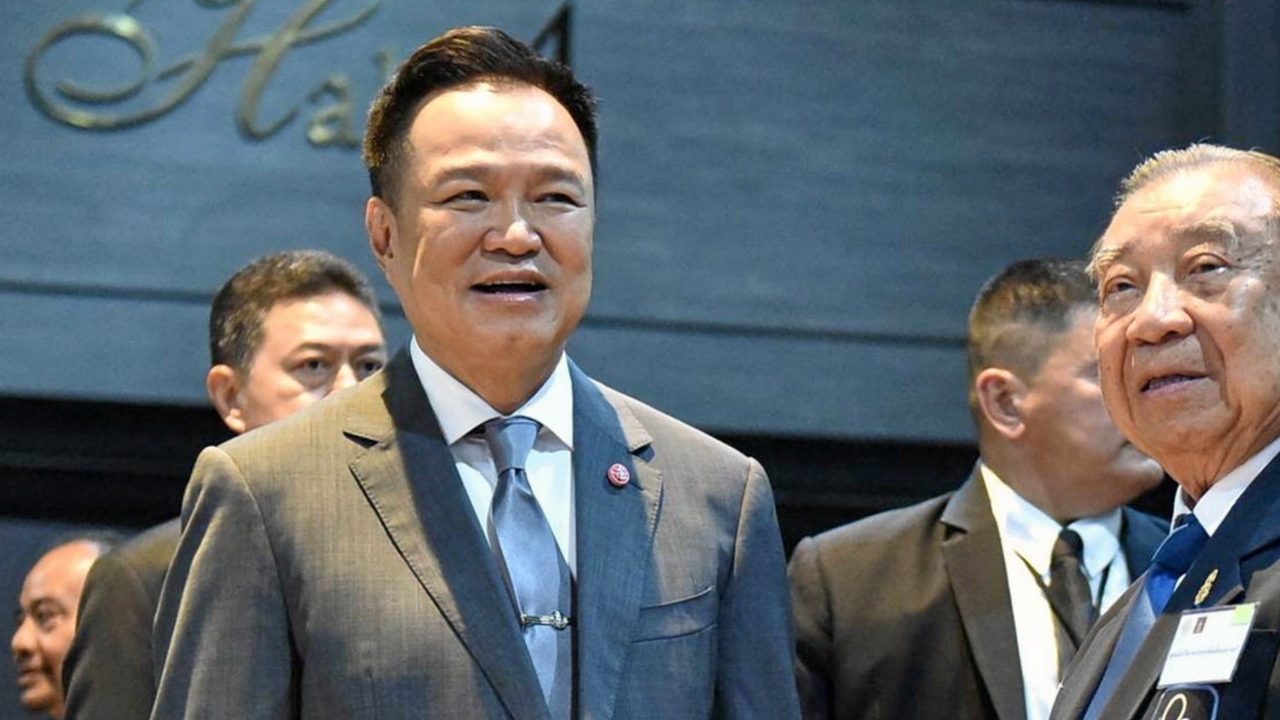
The 400-billion-baht emergency loan decree has been signed. Anutin pledges to act for the people with transparency and accountability, stressing there must be no misuse. He will supervise to prevent any improper use, noting the loan is in low-interest Thai baht.
At 18:10 on 6 May 2026 GMT+7 Mr. Anutin Charnvirakul, Prime Minister and Minister of Interior, gave an interview at Government House regarding progress on drafting the emergency decree granting the Ministry of Finance authority to borrow funds to address the energy crisis impact and support the country's energy transition, with a ceiling of 400 billion baht. He stated that the emergency loan decree draft has been signed. It will be published in the Royal Gazette, and a project screening committee will be established, chaired by the Permanent Secretary of the Ministry of Finance. All proposals must be screened by the Finance Permanent Secretary and comply with the decree’s objectives. The loan responsibility lies with him as Prime Minister.
“I would like to emphasize that as head of government who just signed this decree, I will oversee every baht to ensure it is used properly without any leakage. Please trust me—this is something I must do in life and it is an honor. Therefore, I promise that the 400 billion baht will be closely monitored by myself and all cabinet members, so not a single cent is lost or wasted on anything unbeneficial. Everything must be transparent, auditable, with no misuse, and solely for the people.”

Asked about Moody’s credit rating agency’s concerns over Thailand’s emergency loan decree, the Prime Minister replied that the real government burden is the loan interest, which is very low. Since the loan is entirely in Thai baht, there is no exchange rate risk. The borrowing ceiling will not need expansion, and it improves liquidity for financial institutions lending to the government. The loan will not become non-performing debt (NPL), so there is no need for large risk reserves.
The Prime Minister added that compared to other opportunities, the loan interest cost is minimal for the people. The funds will directly reach the citizens rather than being invested in projects that take 5–7 years to show results. This money will immediately help citizens reduce living costs while improving quality of life.