

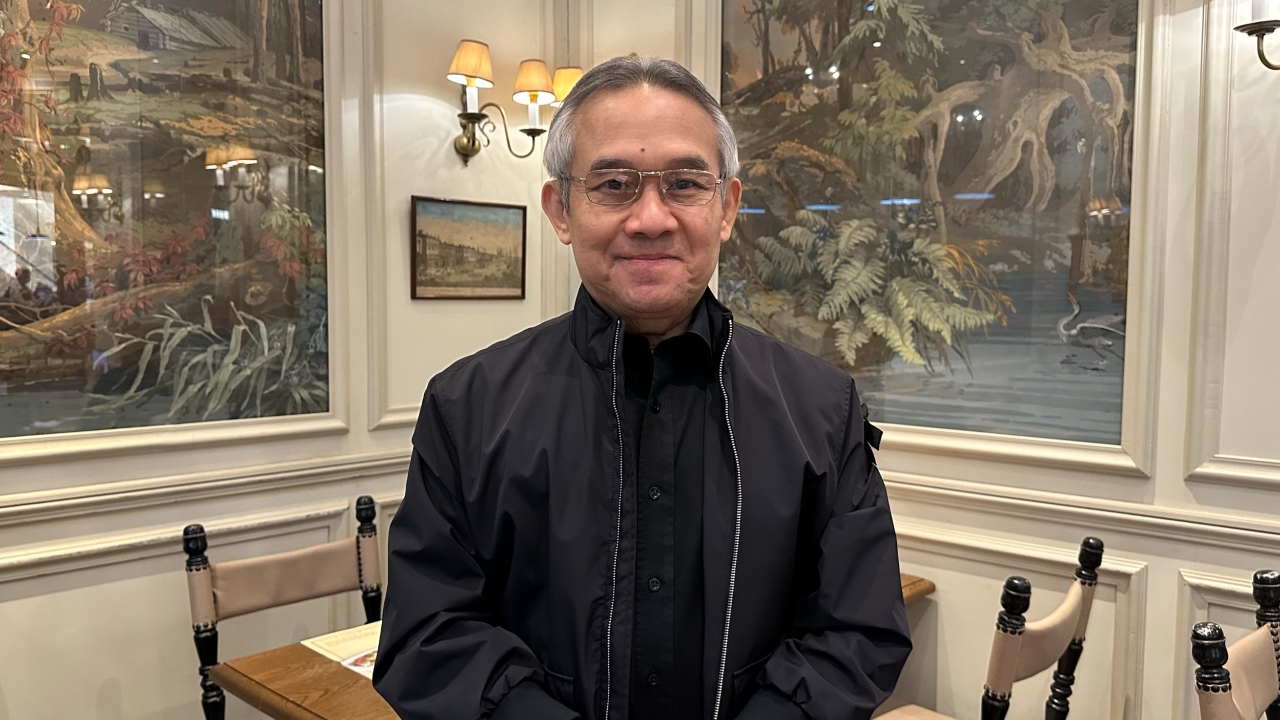
Suradech opposes the Land Bridge project, stating it is not worthwhile and will still lose to Singapore’s ports. He warns it will increase public debt and describes it as a futile effort. He suggests promoting the Thai Canal instead, believing China will definitely support it because it benefits both sides. He revealed that he once led a Senate delegation to China several times, which sparked his interest.
On 7 May 2026, Mr. Suradech Yasawat, an independent politician, former senator, former member of the House of Representatives, and former deputy leader of the Palang Pracharath Party, expressed his opinion on the Land Bridge project. The government is currently forming a committee to study the project, chaired by Deputy Prime Minister and Finance Minister Mr. Akniti Nitithanprapas. Suradech said he personally opposes the project because he believes it is not worthwhile—in other words, it’s like 'spilling chili paste into the sea,' not just wasting a river.
Suradech explained that the Land Bridge project involves developing deep-sea ports on both the Andaman Sea and Gulf of Thailand sides, connected by rail and expressway. If all four phases are completed, it could handle 40 million TEU containers—20 million TEU on the Ranong side and 20 million TEU on the Chumphon side. However, a study by Chulalongkorn University conducted through the National Economic and Social Development Council clearly showed the project is not economically viable and carries a high risk of losses. This is due to the cost of double handling cargo being higher than shipping through the Malacca Strait, plus risks of cargo damage. It wastes time, money, and requires additional insurance costs. Thus, the benefits do not justify the costs, with investments exceeding one trillion baht.
Furthermore, Singapore is currently expanding its port facilities through the new Tuas Port project, which has already opened Phase 1 and can handle 20 million TEU. When fully completed in all four phases, it will accommodate over 65 million TEU per year. By 2040-2042, the port is expected to handle twice the cargo volume of 2021, becoming the largest container port in the world. Singapore’s future cargo capacity will exceed Thailand’s by 25 million TEU.
“In summary, no matter how the Land Bridge is developed, it cannot compete with Singapore because shipping there is simpler without needing to transship cargo. The Land Bridge project is like spilling chili paste into the sea, similar to the defunct Hopewell project, which would be a disaster if implemented. Therefore, I do not support it because it cannot compete with Singapore, and Chulalongkorn University’s study has clearly shown it is not worthwhile. A Japanese university also studied it and reached the same conclusion. Yet the government still pushes it? The Land Bridge project requires one trillion baht, and if implemented, it will surely fail. We will increase public debt, which is already over 12 trillion baht, pushing it close to 14 trillion baht—surpassing the debt ceiling.”
Suradech said the alternative 9A route, or the option of digging the Thai Canal, is an infrastructure development plan to connect the Andaman Sea and Gulf of Thailand through Krabi, Trang, Phatthalung, Nakhon Si Thammarat, and Songkhla provinces, spanning approximately 135 kilometers. At the time, he was chairman of the Senate subcommittee on international cooperation in investment for the Isthmus of Kra project and had led delegations to China and other countries several times at his own expense to explain the project. Eventually, China became interested and pushed to build it. However, some parties are concerned that the U.S. would oppose the Thai Canal because of fears that China would send warships through it. He clarified that this is a separate issue, as the canal would be a commercial waterway and a special economic zone with investments from at least six to seven countries, including China, the U.S., and Europe. Therefore, it is impossible to allow Chinese warships to pass; such ships would have to go through the Malacca Strait. The idea that the canal would cause territorial division is also false, as the studied project includes an underwater tunnel for vehicles about 300-400 meters wide, allowing ships to pass and cross safely. Thus, there is no territorial division, and such claims are just rhetoric.
“The reason the Thai Canal has not materialized is because Singapore does not want it to happen, fearing huge damage. Singapore has tried every means to interfere in Thai politics, creating scenarios that the U.S. opposes the canal and urging Thailand to abandon it in favor of completing the Land Bridge. However, building the Land Bridge will fail as very few ships would use it. Even if completed, it will still lose to Singapore because they are expanding their port. I want to affirm that the Chinese government is ready to support the Thai Canal project, but not the Land Bridge. The problem blocking the canal’s construction is not the U.S., but Singapore. If the government does not build the canal, it should not build the Land Bridge either, but instead find ways to connect with Chinese railways, which would be better. If the canal is not dug, the country will suffer huge losses. We have missed this opportunity for over 300 years, since the era of King Narai the Great. I believe China will invest heavily to help us. If we do not build it, that’s fine, but do not use the U.S. as an excuse because Singapore is the one creating the problem.”
Suradech added that some critics say the Thai Canal project costs have doubled from one trillion to two trillion baht. He pointed out that the initial one trillion baht plan was a futile effort that no one cared about, but with the two trillion baht plan, China will fully support it. Regarding the special economic zone discussed previously, China will help by setting up a branch of the Pudong economic zone. China, as an authoritarian state, can order this easily. In short, China will assist with investment in the special economic zone. The two trillion baht is not just free aid; China will invest in the zone and lead the way alongside six to seven other countries, including the U.S. Therefore, it is impossible to allow warships to pass. We will hardly spend any money. He knows this well because he has spoken with them. It is a win-win situation for both Thailand and China. Importantly, China is a peaceful country that does not want war unless provoked. He urged people to consider this carefully because Thailand has lost out for over 300 years.