

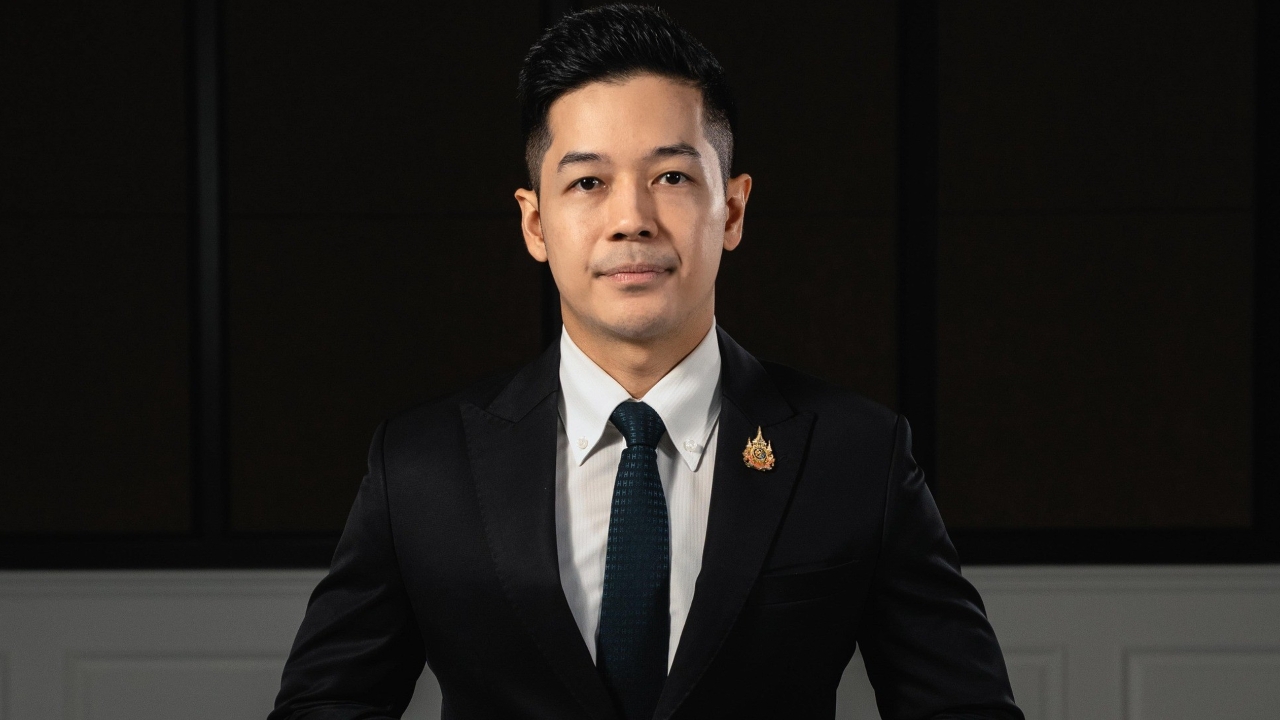
Wiput Sriwaurai summarizes his four-year tenure as Bang Rak district councilor, introducing a four-year plan titled "Bang Rak... Continue Development" to enhance existing potentials by not just adding new projects but ensuring all systems are interconnected and genuinely functional.
7 May 2026 GMT+7 Mr. Wiput Sriwaurai, member of the Bangkok Metropolitan Council (BMC) representing Bang Rak district and chairman of the council, disclosed that his work as a Bang Rak councilor over the past four years extended beyond local efforts to city-wide system management through the Bangkok Metropolitan Council. During his term, the council approved 37 city ordinances, pushed forward 173 motions, and submitted 138 inquiries to the administration to monitor and drive solutions across multiple dimensions in Bangkok.
This reflects that urban development cannot rely solely on policy but requires laws, oversight mechanisms, budgeting systems, and cooperation among the legislative branch, executive agencies, state units, private sector, and citizens. Therefore, the approach "Bang Rak... Continue Development" is not based on abstract ideas but builds upon real experience from local work and city-level policymaking in Bangkok.
Mr. Wiput further stated that Bang Rak is one of Bangkok's most prepared areas, featuring mass transit systems, key infrastructure, and major economic zones such as Silom, Sathorn, Surawong, Rama IV, and Charoen Krung. While Bang Rak may appear ready overall, the core challenge remains to better connect and optimize the existing elements to their full potential.
"Therefore, over the next four years, my goal is not merely to create more new projects but to improve the performance of existing systems, enhance their connectivity, and better meet citizens' real-life needs. Future urban development must move beyond isolated projects to integrate all systems—sidewalks, transport, traffic, flood management, safety, environment, health, education, economy, community, urban planning, and data—so that the ultimate result is not just projects on paper but an actual, perceptible improvement in daily urban life for residents."
1. Sidewalk and pedestrian systems The future approach is not spot repairs but creating truly continuous walking networks, especially in high-traffic corridors like Surawong-Sathorn-Silom, including connections from communities to stations and from stations to important buildings. Sidewalk improvements must cover surface structure, durability, smoothness, safety, ramps, manhole covers, tree guards, lighting, crossing signs, and links to public transport. In high-use areas such as near transit stations, schools, hospitals, offices, and economic zones, consideration should be given to skywalks or covered walkways to protect pedestrians from rain, sun, and existing sidewalk limitations.
In Bang Rak, walking is not just mobility but an economic factor. Convenient walking encourages stopping at shops, using services, moving to other districts, and stimulates economic activity. Thus, sidewalk improvements are not only about aesthetics but about equitable urban access. Good sidewalks enable elderly people to walk, children to cross safely, workers to save time, disabled persons to access the city, and allow full utilization of public transport investments.
2. Transport system connectivity Travel must become more seamless, including feeder buses at suitable points, organized pick-up/drop-off zones, support for bike-sharing in promising areas, and developing bus stops into real service hubs—not just poles and signs. Future bus stops should provide travel information, schedules, transit connections, safe boarding locations, and practical environments for users. Bike-sharing and cycling routes must go beyond painted lines to include parking, safety, station connections, and actual travel behaviors of residents.
Importantly, connections must link different districts, not just isolated origin-destination trips. Clear examples are linking Silom-Banthat Thong-Rama IV or connecting Charoen Krung, Surawong, Silom, and Sathorn. Improved connectivity in travel fosters economic integration as well.Better connected travel reduces private vehicle use, lowers travel costs, and improves access to jobs, education, healthcare, and economic activities.
3. Data-driven traffic management Adding more roads is no longer the primary solution. More important is optimizing existing road use. Bangkok has begun implementing Adaptive Traffic Control in several locations, where signals adjust to real-time traffic instead of fixed timings. The next step involves AI and real-time data analysis for intersections, U-turns, pick-up/drop-off points, crossings, and time-based road usage patterns. Future traffic management must be area-specific and data-driven, not uniform citywide.
Additionally, traffic solutions must integrate sidewalks, parking, pick-up/drop-off points, and public transport. Congestion is not only due to vehicle volume but also street-side management, double parking, U-turns, crossings, and passenger boarding points. Proper data usage can identify where to adjust signals, organize parking, improve crossings, add pick-up/drop-off spots, or modify traffic flow. This is an informed approach to congestion, not one based on impressions.
Therefore, data-driven traffic management is not merely technological but a means to give back time to citizens. Long-term traffic solutions must also link to urban planning and decentralization because if jobs, schools, hospitals, and economic centers remain concentrated, even the best signal management cannot relieve inner-city travel pressures. True congestion solutions require both short-term traffic management and long-term urban structural planning.
4. Flood management Repeated flooding in the same locations must be avoided. Management must shift from reactive to proactive, linking data on rainfall, water levels, drainage, pumps, and floodgates to provide a comprehensive real-time overview enabling faster city response. Bangkok has about 88 kilometers of flood protection along the Chao Phraya River, with vulnerable spots requiring ongoing monitoring and repair. Flood prevention must extend beyond pipes to riverbanks, canals, and entire water catchment areas.
Long-term, flood defenses along canals and rivers should not only serve as protection but also be developed into walkways, public spaces, tourist routes, and new economic structures. River and canal edges should be elevated from being city backyards to prominent front areas that are safe, usable, and value-generating. Dredging canals, cleaning pipes, maintaining pump stations, and managing floodgates must be coordinated with shared data. Flood solutions must connect to urban planning, considering water catchments, green spaces, drainage, and land use concurrently.
5. Urban safety Safety encompasses not just crime but also dark sidewalks, isolated bus stops, blind spots, unreliable pedestrian crossings, and public areas that discourage lingering. Safety has two layers: one measurable with CCTV, lighting, and incident response; the other subjective, felt by citizens such as women walking home at night, students crossing in front of schools, or elderly visiting markets in the morning.
Over the next four years, enhancing safety in Bang Rak means making areas around schools, communities, bus stops, and main pedestrian routes genuinely safer. Future CCTV systems should integrate with city management to enable proactive monitoring, risk analysis, anomaly detection, and support traffic management, not just record past events. Urban design should include well-lit streets, pedestrian activity, active storefronts, quality sidewalks, and usable public spaces. Urban safety is directly linked to the economy, especially for developing Night Economy and Pride Economy, which require a sense of safety among residents, tourists, businesses, and communities.
6. Environment: PM2.5, waste, and clean energy PM2.5 pollution is now part of urban life. Increasing monitoring points alone is insufficient; alerts must be clear and connected to schools, health centers, public spaces, and daily life. Bang Rak may lack large parks everywhere, but 'pocket parks' and redesigned vacant or buffer spaces can create breathing room for the city.
Waste management is equally critical. Bangkok produces about 8,000-10,000 tons of waste daily, with food waste a significant component. The 'not mixed' waste program is a good start to reducing landfill and changing behavior from the source. Waste systems must be designed around collection aligned with area behaviors. Long-term, Bangkok must reduce landfilling and advance Waste-to-Energy technology to convert manageable waste into energy, lowering environmental impact and city costs. Proper sorting at all stages is essential: recyclables must re-enter the economy, organics for compost or bioenergy, residuals to proper disposal, and avoid indefinite landfilling.
Regarding clean energy, Bangkok should systematically inventory government vehicles and gradually replace suitable ones with electric or clean-energy models to reduce pollution at source, lower long-term costs, and set an example for the private sector and public. This shifts environmental efforts from campaigns to a comprehensive urban resource management system covering waste, energy, air quality, and green spaces. A good city is not just tall buildings but one where people can breathe, live well, and pass on a healthy environment to future generations.
7. Elderly care, community health, and local support systems Bang Rak is aging like the rest of Bangkok. Future urban development must recognize that the elderly need more than welfare; they need a livable city. This means safe sidewalks, accessible government facilities, nearby healthcare, and community activities that support social life. Plans should improve public health centers, integrate telemedicine, and establish medicine delivery systems to reduce crowding, waiting times, and travel needs, making healthcare accessible beyond hospitals. A good city for the elderly is one that helps them maintain roles, social spaces, good health, and a sense of belonging.
8. Childcare centers, education, careers, and sports Upgrading childcare centers to serve children as young as six months reduces family burdens, increases parental work opportunities, and supports early development. Bangkok oversees 437 schools, fundamental to reducing educational inequality. School improvements must be systemic, using AI and technology not as extra burdens but as tools to save teachers' time by reducing administration, scheduling classes, analyzing student data, and allowing more direct student interaction. Promoting Bangkok's model international schools can ease parents' costs and give urban children access to quality education without private school fees.
On careers, Bangkok has 10 vocational schools offering over 200 courses, crucial for skills development. These schools should update curricula for the modern world, including AI, digital skills, high-quality services, food, health, elderly care, creative work, and labor market alignment. Vocational training should generate real income opportunities linked to city jobs. Sports programs should build on district clubs into a system developing youth from community, schools, sports centers to Bangkok sports schools. Sports connect discipline, health, opportunity, and future careers. Education, careers, and sports are interconnected systems building people, skills, opportunities, and futures for children, youth, and citizens.
9. Urban economy, district connectivity, and marketplaces Bang Rak has unique advantages with national business districts, creative zones, and nightlife areas coexisting in Silom, Sathorn, Charoen Krung, Surawong, and Rama IV. These should form a connected network enabling visitors at one spot to spend time, use services, and shop in others. Night Economy involves designing the city to safely, orderly, and attractively support nighttime economic activities, including Pride Economy and diversity economies. These should be strategic parts of the urban economy, generating revenue and making Bang Rak more international.
Another key issue is supporting small vendors and hawkers to operate with dignity. Organizing Hawker Centers and orderly trading spaces using Bangkok's public areas, spaces under expressways, government sites, or negotiable private areas can systematize grassroots economies. Done well, this makes the city orderly, sidewalks walkable, small traders secure, and citizens access affordable food and services. The goal is clean, safe, non-obstructive market areas that genuinely generate income for locals. When urban economies connect well, income flows beyond large businesses to shops, small vendors, communities, and workers, creating a truly vibrant urban economy.
10. Urban planning management and decentralization of development Future zoning must go beyond color changes to answer where new economic centers should be, where dense housing fits, job zones, green space preservation, and related infrastructure. Spreading development to suburbs and Bangkok peripheries requires private sector confidence that infrastructure—roads, rail, drainage, utilities, public spaces, and services—will follow investments. Thus, zoning must align with infrastructure investment, not let cities grow first then fix later.
For Bang Rak, decentralization does not mean reduced importance but higher quality development, as it will no longer bear the entire city's burden alone. Multiple economic centers in Bangkok distribute travel, reduce inner-city congestion, and allow Bang Rak to evolve from a dense hub to a quality center. This addresses traffic, congestion, and life quality at the source, not just symptoms.
11. Community fund of 200,000 baht and unlocking shared space usage Bangkok has a Strong Community Self-Development Fund program supporting community participation by enabling neighborhoods to design and implement their own problem-solving projects with state funding and support from other sectors. The annual 200,000 baht fund per community is an important tool. Effective use requires simplifying access, especially by transferring procurement processes into community hands within transparent, accountable systems. This links to two important local ordinances.
The first concerns development of assets used collectively by residents, which can unlock longstanding issues with roads, drainage, lighting, or common spaces not formally public under Bangkok's jurisdiction. Proper unlocking allows targeted budget use for development and improvements.
The second relates to registration of Bangkok communities, aiming to allow housing estates, juristic persons, and residential areas resembling real communities to join the city's community system more easily. This shifts from citizens passively waiting for the state to actively co-manage the city. Successful implementation not only speeds projects but increases citizens' ownership of urban development. Ultimately, a good city is one where citizens participate not just in reporting problems but in planning, budgeting, and monitoring outcomes.
12. Homelessness solutions The goal is to create cycles of social reintegration. Collaboration with Bangkok's "Happy Home" program is vital, as it offers not just temporary shelter but a starting point for health checks, rehabilitation, vocational training, and job reintegration. Equally important is data: knowing who is where, their needs, and readiness for assistance. Effective homelessness solutions require social understanding and precise data. This is not managing people but building systems that support their return to self-sufficiency.
13. Data-driven city management, AI, and transparency The challenge is not just having data but linking data from various agencies and using it for real decision-making. Integrating data on traffic, environment, health, flooding, education, budgets, and citizen complaints can move city management from fragmented fixes to systemic governance. Traffy Fondue exemplifies a system allowing citizens to report urban issues easily and transform complaints into actionable urban data. The next step is using such data in budgeting, planning, and evaluating agency performance.
Another dimension is corruption prevention. AI can detect anomalies in TORs, contracts, procurement conditions, and abnormal pricing by comparing with standard databases or similar projects. Combined with Open Data and public dashboards, citizens can track budget use, progress, and value. Transparency is thus not just document access but making information understandable and verifiable. Well-opened data empowers citizens not only as service recipients but as co-monitors and co-developers of the city.
14. Emergency alert systems and urban readiness Developing area-specific alert systems like Cell Broadcast and Emergency Alert is more than technical—it builds public trust that the city can communicate swiftly and clearly during crises. Bang Rak hosts residents, workers, tourists, high-rises, hotels, schools, and economic zones, making precise alerts critical. The system must integrate data from agencies on rain, floods, traffic, safety, fires, and health to provide communication that guides people on what to do, where to go, and what to watch for. Good alerts avoid panic, delivering timely, clear, and actionable information.
15. Responsible coexistence with animals Stray dogs and cats pose significant issues for safety, public health, cleanliness, and community quality of life. The key is proactive work rather than reactive fixes. Expanding microchipping and sterilization programs with higher frequency, more field units, and systematic linkage of pet data to owners is essential. Microchips enable identification and reduce abandonment; sterilization controls stray populations long-term; data allows the city to identify problems, allocate resources, and plan services. A good city does not exclude animals but manages coexistence safely and responsibly.
Mr. Wiput concluded by saying, "Bang Rak does not need to start from scratch but must make all systems work together. This is why I believe Bang Rak has abundant potential already. What we must do is improve system integration, address real-life needs better, and increase citizen participation. Ultimately, urban development success is not measured by project counts or documents but by simple things: do people walk more comfortably? Travel faster? Feel safer? Avoid flooding in the same spots? Access government services more easily? Have better quality of life? Gain economic opportunities? A good city is not just one that looks good on paper but one citizens truly experience positively daily. Bang Rak... Continue Development is not just adding more but connecting all systems to work effectively."