

iLaw visited the Election Commission urging the release of 100% of unit-level election and referendum results, criticizing the ECT Report system for missing and erroneous data. Meanwhile, WeWatch exposed confusion surrounding early voting, questioning the Election Commission's transparency. The Election Commission stated it is not closely connected to the people. Meanwhile, Yingcheep warned that if the Election Commission orders no prosecution in the 80,000-page Senate vote-rigging case, public trust will be lost.
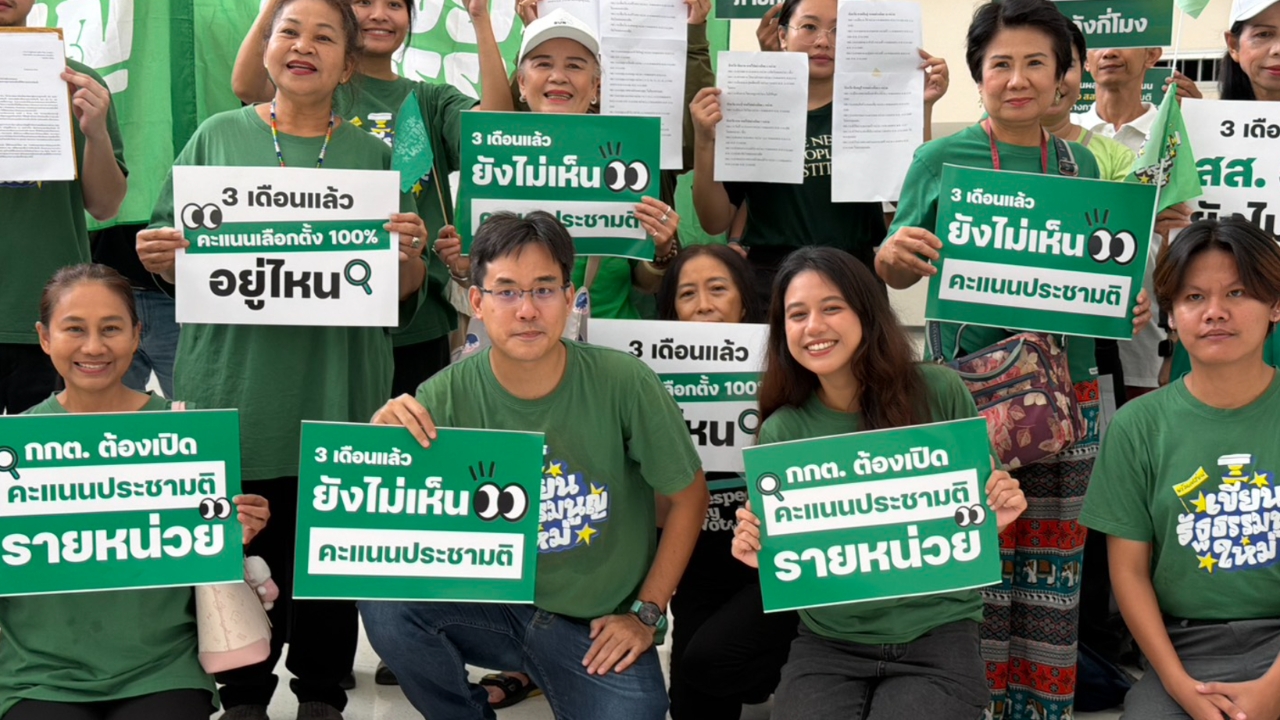
On 8 May 2026 at the Election Commission office, the Internet Law Project (iLaw) and civil society networks gathered to hold the “March to Demand Election Commission Scores” event. They requested the Election Commission to publish complete unit-level vote counts for the 2026 House of Representatives election and the referendum. During the event, participants wore green shirts and displayed various signs. At times, the group chanted, “Where is the referendum score? When will election results reach 100%?” as a symbolic protest, before cutting a ribbon and saying “Open it now” to call for transparency.
Chayaphol Danothai, iLaw representative, highlighted two main issues: unit-level election results and the constitutional referendum results. He noted that over three months after the election, the ECT Report system still had not published 100% of vote counts for constituency and party-list members. He cited Kalasin and Ubon Ratchathani provinces, where data from many polling stations was missing or incomplete, and there were errors and duplicate uploads. He also urged the Election Commission to reinstate the Dashboard results reporting system, which has been offline for over three months, raising concerns about transparency in election data disclosure.
Regarding the constitutional referendum results, Chayaphol said the public currently only knows the nationwide totals, with no release of district or unit-level data. He called on the Election Commission to disclose this information to enhance transparency and legitimacy in this important national issue.

Pongsathorn Kanthuang from WeWatch revealed that over 16,000 volunteer election observers nationwide reported problems during early voting, including officials entering incorrect district codes and the reuse of 2023 ballot envelopes, which contained code slots inconsistent with current formats. As of now, the Election Commission has not provided explanations, potentially undermining public confidence in election management.
WeWatch also demanded that the Election Commission stop prosecuting citizens, academics, and journalists scrutinizing the election process. They proposed reviewing the use of QR codes on ballots and installing CCTV inside polling stations to increase transparency. Additionally, they advocated for legal and institutional election reforms, especially separating the Ministry of Interior's role from election management to build neutrality and public trust.
Phatsarawalee Thanakitwiboon, also known as Mind, a leader of the 'Three Fingers' group, emphasized that past election management issues indicate the Election Commission may prioritize legal compliance over transparency. She noted that all seven commissioners were approved by the Senate and lack grassroots ties. She questioned the expertise of some commissioners who have no direct election-related backgrounds and said none have taken responsibility publicly except the secretary-general. This situation stems from the 2017 constitution, which determines the Election Commission's composition without a direct link to the public. She affirmed that 21.6 million voters have expressed a desire for a new constitution and called for a thorough, participatory constitutional drafting process.

Yingcheep Atchanon, iLaw director, warned the Election Commission about the Senate vote-rigging case, which involves over 80,000 pages of evidence. He urged the Election Commission to act as a neutral “mailman,” verifying the integrity of the process and forwarding the case to the courts for fair judgment without deciding themselves. Since many current commissioners were chosen by this Senate, conflicts of interest may exist. He cautioned that if the Election Commission dares to dismiss the Senate case, public confidence in fairness will collapse. iLaw intends to present all evidence publicly and pursue legal action against any commissioners who misuse their power.
