

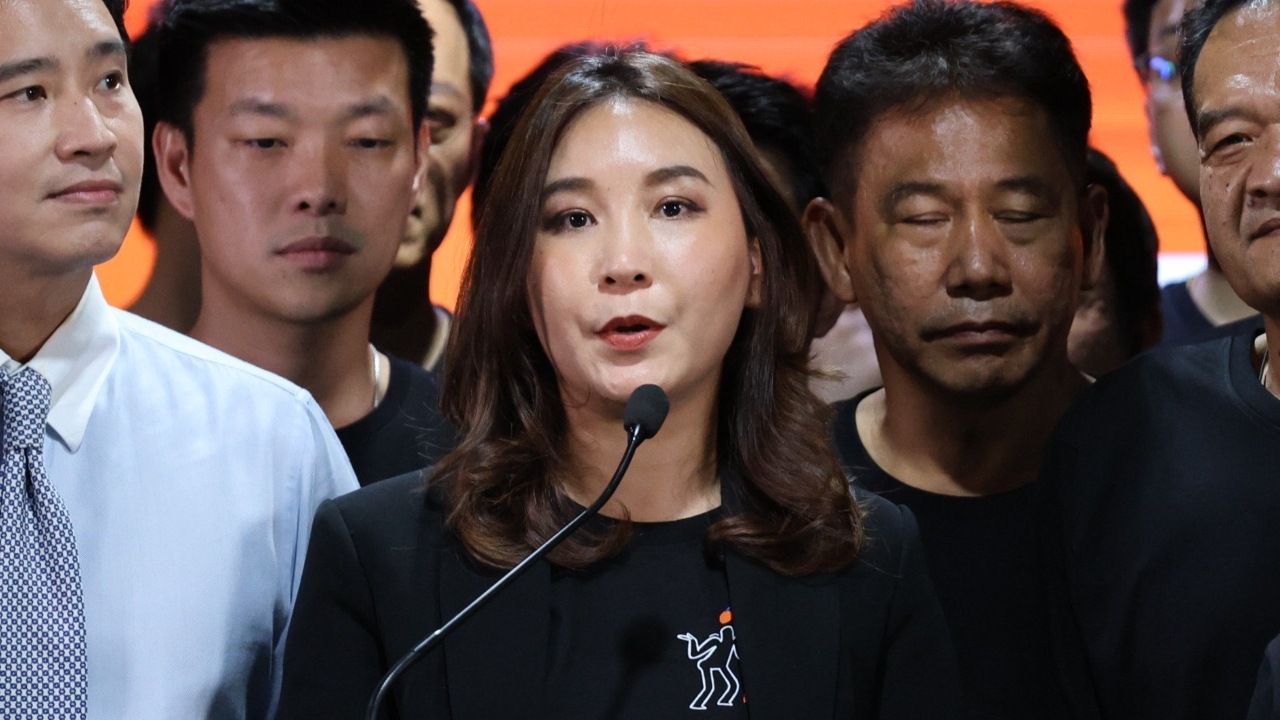
Sirikanya emphasized that the opposition coalition’s submission to the Constitutional Court to interpret the 400 billion baht loan decree will not affect compensation to the people. The government can proceed with borrowing immediately. She affirmed that the People’s Party adheres to the principle of not expanding the constitutional court’s power to the point of creating "legal warfare."
On 9 May 2026, Ms. Sirikanya Tansakul, Deputy Leader of the People’s Party, spoke about the Royal Gazette’s publication of the decree granting the Ministry of Finance authority to borrow 400 billion baht to address the energy crisis and drive the country’s energy transition. She noted that the decree is only five pages long and lacks clear details on the borrowing methods or project specifics, unlike typical loan applications to financial institutions, which require extensive documentation. It also differs from the COVID-19 loan decree, which included a screening mechanism chaired by the Secretary-General of the National Economic and Social Development Council (NESDC).
Regarding the screening committee’s structure this time, the government has assigned the Permanent Secretary of the Ministry of Finance as chair, instead of the NESDC Secretary-General as before. Meanwhile, the Public Debt Management Office (PDMO) is tasked with project evaluation. This arrangement means the Ministry of Finance acts simultaneously as borrower, screener, and auditor within the same process.
The decree’s appendix outlines spending frameworks broadly. The compensation plan covers farmers and entrepreneurs. However, it is noted that the “Thai Help Plus” project alone uses approximately 170 billion baht, nearly the entire budget allocated for this plan.
Regarding the energy transition plan, another key component of the decree, it broadly includes training and workforce skill development. This raises questions about the urgency of including such measures in a loan decree, prompting the opposition to file a petition with the Constitutional Court concerning its constitutionality.
At the same time, there is uncertainty whether the opposition’s petition to the Constitutional Court to review the decree’s constitutionality would prevent the government from borrowing to compensate the public. It is affirmed that the government can proceed with borrowing immediately without waiting for the court’s ruling.
This is because the petition only delays parliamentary approval by up to 60 days. Even if the Constitutional Court rules that parts of the decree are unconstitutional, it may affect only the energy transition plan, while the government can continue borrowing for the compensation plan beforehand.
Regarding criticisms that the compensation distribution appears "random" and "almost universal," which may result in some affected people missing out or having to wait for later rounds, the view is that parliamentary mechanisms should be used for oversight and objection rather than intervention by the Constitutional Court. Affected citizens awaiting assistance can be assured that the compensation process will continue.
Ms. Sirikanya added that the opposition coalition’s petition uses legislative authority to request the Constitutional Court to determine whether the decree violates the constitution, which is within the court’s remit. This differs from frequent petitions by habitual complainants seeking broad interpretations, which have expanded the court’s power into what is called “legal warfare,” primarily to attack political opponents.
Therefore, she urged the public to trust that the People’s Party will not partake in practices it opposes. The party remains committed to working based on the interests of the people and parliamentary democracy principles as they should be.