

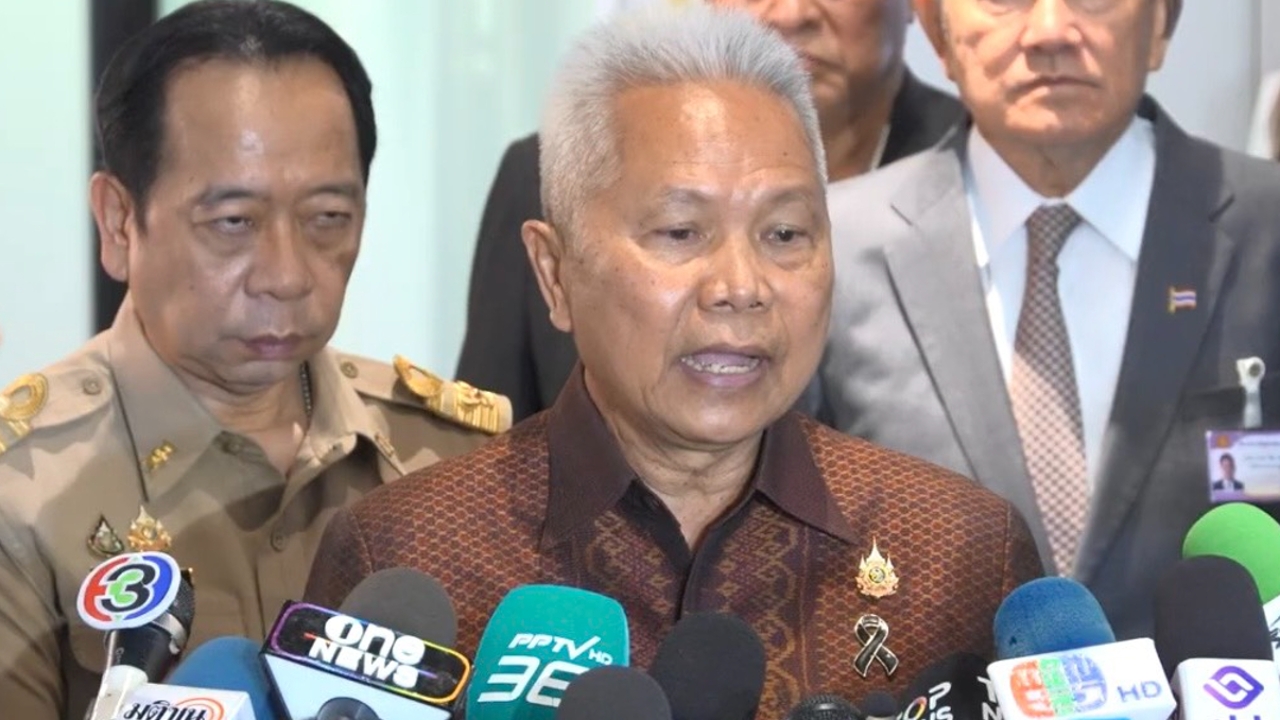
The Speaker of the House revealed that the tripartite whip committee has agreed on a nine-hour framework for discussing draft legislation on 15 May, focusing on debating only key issues and emphasizing that quality is more important than prolonged sessions.
At 11:30 a.m. on 11 May 2026 at the Parliament Building, Mr. Sophon Sarum, Speaker of the Parliament, spoke about the upcoming tripartite whip meeting scheduled for Friday, 15 May. He said it would involve discussion of draft laws that the Cabinet has confirmed will be resubmitted for parliamentary consideration. The agreed meeting duration is nine hours, with an option to extend by another half hour if needed. Time will be allocated appropriately among the parties.
The meeting reached a consensus that debates should focus only on issues where differences or doubts remain, especially regarding other laws not submitted for consideration. The opposition may question the Cabinet to clarify why those bills were not brought to Parliament. For draft laws already reviewed and confirmed for resubmission, detailed debate should be limited since they have passed parliamentary processes. Instead, remarks or supportive comments may be made as appropriate.
Mr. Sophon added that Friday's meeting would primarily focus on setting the meeting framework. Although there were proposals to add other agenda items, concerns were raised about insufficient time. Nevertheless, all parties agreed to hold another joint meeting in the coming weeks or month to discuss key government matters, such as international agreements or constitutional amendments.
When asked if the Cabinet's approval of additional draft laws could be submitted in time for the meeting, Mr. Sophon said the Cabinet has already approved and sent the draft laws to Parliament. Therefore, no other draft laws can be added in time, and only the confirmed agenda will proceed.
Regarding the opposition possibly debating laws not on the agenda or expressing dissent, Mr. Sophon said this is normal in parliamentary sessions where all parties must respect whip agreements. Each party's whip is responsible for ensuring their members understand this. For laws already confirmed for resubmission, debates should not delve too deeply but focus on essential points and constructive observations.
Mr. Sophon also shared his personal view, expressing a desire to see higher-quality and more engaging parliamentary debates. In the past, even when sessions were broadcast only on radio, the public followed closely because members debated from their own understanding and perspectives. This contrasts with the present, where many prepare written speeches, resulting in a loss of the debates' original appeal.
Mr. Sophon concluded by emphasizing that the effectiveness of Parliament does not depend on the length of meetings but on the substance and quality of debates. If there is agreement, lengthy discussion is unnecessary; if there is disagreement, ample time should be used to question thoroughly so the public receives complete information, rather than debating merely to fill the allotted time.