

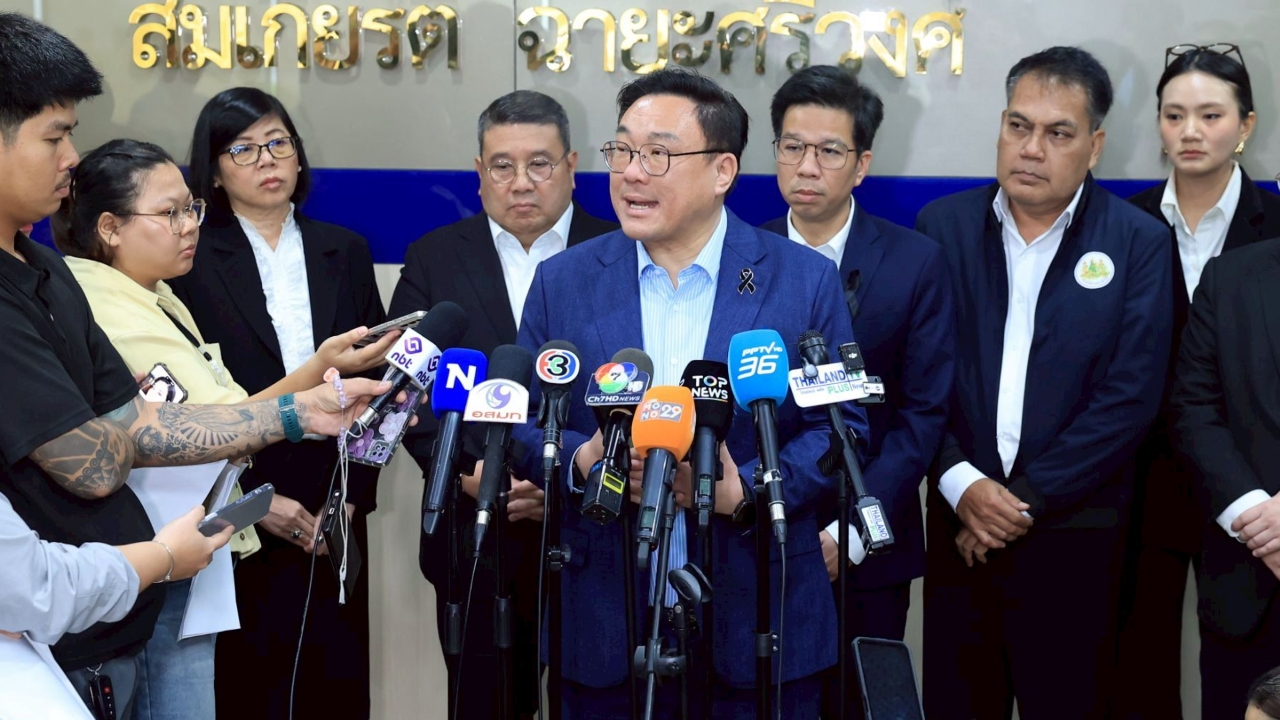
Julan Phan Amornwiwat held tripartite social security talks to address the trust crisis, aiming for a transparent and sustainable fund. He acknowledged that investment returns remain insufficient and plans to increase worker enrollment to build a comprehensive basic welfare system.
11 May 2026 GMT+7 Julan Phan Amornwiwat, Minister of Labor, said after participating in a policy dialogue meeting with the Compensation Fund Committee, the Social Security Committee, and Social Security Office executives to lay proactive groundwork. The goal is to elevate the social security fund into a key institution providing stability for workers and to drive policies that meet the needs of the modern workforce.
Julan Phan revealed that all parties agreed the Social Security Office is currently facing a trust crisis affecting its public image negatively. However, the Ministry of Finance's review found the fund's status and operations have no problems. Despite this, the public perceives various issues, which will not be swept under the rug but will be corrected promptly. The Social Security Office’s operations must prioritize transparency so everyone can fully inspect and monitor, marking a crucial first step toward regaining confidence.
Regarding the fund’s challenges, it currently confronts a fully aging society, yet investment returns have been insufficient, posing risks. The approach to investment must be adjusted to seek higher returns, and the fund has already begun efforts in this direction.

Meanwhile, Julan Phan emphasized the importance of enrolling as many people as possible into the social security system. Many workers remain outside the system. Mechanisms must be created to enable participation, especially for platform workers and gig workers, who clearly illustrate how the world of work has changed.
“Currently, we have about 300,000 riders, and it is certain this number will at least double within 3 to 5 years. Our challenge is how to ensure that these workers receive rights and protections by bringing them into social security. We need to update laws to keep pace with these changes,” he said.
Julan Phan also pointed out agreement that migrant workers in Thailand are underrepresented in the social security system. The Ministry of Labor aims to properly integrate these workers so they receive legal protections according to law and international agreements. This is crucial because failure to do so could result in unregistered or illegal labor, which may threaten economic stability.

Another key issue highlighted is managing the healthcare budget exceeding 100 billion baht annually. The Social Security Office has been tasked to increase focus on safety and occupational health, emphasizing accident prevention, work-related illness prevention, and rehabilitation to enable workers’ quick return to work. Reducing illness rates would significantly enhance the fund’s financial stability.
Regarding the CARE pension formula, a conclusion is near but more comprehensive discussions are needed. Meetings with various groups have begun to identify obstacles and determine how to proceed to protect the interests of all parties.
On service issues, Julan Phan acknowledged ongoing problems with the IT system. He has ordered urgent fixes to the core SSO system, which remains a barrier to use. Welfare demands are under consideration with priority given to fund stability. Any welfare improvements that do not harm stability can be implemented immediately.
He added that a key future mission is organizational restructuring and updating social security laws to ensure transparency, modernity, independence, and a solid support system for all workers, whether sick, unemployed, or retired. “Today, the Social Security Office must create a new dimension by advancing participatory and consultative work to move forward and meet the needs of the public,” he concluded.
