

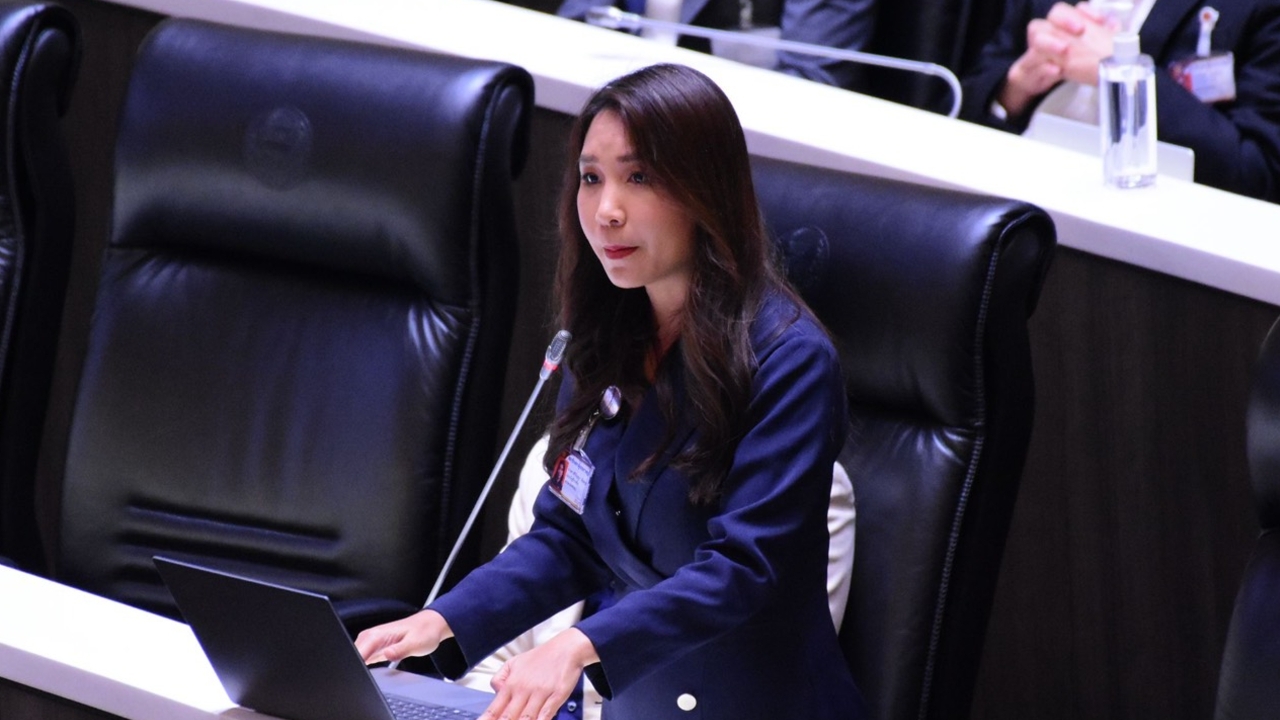
Sirikanya fears repeating the mistakes made four years ago in purchasing World Cup broadcast rights. She urges the government to quickly decide on free viewing arrangements and warns that doing otherwise might weaken its bargaining power with agents. She also advises setting spending priorities and cautions against misusing funds to gain short-term popularity.
12 May 2026 GMT+7 Ms. Sirikanya Tansakul, party-list MP and deputy leader of the Prachachon (People's) Party, commented on reports that the Cabinet has approved a 1.3 billion baht budget for the Office of the National Broadcasting and Telecommunications Commission (NBTC) to purchase the World Cup broadcast rights. She said that the Cabinet’s decision remains unclear about who will actually buy the rights and who will pay, raising concerns about repeating history.
Four years ago, the funding came from several sources: about half from the Broadcasting and Telecommunications Research and Development Fund for Public Benefit (BTRDF), if she recalls correctly, and the rest from the Sports Authority of Thailand’s (SAT) fund and private sector contributions. At that time, there were two main criticisms.
First, the BTRDF was not intended for this type of expenditure. Its purpose is to help vulnerable groups access media, such as low-income individuals or people with disabilities, by subsidizing access. Therefore, it does not cover making the World Cup free for all nationwide.
Second, the Sports Development Fund was also questioned, with opinions that it should be used for developing domestic sports rather than buying broadcast rights. Although it might inspire aspiring professional athletes, the uncertainty about funding sources raises concerns that without private contributions, it might revert to the same old subsidy approach.
Sirikanya added that this time the context is different. First, the NBTC's Must Have rule requiring certain sports events to be broadcast free to the public no longer includes the World Cup, so there is no longer a need to ensure free live broadcasts.
Second, there is the issue of private sector motivation. Previously, there was an ongoing dispute between True and the NBTC, where, after acquiring broadcast rights, True failed to comply with the Must Carry rule, causing blackout on some platforms or channels. This happened because investors naturally seek to profit from their investments. Therefore, if the rights are to be purchased, it should be by private entities motivated to invest, rather than the government.
“If the government rushes to guarantee free viewing, it weakens its bargaining power in negotiations with agents holding the World Cup rights or private investors unwilling to fully fund the purchase. This could pressure the government to subsidize payments. Although the funds used may not directly address immediate economic issues, they have specific purposes. If the money is not allocated to the fund, it should be considered revenue submitted to the treasury. I urge the government to prioritize this issue carefully and not misuse funds simply to gain short-term popularity by pleasing football fans. We do not intend to prevent fans from watching the World Cup live; we want the government to spend transparently, according to the intended purposes, and focus on more urgent needs.”