

The Landbridge Study Committee's first meeting resolved to establish three subcommittees. It plans to include study results from the Office of Transport and Traffic Policy and Planning and the Senate in its review. The committee confirmed it will expedite the study to meet the 90-day timeframe and will request an extension from the Prime Minister if necessary.
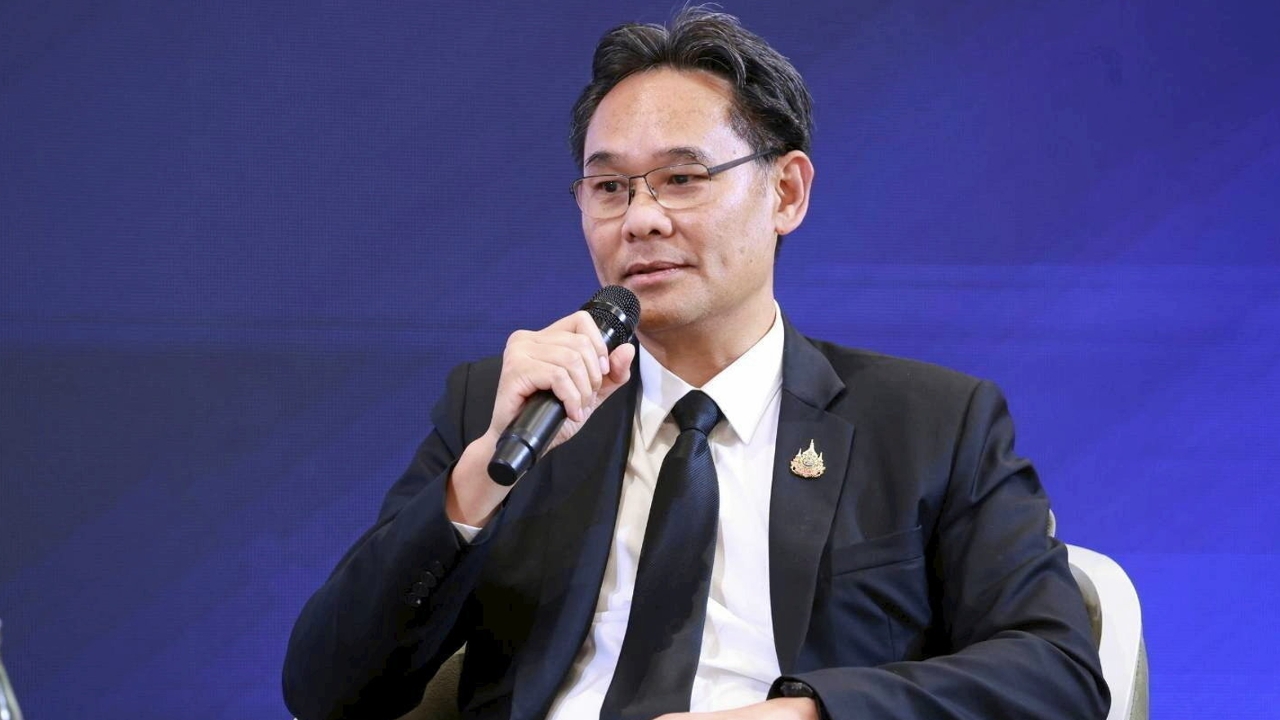
On 15 May 2026 at the Government House, Mr. Danucha Pichayanan, Secretary-General of the National Economic and Social Development Council (NESDC) and secretary of the committee studying the Landbridge infrastructure project linking transport between the Gulf of Thailand and the Andaman Sea, spoke after the first meeting chaired by Deputy Prime Minister and Finance Minister Mr. Aekniti Nitithanprapas. He said the meeting discussed basic data for the work, noting there is only 90 days, so starting a new study from scratch is impossible. The committee will therefore rely on the latest detailed study by the Office of Transport and Traffic Policy and Planning (OTP), as well as a Senate report. The assessment will consider current and future assumptions and problem trends, the Landbridge project's cargo transport potential linking both coasts, and business feasibility. He confirmed the study will examine impacts from all angles, including environmental concerns, and will collect public opinions.
Additionally, the meeting approved the establishment of three subcommittees: 1. The Subcommittee on Landbridge Project Strategy, including private sector experts and academics; 2. The Subcommittee on Environmental Impact Assessment, chaired by the Permanent Secretary of the Ministry of Natural Resources and Environment, including environmental experts and agency representatives; and 3. The Subcommittee on Public Participation and Communication, chaired by the Permanent Secretary of the Ministry of Transport. This group will disclose information to the public and conduct public consultations, considering concerns and local worries as part of the review.
These three subcommittees will report their progress to the main committee for consideration at the next meeting scheduled for June. Regarding whether academic experts and NGOs will be consulted, Mr. Danucha said all such opinions will be incorporated into the review.
Concerning whether the project would be governed by legislation similar to the Eastern Economic Corridor Act (EEC Act), Mr. Danucha said that is a separate issue. If the project is business-oriented, the legal mechanisms will differ. Initially, the focus will be on project feasibility. Legal matters have not yet been discussed, but he assured the process will be expedited. The 90-day period will start from the announcement of the committee's formation.
Mr. Danucha also confirmed that economic and geopolitical factors will be included in the review. He noted the need to assess changes between past and present studies; the OTP study was conducted in 2023. Therefore, current geopolitical shifts must be examined and the study updated accordingly. The team will strive to complete the work within the 90-day timeframe but will request an extension from the Prime Minister if necessary.