

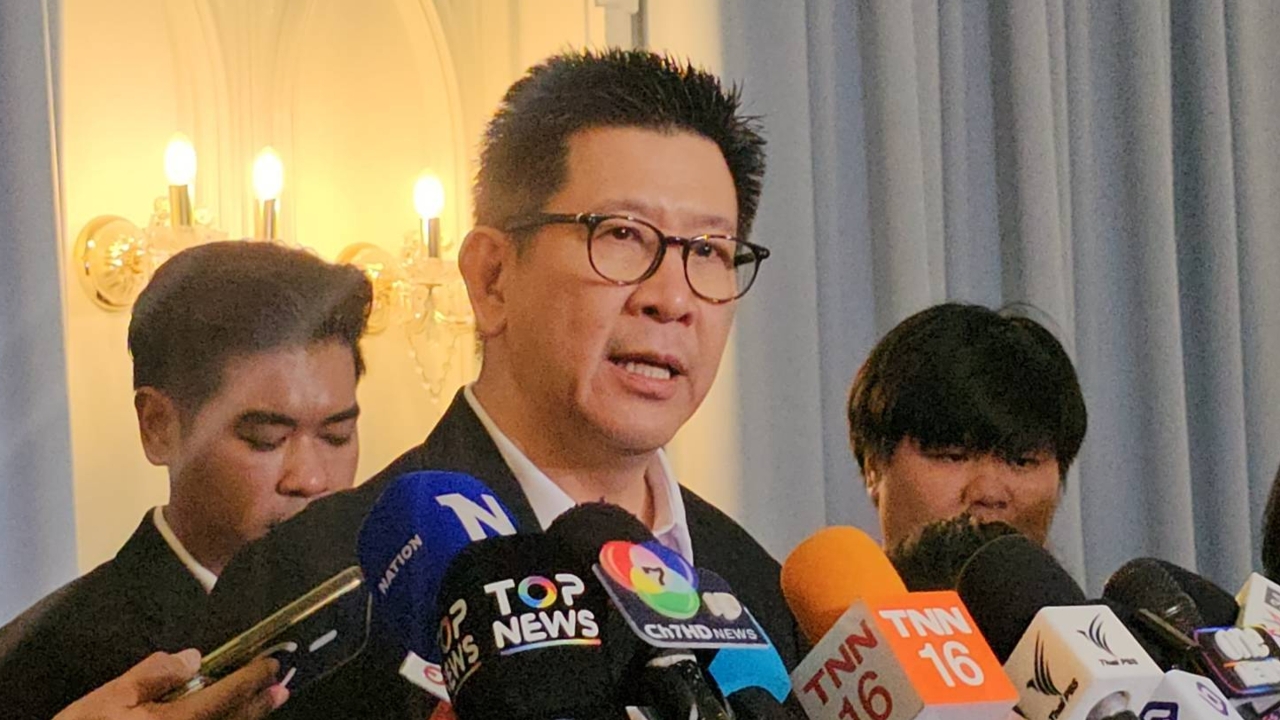
Ekniti revealed the outcomes of the "Private Sector Speaks, Government Listens" meeting, pointing out that the current global energy crisis is a golden opportunity for Thailand to attract production bases. The government also accepted six private sector proposals to advance the Joint Public-Private Committee's (กรอ.) mechanisms to support investments in infrastructure, clean energy, and AI, positioning Thailand as the economic core of ASEAN.
At 21:30 on 15 May 2026 at the Government House, Deputy Prime Minister and Finance Minister Ekniti Nitithanprapas disclosed the results of discussions between the Prime Minister and private sector executives during the "Private Sector Speaks, Government Listens" event. The private sector agreed that the current global energy crisis presents a crucial opportunity for Thailand to attract investment, particularly with the trend of relocating production bases and supply chains to the ASEAN region and Thailand. The country must seize this chance through proactive policies. The government received six proposals from the private sector, including:
1. Accelerate investment in infrastructure and clean energy. This is a primary proposal from the private sector, emphasizing increased investment in water resources to support agriculture and address the El Niño crisis expected at year's end. It also calls for expedited investment in clean energy, such as solar power, and the development of smart grid systems to meet the demands of modern global energy trends.
2. Invest in "people" by using AI and digital technologies to enhance (up-skill) Thai workers' capabilities to prepare for future changes.
3. Create new economic engines and financial centers. The private sector proposed that in building new growth engines, the government should focus on Thailand's strengths in wellness tourism, the digital industry, and modern agriculture. Plans include expanding from data centers to cloud services and semiconductor production, which are vital to AI. Meanwhile, the banking sector suggests positioning Thailand as a regional financial hub by supporting strong Thai businesses and encouraging mergers to enhance competitiveness, leveraging opportunities arising from the Middle East crisis.
4. Unlock and resolve various obstacles. The private sector urges the government to expedite delayed licensing processes, especially the management of unused public land. They also praised the BOI Fast Pass project as a successful example that accelerated investment since Q4 last year, leading to actual investments exceeding 200 billion baht recently.
5. Propose establishing a concrete anti-corruption center to build public trust and swiftly address corruption issues.
6. Propose measures to manage inflation, which is expected to rise, alongside support for SMEs affected by economic challenges.
For the next steps, the Prime Minister intends to drive implementation through the Joint Public-Private Committee (กรอ.), putting all proposals into concrete action. Projects requiring budgets should emphasize public-private partnerships (PPP), with the private sector leading and the government supporting. This will be combined with the 4T strategy, which includes 1. Target: clear objectives; 2. Transition: shift to clean energy;
3. Transform: reform human resource skills; and 4. Together: cooperation between government and private sector.
Ekniti said the government does not neglect urgent issues, especially inflation and the cost of living for grassroots citizens and SMEs. It also accepts proposals from the Federation of Thai Industries to develop Ranong port and the missing rail link between Chumphon and Ranong to sustainably strengthen Thailand as a key ASEAN hub.