

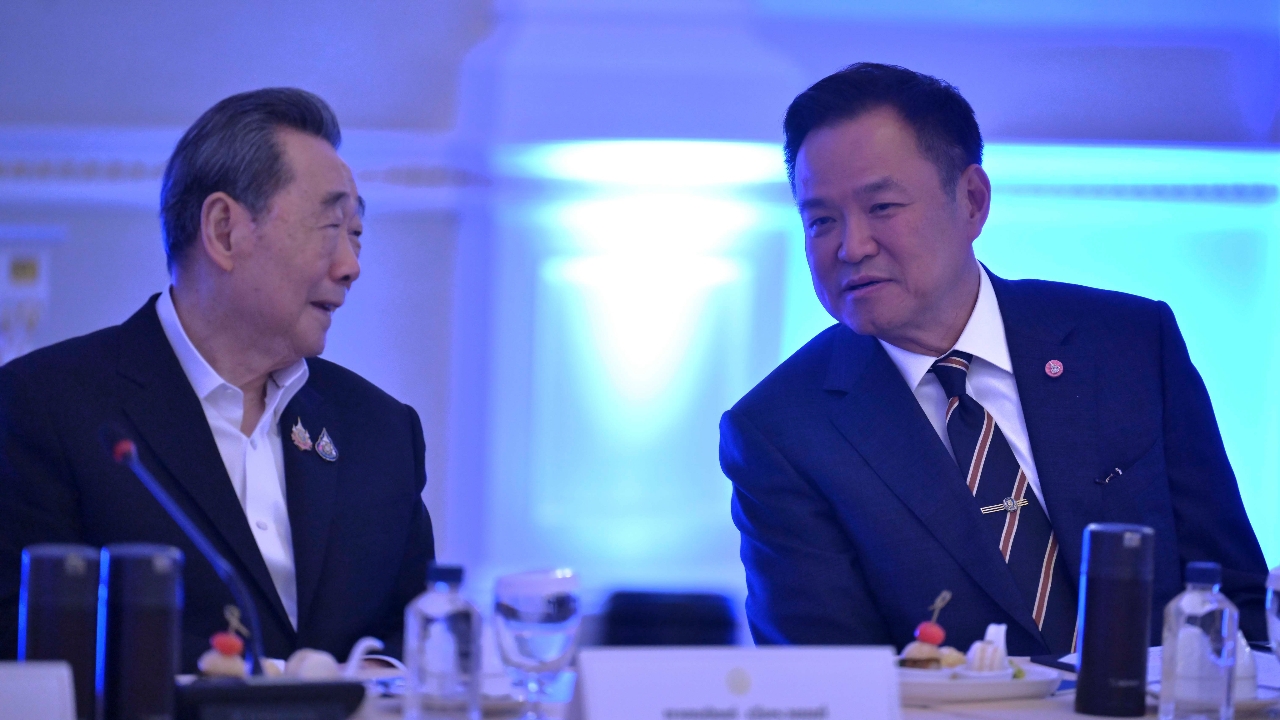
Details revealed that top CEOs from major Thai corporations joined a dinner table to present their perspectives and opinions to the government, urging an urgent overhaul of Thailand's economy. The Prime Minister immediately accepted the proposal and ordered the Joint Public-Private Sector Committee (กรอ.) to resume a proactive role.
At a joint discussion forum between the government and private sector held at the Government House on the evening of 15 May 2026, Prime Minister and Minister of Interior Anutin Charnvirakul, along with the Cabinet, invited senior executives from 10 key industrial groups to listen and exchange views to set directions for enhancing the country’s economic competitiveness amid rapidly changing global contexts in international politics, technology, innovation, and environment—all factors the Prime Minister noted directly impact the economy and citizens’ quality of life.

The main goal of this discussion was to gather opinions from all sectors so the government can promote and support Thai entrepreneurs across industries to compete to their fullest potential. The Prime Minister remarked during the meeting that “Thailand has a significant opportunity to elevate its economic potential more than many countries. However, this success will only come if ‘the public and private sectors move forward together.’ This government is ready to facilitate in all dimensions, not bound by outdated restrictions, obsolete laws, or cumbersome procedures. We will expedite business operations, investment, and employment to strengthen the country’s and all sectors’ enterprises’ growth.”
This consultation forum included senior private sector executives and representatives from 10 key industrial groups as follows:
1. Core Institutions Committee (กกร.)
2. Automotive Sector
3. Hotel/Tourism Sector
4. Health Sector
5. Construction/Real Estate Sector
6. Retail/Fast-Moving Consumer Goods
7. Energy Sector
8. Finance Sector
9. Technology Sector
10. Agriculture/Food Sector

The discussion atmosphere was cordial. The government allowed students from Suan Sunandha Rajabhat University, together with Wang Suan Sunandha Hotel, to prepare the dinner, using domestic ingredients to create Thai Fusion Set dishes such as pomelo salad tart, sweet shrimp with watermelon, and three-colored rice stir-fried with salt and chili and grilled fish with herbs. The discussion lasted over two hours. The Prime Minister then exited Santimaitri Building with the Cabinet, followed by Dhanin Chearavanont, Senior Chairman of Charoen Pokphand Group, and Vethit Chokwatana, Managing Director of Sahapat Group Public Company Limited, both seated beside the Prime Minister during the discussion.
Reporters asked about the discussion, and Anutin exclaimed with enthusiasm and said, “Think about it, people at this level spent over two hours—they weren’t here just to chat.” When asked again about the atmosphere of the talk, Anutin laughed and said, “My ears are numb.”

Later, Deputy Prime Minister and Minister of Finance Akniti Nitithanprapas stated in an interview that the discussion “Private sector speaks, government listens.” The government received six proposals from the private sector:
1. Accelerate investment in infrastructure and clean energy. This was a primary proposal focusing on expediting investment in water resources to support agriculture and the El Niño crisis expected late in the year, as well as accelerating clean energy investments such as solar power and developing smart grid modernization systems to meet modern global energy trends.
2. Investment in “people” by using AI and digital technology to upskill the Thai workforce to prepare for future changes.
3. Creating new economic engines and financial hubs. The private sector proposed that the government focus on strengths in wellness tourism, digital industries, and modern agriculture, planning to expand from data centers to cloud services and semiconductor production, which are core to AI. The banking sector proposed making Thailand a regional financial hub by supporting strong Thai businesses and encouraging mergers to boost competitiveness, leveraging opportunities from crises in the Middle East.

4. Unlocking and resolving various obstacles. The private sector wants the government to expedite delayed licensing processes, especially in managing unused public land. They praised the BOI Fast Pass project as a successful example that accelerated investment since Q4 last year, resulting in actual investments exceeding 200 billion baht during this period.
5. Propose establishing a concrete anti-corruption center to build confidence and address the issue swiftly.
6. Proposals regarding inflation management, which is expected to rise, along with support for SMEs affected by economic impacts.
The government will take all private sector proposals seriously into action and revive the Joint Public-Private Sector Committee (กรอ.) to proactively collaborate to unite “public and private sectors” to systematically drive the Thai economy, strengthen the grassroots, and enhance the country's long-term competitiveness.
For projects requiring budget, the focus will be on public-private partnerships (PPP) led by the private sector with government support, alongside employing the 4T strategy. This consists of
1. Target: Clear goal-setting.
2. Transition: Transition to clean energy.
3. Transform: Reform of human resource skills.
4. Together: Collaboration between public and private sectors.
It was also reported that during this meeting, the government asked the private sector to complete a survey on which measures or policies they want the government to end, to assist in framing future policies. Additionally, there was a question asking what private sector leaders would personally like to say to the Prime Minister if given one minute.
Further reports indicate that the government plans to next hold a forum with executives from financial institutions, finance companies, and financial business groups at the Government House to hear their suggestions.


