

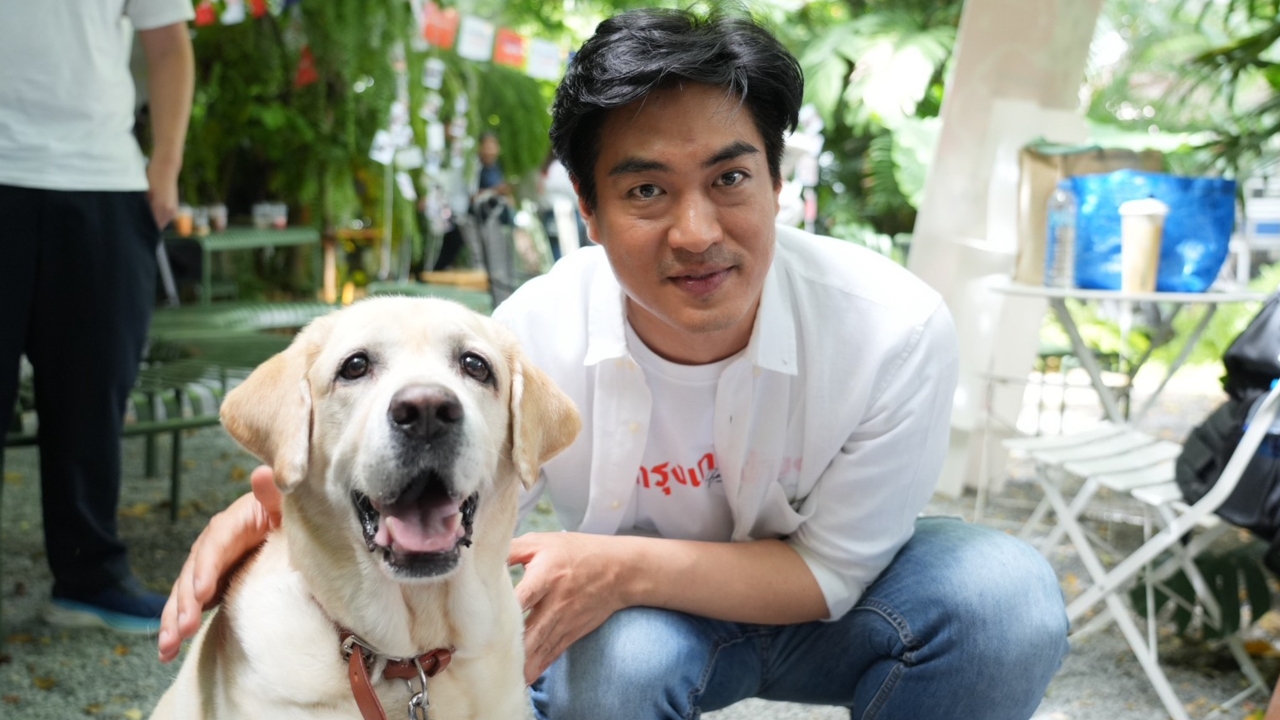
The Prachachon Bangkok Party organized a seminar on the problems of pets and stray animals in Bangkok. Chaiwat emphasized policies of free microchip implantation, insurance discounts, and increasing shelter capacity by 3-4 times to connect adoption efforts, aiming to reduce burdens on city residents and the number of abandoned dogs and cats in the city.
On 17 May 2026, the Prachachon Bangkok Party held a seminar and policy presentation on pets and stray animals by the party’s candidates for Bangkok Governor (BMA Governor). Present at the event were Mr. Chaiwat Sataworawijit, the Prachachon Party’s candidate for Bangkok Governor, , Ms. Rakchanok Srinok, party-list MP of the Prachachon Party, and Mr. Ariyathat Yodchaikiat, candidate for the Bangkok Metropolitan Council (BMC) representing Bangkok Noi district from the Prachachon Party. They joined the panel discussion at Baan Puen Cafe & Creative Space in Bangkok Noi district, Bangkok, along with Dr. Kornchit Suwan, an animal behavior specialist veterinarian and founder of Happy Howl - Dog Training and Behavioural, who was a guest speaker at the seminar today.
Mr. Chaiwat stated that Thai people are accustomed to stray animals. Thailand has many kind-hearted people who feed strays, which encourages them to stay in those areas. At the same time, many pets fall ill and owners face high costs; those unable to afford care often release their pets, turning them into strays. When these strays breed with others, their population grows, creating a cycle that disrupts urban life. Strays rummage through trash for food, and some display aggressive behavior.

He said policy must reconsider the cycle of stray animals’ origins and how to coexist. Bangkok Metropolitan Administration (BMA) should support both people and pets as family members. The Prachachon Party proposes pet health insurance as a mechanism, which BMA, as city caretaker, can implement alongside measures to reduce stray animal issues.
A key policy mechanism is requiring pet owners to register their animals, incentivized by free basic vaccinations, free spaying/neutering, microchip implantation, and insurance discounts. BMA would become a platform linking pet owners with insurance providers. Registering and microchipping pets is like officially “recording” them, enabling BMA to know pet populations while owners receive benefits distributed by BMA.

Currently, BMA faces many constraints in managing stray animal problems due to limited budget and few shelters. Encouraging pet owners to register their animals will provide benefits for owners, help BMA reduce stray animal problems, and enable tracking if pets go missing.
Moreover, the Prachachon Party plans to increase stray animal shelters by about 3-4 times. BMA can also facilitate adoption by allowing people to select animals from shelters more easily through accessible profiles online, enabling potential adopters to browse before meeting pets in person. If they decide to adopt, pets will be microchipped before going to new homes, reducing shelter populations.
“Bangkok will care for both urban residents and their pets, preventing pets from negatively impacting city life. It will address pet issues as family members and comprehensively solve stray animal problems simultaneously,” he said.

Mr. Ariyathat noted that from his observations in community areas, pet owners in fenced houses tend to be better prepared to care for animals without disturbing neighbors. However, in closely built community spaces with limited area, challenges arise in caring for pets, especially regarding illness, contagious diseases, and accidents, which are more frequent. Cost burden is a major concern for pet owners in Bangkok, compounded by difficulties accessing treatment and transportation.
He added that for many pet owners, having pets at home does not end problems; expenses and care remain issues. Without mechanisms or policies supporting pets in homes, they may become strays when owners cannot care for them. The stray animal shelter in Prawet district is currently at full capacity, but many wanting pets can adopt from there. The Prachachon Party’s policies aim to support those wishing to own pets by providing insurance to reduce medical expenses. Combined with microchipping and spaying/neutering, this lowers the chance of pets being abandoned and becoming strays again.

Ms. Rakchanok said that when visiting communities, she often found many stray dogs and cats. People feed them but do not take ownership. Without regular care, vaccination, or spaying/neutering, these animals breed and multiply. The problem worsens near temples, where animals gather and people feel adding another stray is harmless, leading to more abandoned dogs and cats at temples, increasing stray populations.
The Prachachon Party’s policy offers incentives for pet owners to microchip their animals. Besides free spaying/neutering and vaccination, owners can choose to buy pet insurance arranged by BMA. Though pet insurance exists now, many owners find it expensive or confusing due to multiple packages. BMA will provide clear options with discounts based on the type of pet owned.
At the same time, many civil society groups temporarily care for animals and seek permanent adopters. BMA can connect with these groups that care for many animals, supporting publicity efforts. BMA can also issue regulations facilitating private and civil society organizations’ animal care, or coordinate with the government to incentivize adopters, such as tax deductions. These measures will help private and civil society shelters manage animals systematically with BMA’s budget support, profiling, and organized reduction of shelter populations.


Dr. Kornchit said that beyond spaying/neutering, which addresses symptoms, policymakers should consider root causes. People deciding to adopt pets need some knowledge. For example, the Prawet shelter could create a model allowing prospective owners to gain hands-on experience caring for animals, helping them understand pet ownership is not always idealized.
BMA might develop an assessment checklist, possibly using AI, to evaluate potential adopters’ readiness. Those scoring low could be advised to delay adopting, reducing stray animal problems. Another interesting model is Japan’s guide dog school turned museum, educating the public on dog care. If Prawet shelter held similar activities, it could raise awareness in Bangkok about pet ownership realities, discouraging impulsive decisions to adopt without readiness.

