

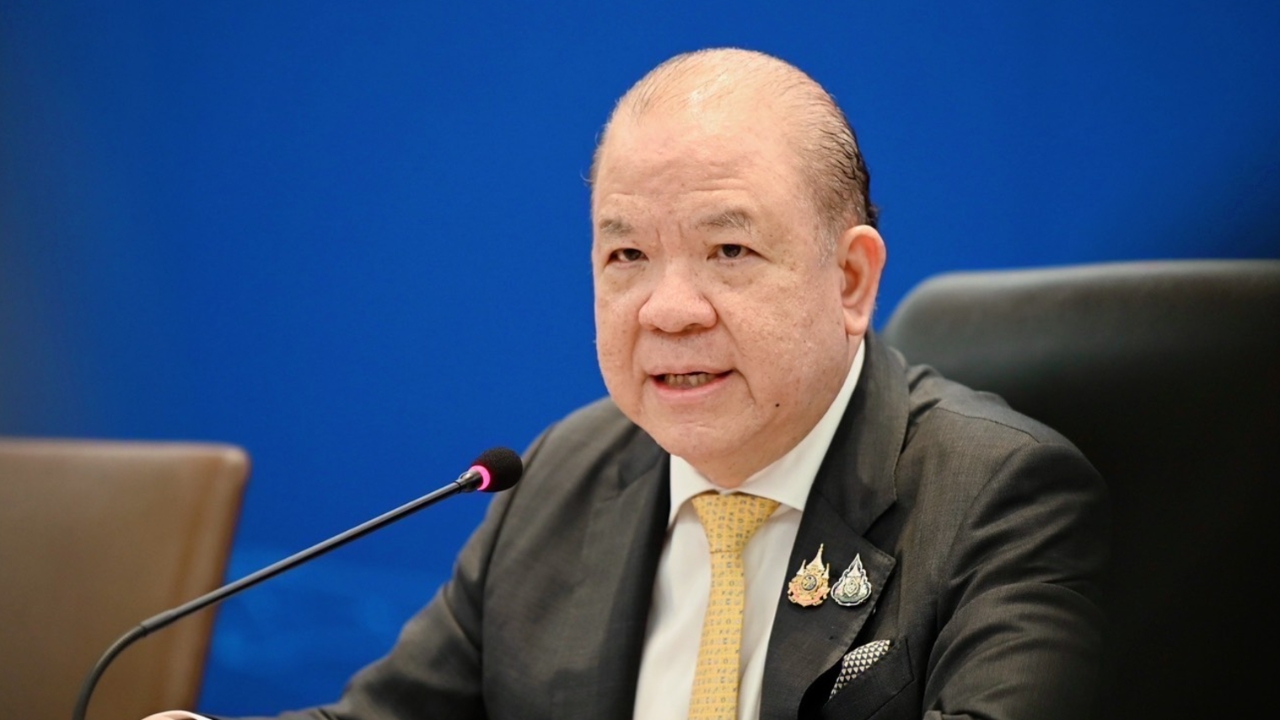
“Pichai” warns the government that the 400-billion-baht loan emergency decree must be used efficiently and produce tangible results. He advises that energy restructuring should be done without concern for vested interests and that electricity costs must truly decrease.,
18 May 2026 GMT+7 Mr. Pichai Naripthaphan Former Minister of Commerce and former Minister of Energy, said he warned the government that issuing an emergency decree (P.R.G.) to borrow 400 billion baht should be used effectively in ways the public can perceive and experience. He cautioned against repeating past loan decrees that, upon review, failed and led to waste akin to "throwing chili paste into the river."
For example, the 53-billion-baht Miyazawa loan in 1998 during the Democrat Party government disappeared without anyone remembering its use. Later, the 400-billion-baht "Strong Thailand" loan decree under the Democrat government in 2010 was actually part of an 800-billion-baht loan package—comprising a 400-billion-baht emergency loan decree and a 400-billion-baht loan act. However, the emergency loan decree was subdivided into smaller budgets so no one could recall how the money was spent. It failed to satisfy public accountability and was marred by corruption scandals in several projects. This led to ridicule as the “Who is Strong?” policy. These issues are documented in past news reports. The Democrat government eventually had to cancel the additional 400-billion-baht loan act, fearing it would not pass in parliament. This controversy contributed to the Democrat Party’s defeat to the Pheu Thai Party in the 2011 election.
More recently, the COVID-19 loan decree for one trillion baht, including 400 billion baht for economic recovery, similarly left no clear record of expenditures. Despite these loans, Thailand’s economy remained poor, and the public debt-to-GDP ratio kept rising because borrowing increased debt while GDP grew little or not enough to justify the amounts borrowed.
Mr. Pichai added that he recalls these details because he has continuously criticized these borrowings since then, not just now. This can be verified from past news and digital footprints. Therefore, he urges the government issuing the loan act to use the borrowed funds for tangible projects with clear public accountability. If energy transition is planned, it should be done without fear of energy monopolists. It must start with genuinely lowering electricity costs, not just reducing charges for the first 200 units while increasing charges for higher consumption users. This practice effectively raises overall electricity costs, as low users make up about 15-20% of consumption, while high consumers, who face increased rates, account for about 80-85%, causing a significant overall rise in electricity expenses.
Therefore, energy restructuring must begin with a real reduction in electricity prices. There must be a clear plan for restructuring, which, if implemented effectively, will greatly benefit the country. .