

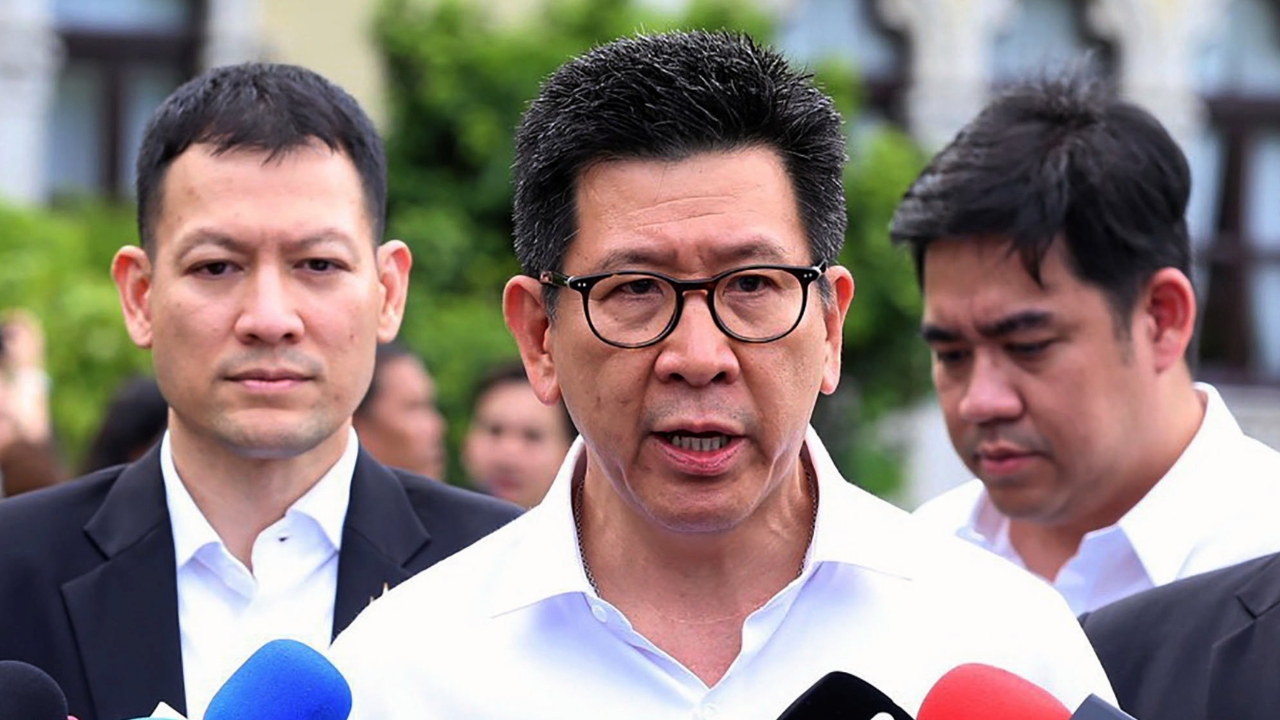
Deputy Prime Minister Akniti accelerates the Thai Chua Thai Plus economic stimulus with 200 billion baht. He notes GDP growth of 2.8%, exceeding expectations, with private investment surging 10.1%, the highest in 11 years, and announces plans to introduce the "Half-Subsidized Fertilizer" measure to aid farmers.
On 19 May 2026 at the Ministry of Finance, Deputy Prime Minister and Finance Minister Akniti Nitithanprapas revealed that according to the National Economic and Social Development Council's report, Thailand's economy expanded by 2.8% in the first quarter, surpassing market forecasts. Key drivers included overall national investment growth of 9.9%, with private sector investment notably surging 10.1%, marking the first double-digit growth in 11 years.
"This success reflects the effectiveness of economic policies implemented before the war crisis, especially the Quick Big Win policy, which provided short-term stimulus with long-lasting results now clearly visible. Additionally, the BOI Fast Pass project has helped unlock constraints and accelerated investment inflows into the Thai economy," he said.
Deputy Prime Minister Akniti added that these factors have led global credit rating agency Moody's to revise Thailand's outlook positively, recognizing the potential from the recovery in private investment after a long period without major investments in the country.
Meanwhile, exports in the first quarter continued to grow well as exporters rushed to ship goods before the United States imposes Section 301 measures by the end of the year.
However, the Deputy Prime Minister noted that the Q1 GDP growth is merely a "rearview mirror" reflection. Looking ahead, Thailand's economy still faces rough terrain and challenges. The Q1 economic figures do not fully reflect the impact of the war outbreak in March, as the government capped diesel prices at no more than 30 baht per liter at that time.
Assistant Minister of Finance Santithan Sathienthai added that Thailand and the world are currently facing multiple waves of economic storms, starting with the global energy crisis, expected to last at least another 1–2 years due to structural damage in energy systems, causing oil prices to remain elevated.
Next is the inflation and cost of living crisis, reflected in April's general inflation rate rising to 2.9%. A worrying sign is that the Producer Price Index (PPI) has turned positive while the Consumer Price Index (CPI) remained negative in Q1, indicating businesses are bearing higher costs and squeezed profit margins. If businesses cannot absorb costs and must pass prices to consumers, this will worsen living costs and liquidity issues for the public.
"This situation may lead to a crisis within a crisis, as rising product costs and living expenses coincide with declining incomes and purchasing power. Without swift action, this could escalate to future job losses," he warned.
Santithan explained that current inflation is driven by rising costs (cost-push inflation), not by strong demand or overheating purchasing power. Therefore, monetary policy measures like rapid interest rate hikes may be difficult to apply and could further contract the economy.
Deputy Prime Minister Akniti said that to address the livelihood crisis, the government plans to propose the Thai Chua Thai Plus project to the Cabinet, leveraging 200 billion baht from the 400 billion baht borrowing authority under the Royal Decree empowering the Ministry of Finance to borrow. This project will use a co-payment model with the government covering 60% and the public 40%, targeting support for small retailers and low-income groups.
"This project is notable for its effective distribution of funds to local areas. Past similar projects showed that spending was concentrated only 15% in Bangkok, while 85% stimulated grassroots economies nationwide, which will positively impact SMEs as well," he explained.
Beyond short-term relief, the government aims to use the borrowing funds to restructure and address long-term issues by promoting energy and cost transition. Discussions are underway with the Ministry of Transport to encourage truck fleets to switch to electric power and to support increased use of domestically blended B20 biodiesel with palm oil. This approach aims to build permanent resilience, so the government will no longer need to endlessly subsidize diesel prices.
In agriculture, affected by rising chemical fertilizer prices linked to energy costs, the government plans the "Half-Subsidized Fertilizer" measure to specifically assist farmers. Additionally, the BOI board has approved incentives for the ASEAN potash mining project to produce domestic fertilizer raw materials, which will help reduce farmers' costs in the long term.
Regarding monetary and fiscal policies, the Deputy Prime Minister explained that fiscal space and fiscal policy are essential tools to maintain the country's economic stability at this time.
On public debt concerns, Akniti stated that if the government does not inject funds to stimulate the economy and investment, GDP would contract, mathematically pushing the public debt-to-GDP ratio above 70%. However, with current policies, this ratio is expected to remain below 68% this year and peak at 69% around 2028–2029, still within manageable limits.
The Deputy Prime Minister concluded that this economic crisis differs from past ones, unlike the 1997 Tom Yum Goong crisis with negative GDP or the 2009 global financial crisis that devastated exports. This crisis is a livelihood crisis where overall GDP may not look bad, but its severity manifests in inflation and the population's cost of living burdens. Therefore, the government must urgently push relief policies alongside sustaining investment engines to expand the country's long-term capacity.