

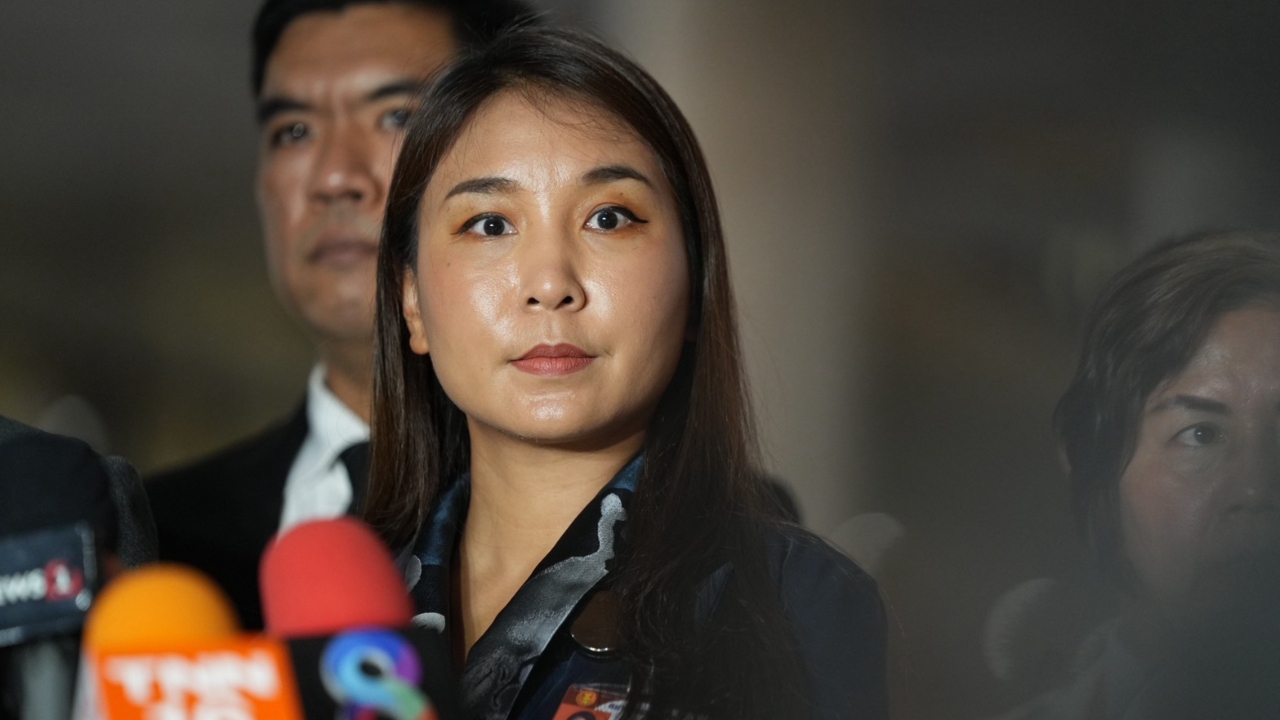
Sirikanya agrees with Supamas that buying the 2026 World Cup broadcasting rights is not cost-effective and difficult to measure. She also jabs that the government does not have abundant funds and warns, "Once you've made a mistake, don't make it again." She suggests opening the opportunity for the private sector to invest and assess risks on their own.
At 12:00 PM on 19 May 2026 GMT+7, Ms. Sirikanya Tansakul, party-list MP and deputy leader of the Prachachon Party, gave an interview at the Future Forward Building regarding the government possibly not obtaining the 2026 World Cup broadcasting rights. She said, "The government's announcements about withdrawing are still confusing. At first, they said they wouldn't use government money at all, but now they say they've withdrawn. So it's unclear what exactly was withdrawn. We need to follow this issue continuously. When they said no government money would be used, will they eventually use the USO (Universal Service Obligation) fund or the Broadcasting, Television, and Telecommunications Research and Development Fund for public benefit to buy the World Cup rights this time? It's still uncertain because the government is inconsistent in each round of statements."
Ms. Sirikanya continued, "We think that since it is no longer on the 'Must Have' list, the private sector should invest in purchasing the broadcasting rights and independently assess the risks and profits from buying these rights. This includes negotiating the rights fees. If the government rushes to say that Thai people will definitely watch for free, their bargaining power really decreases. From 1.3 billion baht, they can't negotiate the price down at all. This should be a lesson, and we need to keep watching who will provide the money to buy the World Cup rights this time." When asked about Ms. Supamas Isarapakdi, Minister attached to the Prime Minister’s Office, stating that the World Cup rights are expensive and not worthwhile, and that the private sector might need to buy the rights since the funds could be used elsewhere, Ms. Sirikanya replied, "That's actually correct. The cost-effectiveness of this matter is quite difficult to assess because the benefits are the public's happiness from watching football or the inspiration for those who want to play sports. These things are hard to measure in terms of whether it's worthwhile or not."
"If the government doesn't have abundant funds right now, it's better to save the money. If they are to use the NBTC fund or the USO fund, they should use it according to its purpose. I also urge all NBTC members to make decisions aligned with the USO's objectives to increase opportunities for low-income people or people with disabilities to access media, not to use it for buying World Cup broadcasting rights. Once a mistake has been made, don't make it again."