

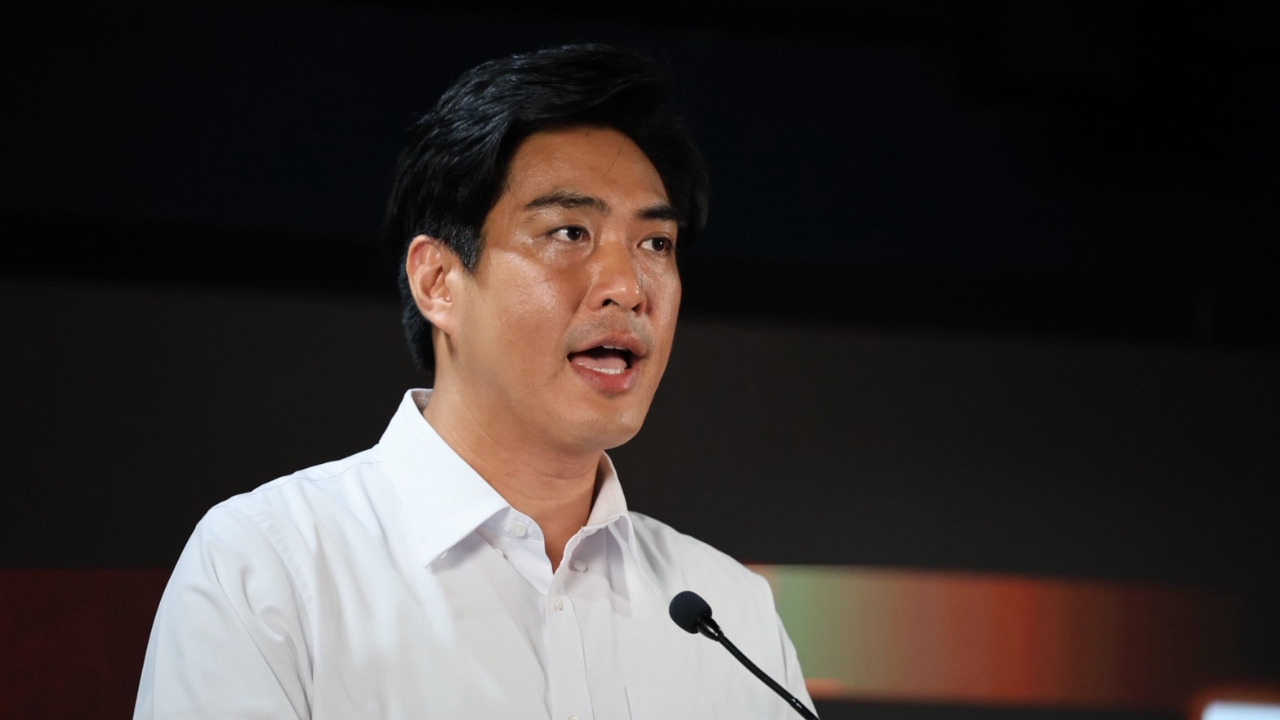
Dr. Joe does not guarantee the Orange Party's Bangkok council candidates, saying he has checked their backgrounds with available information and declines to comment on Chatchat’s poor anti-corruption management, leaving it for people to judge on 28 June.
On 19 May 2026 at the Future Forward building, Chaiwat Sathawornwijit, also known as Dr. Joe, the People's Party candidate for Bangkok governor, said in an interview after an AI anti-corruption press conference that regarding past corruption, whether former governor Chatchat Sitthiphan failed, he believes the public should judge. However, he thinks solving corruption is the executive's role because they can prevent it at every step. The failure to prevent it while claiming ignorance is hard to accept. He urged the public to rate Chatchat on 28 June and emphasized that corruption cannot be eliminated without the executive's will and courage.
When asked if the People's Party insists on electing all their council candidates as a team and whether they would refuse to cooperate if the team is not elected, Chaiwat said that is not the case. People's Party council members can work with any governor. The previous Bangkok council worked well together. Even a People's Party governor can work with council members from other parties. It depends on who they serve and their will to do right by the people. Problems arise when some council members band together to bargain for personal benefits by negotiating budget allocations with the governor and inserting themselves into various departments, known as 'budget amendments.'
Chaiwat then invited Wirot Lakkhanaadisorn, a member of the People's Party Bangkok administration team, to elaborate. Wirot said that deficiencies happen because Bangkok's procurement is extensive. However, the public expects that when mistakes occur, there should be mechanisms or systems to prevent errors linked to corruption, such as the repeated treadmill case.
"If we just focus on individuals, corruption will recur. Chaiwat and our council team believe a system is needed that uses artificial intelligence or AI to block corruption from the start—in budgeting, reasonable price proposals, and unbiased tender specifications. Often, specifications are written by suppliers to lock themselves in and then find affiliated companies to bid."
Wirot added that when asked how he would rate former governor Chatchat, he believes Chatchat has already rated himself. He respects that but said they look forward. Regardless of who is governor, anti-corruption should not depend on one person. Even a good governor should establish systems that remain effective after they leave office.
Asked if Chatchat's system works, Wirot said such systems must be paired with administrative structures. Chaiwat mentioned budget amendment issues—mechanisms aren't complicated but frustratingly unresolved because some council members collude to cut the governor's budget, aiming to cut 5 billion baht annually.
"They conspire to cut the governor's budget, then negotiate behind the scenes, threatening the governor to allocate half the cut budget, around 2.5 billion baht. After getting it, they award contracts to their own suppliers, colluding with officials on tender specifications. Some contracts are low quality, harming the public, while kickbacks go to council members and some officials in the network."
Wirot emphasized that with the People's Party's proposed system, the governor would not be in a difficult position. The governor signs the budget and should not feel constrained as Chatchat did with the treadmill case, even though he knew what was happening. A proper system prevents the governor from being silenced.
When asked how they would work with council members who seek personal gain if the council is not as they hope, Chaiwat said they start with transparency and accountability. Even if council members are from other parties, with this system, bargaining is difficult.
Chaiwat added that this is why they field 50 council candidates. Regarding deal tactics, he trusts Wirot’s experience, who will join the administrative team. Wirot added that council work must involve public participation as much as possible. If the public is informed, they can monitor progress. This is a strength of their candidates and council members: projects involving the public will be as open as possible. If problems arise, the public will defend them. Moreover, the administration's relationship between governor and council must be balanced—not too close, not too distant. The worst is pretending to be distant but being close behind the scenes.
When asked if he can guarantee People's Party council candidates have no corruption cases, Chaiwat said no one can guarantee anyone because people can change at any time. However, they try their best. The People's Party welcomes anyone with sincere intentions. They do not exclude anyone from the start and have processes to select and screen candidates by checking backgrounds with all available information. They conduct training and fieldwork to thoroughly vet candidates. If anyone changes after election, no one can guarantee that, but the training and screening give confidence that all have the DNA and dedication to work.
Asked if the People's Party Bangkok management team will campaign together, as professional candidates in general elections are seen as distant, Wirot said each recruited administrator has different roles. Some help with campaigning, others focus on policy or attend meetings. Each has a distinct role. He understands the public will notice administrators mainly through campaigning, but there is much behind-the-scenes work. Like in a band, everyone behind the scenes is equally important. Some experts are not widely known. If they only campaign and do not do their specialized work, it is unproductive. They aim to assign people to roles that suit them best, not causing problems.
Chaiwat said that in the early phase, they focused on launching the governor and council candidates. Now, they are starting to work on detailed policies in different areas. Soon, the management team will have a larger role because they will develop focused policies. This is the campaign phase for them.