

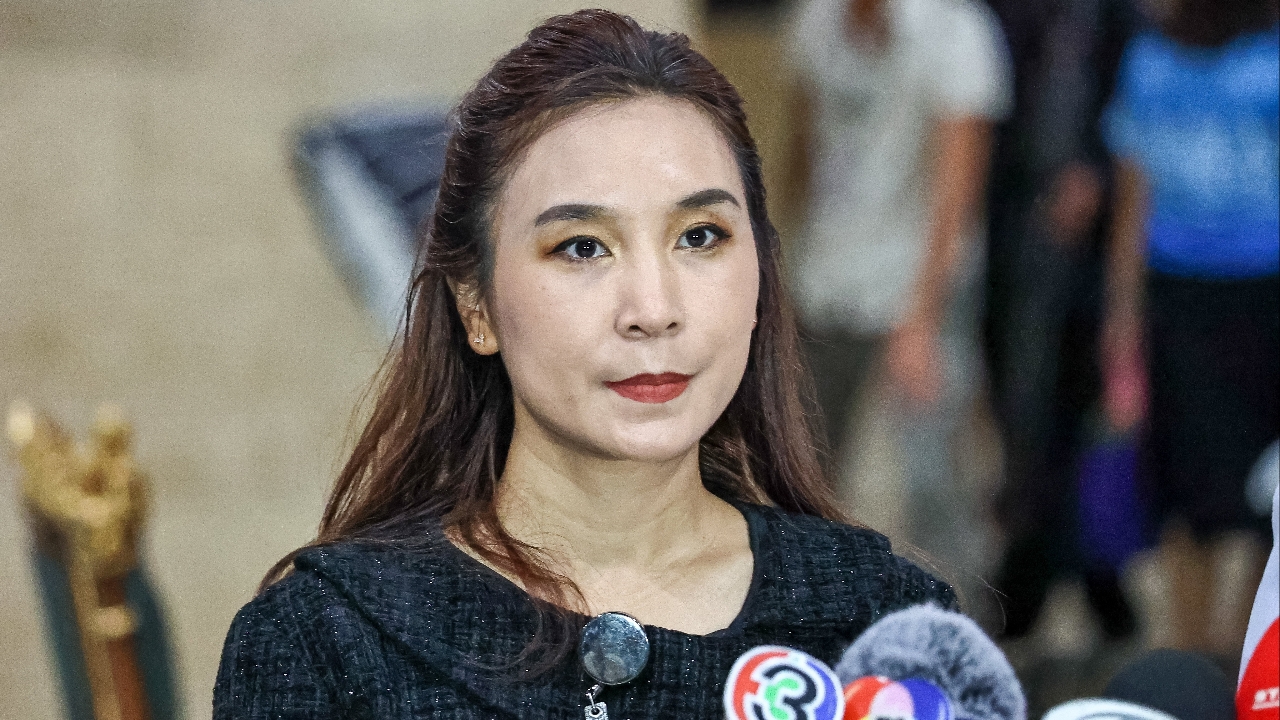
Sirikanya criticized the government for a complete 180-degree reversal, sending Pakorn to clarify with the private sector to counter Anutin's slip-up threatening to sue to silence critics. She advised Suchart, a minister-level official, to humbly accept criticism and use it to make improvements rather than resist it.
On 19 May 2026 GMT+7, Sirikanya Tansakul, a party-list MP from the Prachachon Party, commented on Deputy Prime Minister Pakorn Nilprapunt inviting the Joint Standing Committee on Commerce, Industry and Banking (JSCCIB) for discussions and clarifying that there would be no lawsuits to silence the private sector. She called this a complete 180-degree reversal because the issue needed to be resolved. She referenced Prime Minister and Minister of Interior Anutin Charnvirakul's repeated statements demanding evidence or warning that those without it could be counter-sued, questioning whether he misspoke. Pakorn had recently met with OECD representatives visiting Thailand to review processes, and it would not reflect well if OECD learned that a country seeking membership uses legal threats to silence whistleblowers exposing corruption. She viewed this as a misstep by the Prime Minister attempting to counter the narrative.
Sirikanya added that importantly, after talks with JSCCIB, the government established yet another committee to coordinate anti-corruption efforts, though it is unclear which number committee this is. Whenever problems arise or time is needed to resolve issues, such committees appear. However, lessons learned and myriad solutions for corruption already exist without forming new committees. The key is for the government to take decisive action, implementing systems rather than focusing solely on appointing good people to manage the country. Having such systems prevents even well-intentioned individuals from engaging in corruption. The Prachachon Party has proposed several measures including public data disclosure for transparency, reducing unnecessary licenses, and using technology to limit officials' discretionary power.
When asked whether she trusts the newly formed committee, Sirikanya said she 'cannot yet believe' it will truly be transparent. It is like stepping through the wrong door, requiring revisiting and reevaluating relationships with the private sector. She said it remains to be seen if genuine coordination can be achieved, noting that the Prime Minister chairs the committee again, which likely hampers its function. The Prime Minister chairs many committees but rarely attends meetings, which often occur only once a year, reflecting a lack of seriousness in combating corruption. The Prachachon Party intends to unite with the private sector to establish systematic and effective anti-corruption efforts.
When asked if the party would invite the private sector to provide information for government scrutiny, Sirikanya confirmed that this initiative, along with several others, has already begun. Individuals with private sector experience, such as Phiengphano Boonklam, have joined the Prachachon Party to support these efforts.
Earlier this morning, Suchart Chomklin, Minister of Natural Resources and Environment, showed displeasure with reporters after being questioned about corruption in the Pollution Control Department. Sirikanya said she understands Suchart's intent to protect civil servants, noting that the Pollution Control Department is relatively low risk for bribery. Nonetheless, she emphasized that a minister should humbly accept criticism and use it to close loopholes that enable bribery opportunities rather than opposing the private sector and media revealing such information. This approach would foster a cooperative environment to genuinely address the country's corruption problems.