

The Parliamentary Transport Committee plans to summon the Director-General of the Department of Railways, the Bangkok Mass Transit Authority (BMTA), and the police to explain the recent train-bus collision. The committee says that the approach to reduce train traffic through the city center does not address public needs. It recommends reviving the Missing Link project to connect suburban areas and criticizes proposals to tunnel under railway tracks, pointing out existing underground structures. They assert that if such tunneling were truly feasible, it would have been undertaken long ago.
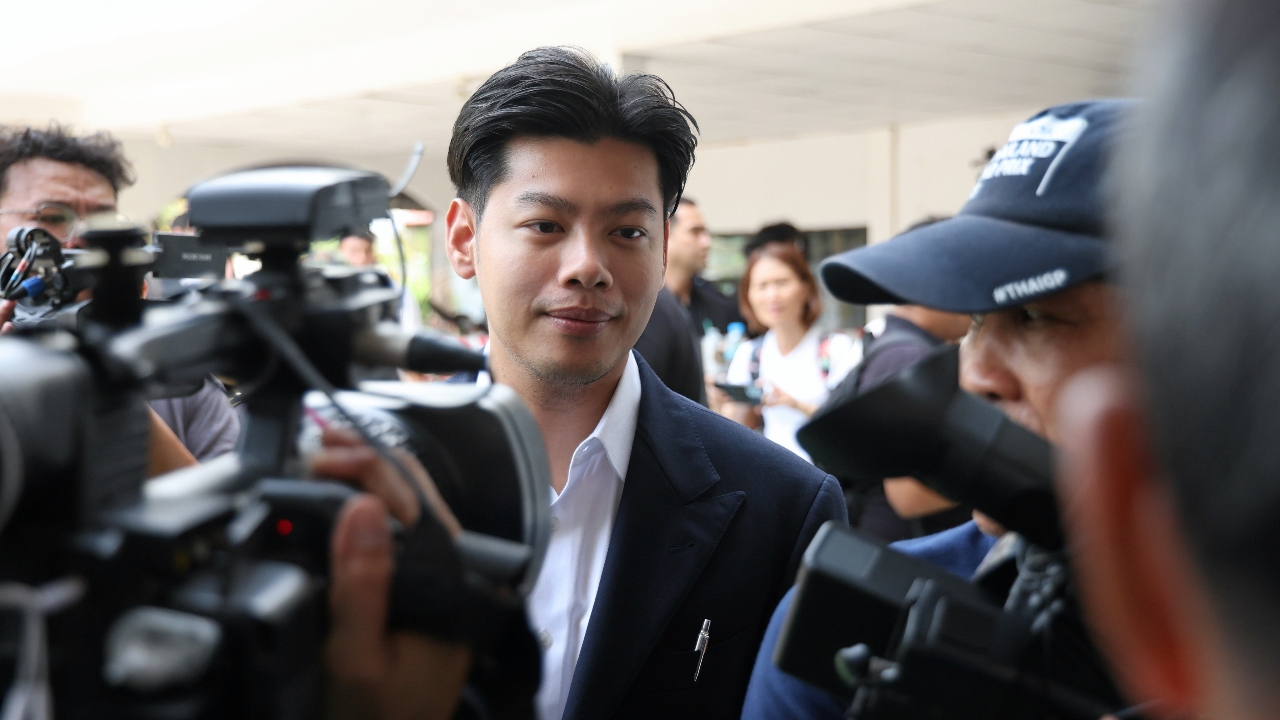
On 19 May 2026, Mr. Suphanat Meenachainan, MP for Bangkok from the Prachachon Party and chairman of the Parliamentary Transport Committee, spoke about bringing the train-bus collision at the Asoke-Din Daeng intersection for committee consideration on 20 May 2026. He said the review would cover three main issues: first, the cause of the accident—not just this case but other past incidents in overlapping areas—and problems related to vehicles obstructing traffic lanes. A comprehensive assessment of causes will be conducted first.
The second issue concerns solutions, including traffic engineering fixes, traffic management, and railway system integration to improve management. These represent short- and medium-term measures. The long-term issue involves projects that may need guarantees, such as the Missing Link project, which has been inactive for years. The third issue involves monitoring compensation for affected citizens, involving entities like the State Railway of Thailand (SRT) and the Office of Insurance Commission (OIC). They have stated that insurance funds are available in various areas, but a One Stop Service is needed to coordinate and inform the public, who currently cannot easily determine what insurance benefits or compensation they are entitled to. A designated government agency should manage this.
When asked whether the drug use detected in the train driver on 18 May would be considered by the committee, Mr. Suphanat confirmed it would. He said the committee had already issued invitations for the meeting. Drug testing and verification are necessary, as past frequency and record-keeping of such tests by the State Railway and other agencies like BMTA are unclear. This lack of clarity undermines public confidence, raising questions about how the driver passed inspection if the government claims regular testing is in place.
Additionally, the statement issued by the State Railway Labor Union (SRLU) contradicts the Director-General’s explanation about braking distances. This discrepancy requires inquiry into the calculation methods. Internal railway issues, including whether there are enough qualified drivers, will also be questioned as supplementary concerns.
Asked about criticism regarding the issuance of train driver licenses, with many drivers lacking valid licenses, Mr. Suphanat said the State Railway must first explain. He distinguished two cases: licenses expired but pending renewal approval (with temporary extensions), and new hires not fully onboarded, causing excessive workload on current staff. He noted the union’s statement came late; had it been earlier, the union could have been invited to clarify during the same session. If issues remain unresolved this week, he is willing to invite the union for further discussion next week to hear all perspectives.
When questioned about the union’s claim that valid licensed drivers number only 200-300, Mr. Suphanat said both sides must be heard before conclusions. The committee’s approach differs from the government’s—they do not accept agency explanations as final truth but seek facts through further questioning of all relevant parties, ensuring a thorough investigation.
Regarding Deputy Prime Minister and Minister of Transport Pipat Ratchakitprakarn’s statement about reducing trains through the city center and encouraging public use of other transportation, Mr. Suphanat said the original Red Line railway plan aimed to connect both western and eastern suburbs to Bang Sue Grand Station. Changing this plan suggests government support favors road transport over rail. He questioned this shift in policy.
He added that the problem lies not with the original plan but with slow implementation. Priority was given to the Airport Rail Link serving three airports, delaying this project which remains unresolved. He challenged whether this delay benefits investors who failed to execute their contracts and are now seeking contract revisions for their advantage. The government has faced criticism for years without decisive action, and this new version of the plan does not meet long-term public needs. He argued that long-term solutions should emphasize rail system integration rather than reliance on roads.
On the Prime Minister’s idea to tunnel under the Makkasan intersection, Mr. Suphanat pointed out that the area already contains underground structures including water systems. He questioned why previously conceived projects were not implemented—whether hesitation is due to associations with the Airport Rail Link project, a government blind spot.
Asked about traffic discipline issues criticized by the public, Mr. Suphanat divided the problem into four parts: law enforcement, traffic engineering context, infrastructure, and internal railway management. He said detailed traffic analysis is needed, including statistics on frequent traffic violations in the area, whether police were notified, and what actions were taken.
He added it is important to understand if citizens break laws due to unavoidable reasons, such as blocked roads preventing passage. Addressing such issues requires solutions. He reiterated the need to revisit the Missing Link project. However, studying it further may only delay solutions by three months, creating silence around the issue. He questioned whether Thailand will continue this pattern of neglect—failing to proceed with original plans, then changing plans only after problems arise, effectively restarting to buy time.