

The Prime Minister discussed anti-corruption measures with public and private sectors, ordering full disclosure of government data after personally encountering incomplete information requests. He declared that if any Prime Minister or minister is found corrupt, an investigation should be initiated immediately. He also criticized the CPI for compiling corruption statistics based on public sentiment, which harms the country.
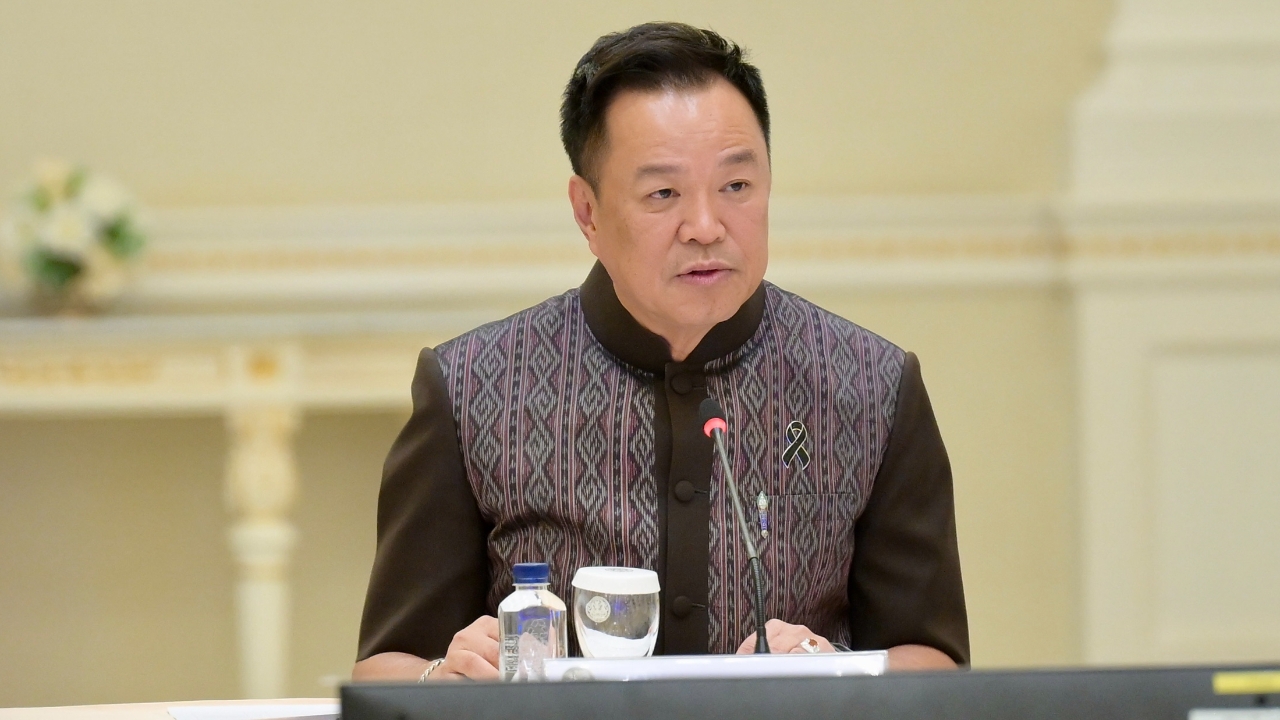
At 09:10 on 20 May 2026 at the Government House, Prime Minister and Minister of Interior Anutin Charnvirakul chaired the first integrated cooperation meeting between public and private sectors to enhance corruption prevention and suppression. Attendees included Deputy Prime Minister Pakorn Nilprapunt, Minister of Digital Economy and Society Chaichon Chidchob, Minister attached to the Prime Minister's Office Pradorn Prissanantakul, Mana Nimitmongkol, Chairman of the Anti-Corruption Organization of Thailand, representatives from the Chamber of Commerce and the Federation of Thai Industries, along with delegates from 35 government agencies and the Joint Private Sector Committee (JPSC). A coordination committee for anti-corruption (CCA) was also established.

He stated that this meeting arose from the government's awareness of public concern following private sector surveys on transparency in government operations by the JPSC. As head of government and leader of administrative agencies, he deemed it appropriate to listen and study everyone’s views to find solutions for preventing and combating corruption. He emphasized that the government’s policy addresses structural corruption by reforming approval processes to promote transparency and reduce risks of all forms of corruption. The government is also accelerating reforms of outdated laws and enhancing Thailand's anti-corruption image and credibility domestically and internationally.


Recently, an order was issued to establish the Coordination Committee for Anti-Corruption to facilitate collaboration among all sectors for concrete solutions and to improve Thailand's Corruption Perceptions Index (CPI) score. The Prime Minister expressed reservations about the CPI’s evaluation method but tasked all government agencies to implement policies to increase transparency in operations. He urged thorough checks at every stage to ensure compliance with laws and regulations, supported the use of modern technology and innovation to boost efficiency and transparency, and insisted on full public disclosure of operational information so citizens can see that work is transparent and free from corruption.

:" "I have been on the side requesting information and often faced exemptions—some data was available, some not, and some only partially. I instructed Pakorn to ensure full disclosure with no secrets because laws already authorize public information release. Even if exceptions exist, we will amend the laws to eliminate them so disclosure is complete, without opening and closing selectively." "Selective disclosure—only showing what they want the public to see and hiding the rest—cannot solve transparency issues and leads to corruption. I complained to the Secretary of the Office of the Public Sector Anti-Corruption Commission (PACC) about how this is allowed. If you see any civil servant, minister, or Prime Minister involved in corruption, report them immediately to the National Anti-Corruption Commission (NACC), courts, PACC, or Anti-Money Laundering Office—any authority with jurisdiction. These are legal matters that can be proven with documentation. If wrongdoing occurs and is successful, it must have been checked and leaves traces. I believe we will find cases to focus on thoroughly, and many communities will support by providing information and sources to investigate to the root."
The Prime Minister continued that when asked as an ordinary citizen—unrelated to politics but relying on public services and infrastructure—about corruption in Thailand, his answer is yes, corruption exists. All ten people asked would say yes. This perception must be addressed because it becomes statistical data making Thailand appear vulnerable and heavily corrupt in the international system. This perception negatively impacts international confidence in political stability, memorandum of understanding signings, cooperation, and investments. Foreign investors need assurance to use Thailand as a production base that generates income for the country. These effects cause significant damage.