

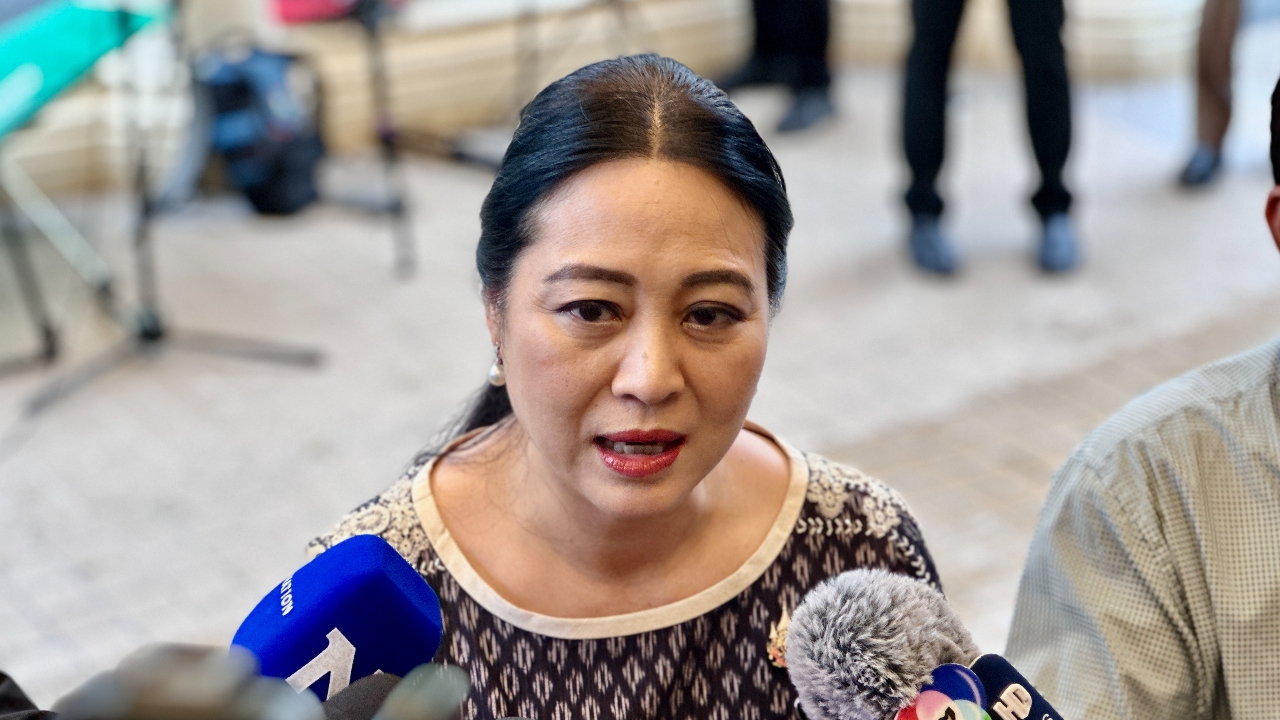
The Permanent Secretary of the Ministry of Natural Resources and Environment ordered all departments to scan for tasks at risk of corruption after summoning senior civil servants to discuss the Transparency Office poll results yesterday. The ministry is pushing to seal loopholes and establish SOP standards to ease concerns, insisting it will not protect wrongdoers.
At 08:53 on 20 May at the Government House, Mrs. Raveewan Phuridej, Permanent Secretary of the Ministry of Natural Resources and Environment, spoke about Environment Minister Suchart Chomklin assigning her to chair a meeting on 19 May to discuss private sector opinions on government transparency. She said the meeting involved all units, not just the Pollution Control Department, including deputy permanent secretaries, inspectors, and all department heads, not only 3-4 departments, because the ministry takes this matter seriously. Corruption issues have been heard continuously, with every government emphasizing reforms, including setting up independent agencies and promoting civil servant transparency. Thailand has been actively working on this, improving approval processes, and developing operational procedures and manuals.
When asked whether the Pollution Control Department requested information from the Transparency Office, Mrs. Raveewan confirmed yes. On 19 May, Minister Suchart assigned her to invite the Transparency Office to join discussions, but they likely received the invitation on short notice and did not attend or send representatives. However, the ministry held discussions to move forward; if there are problematic data, functions, or tasks within any agency, they want to address them. The ministry’s principle is not to protect wrongdoers but to fix and seal leaks. For example, if a factory has issues but no clear indication of whether the problem is with machinery or personnel, it takes considerable time to investigate.
Mrs. Raveewan said that if we want rapid results to seriously solve corruption, we must use the survey data, which are detailed and precise, not rounded figures. The media likely has seen these detailed figures calculated to decimal points. The ministry wants to see this data not to dispute but to use it constructively to address issues. They do not wish to know who provided the data but require some analysis. The ministry functions as both policymaker centrally and with field units handling many tasks like pollution control, waste, and wastewater. To quickly fix corruption leaks, they want to know how to move forward constructively and collaborate with the Transparency Office. Although invited, the Transparency Office did not attend, but now a joint working group between the ministry and Transparency Office has been established under Minister Suchart’s policy to seriously tackle corruption. This is seen as beneficial for the country’s progress.
Mrs. Raveewan stated that it is important to ask if the survey clearly described what each department represents and if respondents understood the questions. Fairness must be given, for example, to the Department of Mineral Resources, which is truly an academic unit. They have been monitoring and counting such issues for a long time, with anti-corruption centers in every unit. This is positive, and they will upgrade according to Minister Suchart’s orders. The ministry’s secretariat office will serve as the agency receiving complaints and managing them promptly, following existing principles of investigation and fairness toward officials, as established by the government. These will link with other agencies to create a direct channel for external information, which is important. The Transparency Office’s concerns are one voice among many the ministry takes seriously. The ministry’s social media monitors related matters continuously, indicating this is a serious task.
The Permanent Secretary said she has instructed all departments to identify their riskiest tasks because it is not yet clear which ones are most vulnerable. Each department head must know all their work areas, even if not related to licensing, such as procurement or other duties, and highlight one or two tasks to develop standard operating procedures identifying potential leak points or discretionary areas. This is crucial. The meeting emphasized transparency, reducing discretionary power, and publishing operational manuals with clear timeframes. Tasks that can be streamlined should be reduced. For example, among the four departments featured in the poll, the ministry is not neglecting others and expects them to implement similar system and personnel measures.