

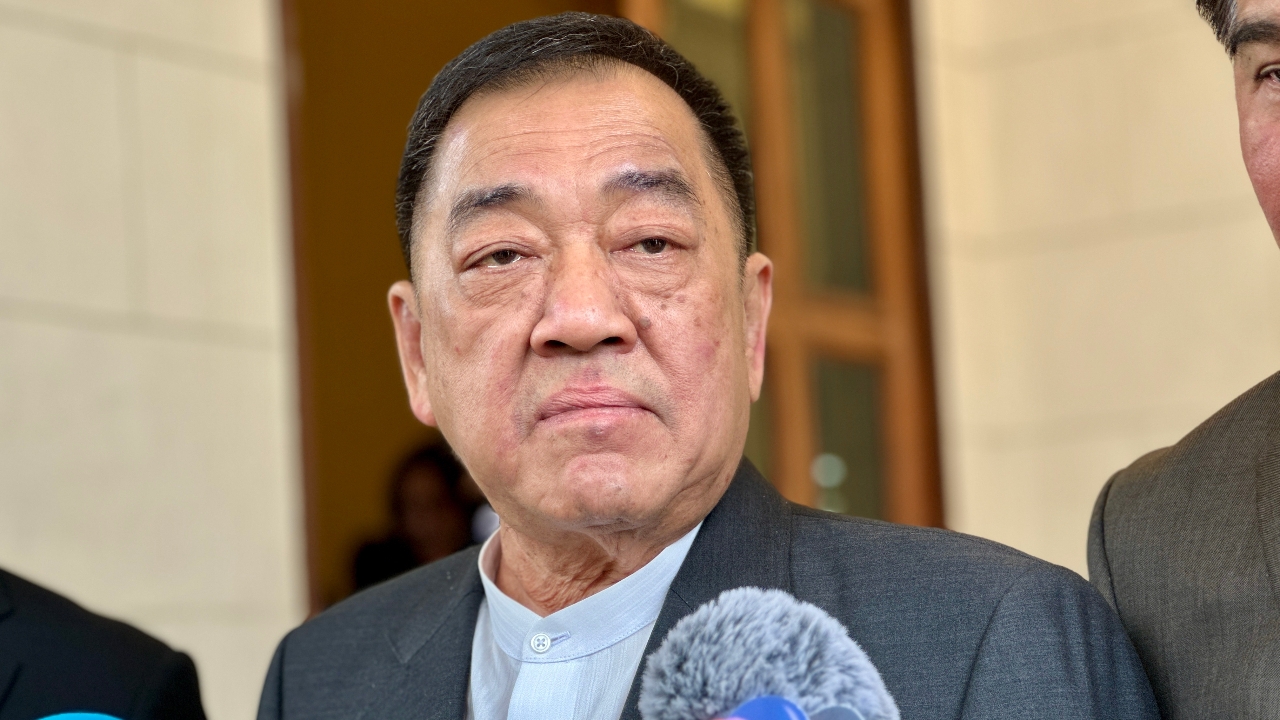
Poj, Chairman of the Thai Chamber of Commerce Council, revealed that the Prime Minister has assigned a policy to aggressively tackle corruption. He said he has already spoken with the Permanent Secretary of the Ministry of Natural Resources and Environment and plans to send detailed information on May 22 regarding the Pollution Control Department's bribery allegations. He emphasized that only survey procedures were requested, not in-depth data.
At 10:35 a.m. on 20 May 2026 GMT+7. Mr. Poj Aramwattananon, Chairman of the Thai Chamber of Commerce Council. , accompanied by Mr. Thanawat Polwichai, President and Advisory Chairman of the Economic and Business Forecasting Center, University of the Thai Chamber of Commerce. and Mr. Piset Saad-yen, Director of the Thailand Institute of Justice (TIJ), a public organization. He spoke after a government-private sector integration meeting to enhance corruption prevention and suppression at the Government House, expressing gratitude to the Prime Minister and government for establishing the Coordination Committee Against Corruption (CCAC) to investigate corruption issues.
Mr. Poj continued, He said the government has taken very swift action, which is encouraging. After setting up the CCAC in collaboration with academic agencies including the University of the Thai Chamber of Commerce, TIJ, and the Thailand Development Research Institute (TDRI), they compiled academic and factual data. The Prime Minister has given the policy that the government is sincerely committed to fighting corruption and will collaborate between public and private sectors.
When asked about the Prime Minister's statement that if there is information, it should be sent to responsible investigative agencies, Mr. Poj said these processes already exist. However, he believes this committee will build private sector confidence that sharing information will be safe. The CCAC has already consulted with the National Anti-Corruption Commission (NACC) and the Office of Public Sector Anti-Corruption Commission (PACC) and is prepared to cooperate fully. He urged the media to understand that all efforts by the CCAC ultimately benefit the nation and the people.
Regarding the question about the Pollution Control Department stating it has not yet received bribery survey data from the CCAC, Mr. Poj said discussions have already taken place. Mr. Thanawat added that the information will be sent on 22 May, with a complete draft ready. When asked if the information sent would be evidence to prosecute the agency, Mr. Poj responded by asking, "Prosecute whom?" He explained that he had just spoken with the Permanent Secretary of the Ministry of Natural Resources and Environment that the questionnaires align with those of the World Bank and OECD. The survey only asks if corruption exists; it does not target anyone specifically. He stressed that the data aims to highlight corruption problems but is retrospective; they must move forward.
When asked if another survey would be conducted, Mr. Poj said there is no need because the government has been established and collaboration is needed to solve the problem. He added that Thailand must overcome corruption, as it affects not just private business and the economy but the nation and society. If corruption remains deeply rooted and people are unaware of the problem, future generations will suffer. Therefore, new values must be created.

Regarding the issue that the Pollution Control Department requested survey results but has not yet received them from the CCAC, Mr. Thanawat disclosed that a meeting with the Pollution Control Department has been scheduled to deliver the data by 22 May. The draft is complete. He clarified that the Pollution Control Department requested information on the survey process, so the response will cover the questionnaire survey and data collection procedures. He said many agencies have already been clearly informed about the CCAC's processes. The data collection is broad-based, based on projects conducted with the Office of the Public Sector Development Commission and the World Bank, including public forums.
Mr. Thanawat added that this project aims to identify structural gaps; it does not specify which steps in each agency are problematic. In the future, they are ready to cooperate with various agencies for proactive investigations, to examine specific cases where agency procedures are flawed. He reiterated that they will not provide detailed data but are willing to coordinate to request information, with each request relating to procedural workflows.
Mr. Piset Saad-yen, Director of the Thailand Institute of Justice, added that the institute will hold workshops, providing a valuable opportunity to begin using empirical data to study and find solutions for corruption prevention. He emphasized that while the survey results reflect one aspect of the truth and are not sufficient for legal prosecution, they are highly valuable in helping system insiders recognize problems and analyze each step of their work processes to determine necessary reviews.