

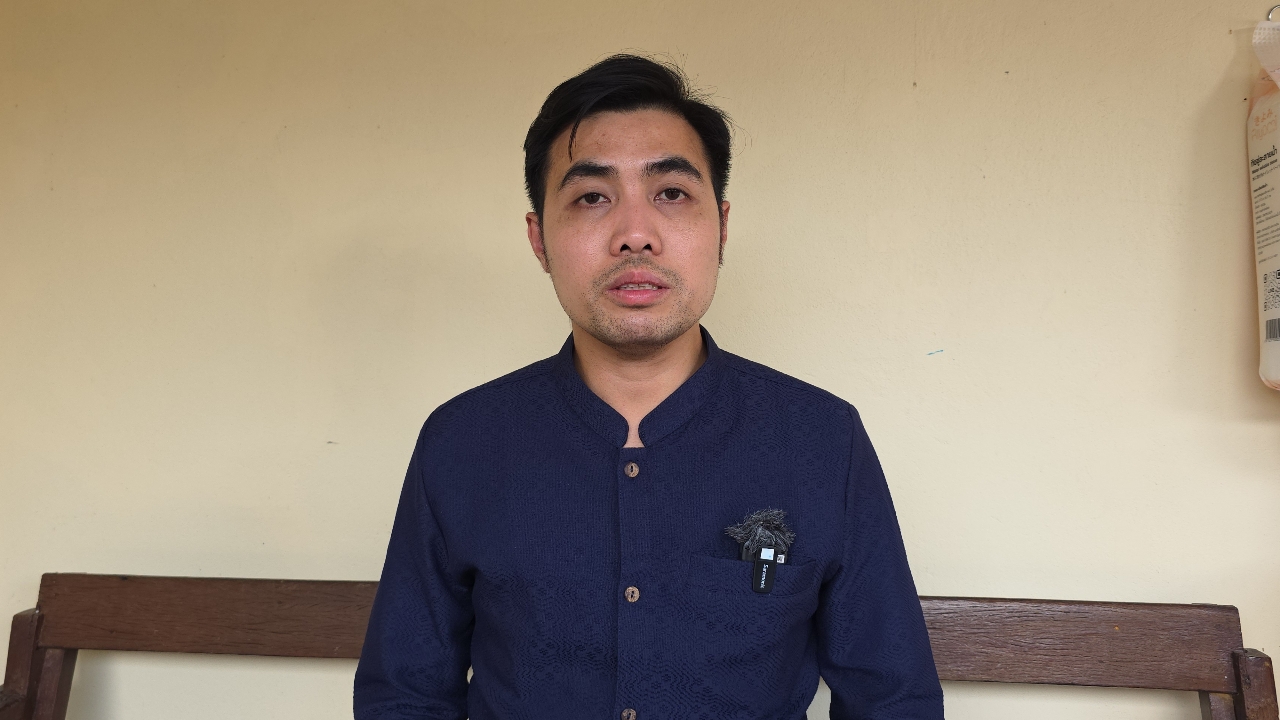
"Toto Piyarat" expressed doubts about the appellate court's reasoning in reversing his sentence to 3 years imprisonment. He affirmed that he did not commit the alleged acts and does not know who posted the content. He emphasized his intention to continue fighting at the Supreme Court level and has never thought of fleeing the Section 112 case. He stressed that his fight is principled, not reckless. He thanked everyone for their support and quickly prepared to return to parliament to continue his duties as an MP.
On 20 May 2026 at 15:50 GMT+7, Mr. Piyarat Jatephat, also known as "Toto," a party-list MP from the Prachachon Party, spoke by phone after being granted bail of 300,000 baht. This followed the appellate court's reversal of his case, sentencing him to 3 years imprisonment without suspension for charges under Criminal Code Section 112 and the Computer Crime Act. When asked about the reasons behind the court's reversal, Piyarat said the judge who read the verdict today was an acting judge assigned only to read the judgment, not the trial's presiding judge. Therefore, only a summary of the verdict was read. Overall, the court showed no particular stance and gave a brief reading, focusing on the last three lines, which stated that the prosecution's witnesses presented sufficient and convincing evidence for the appellate court to conclude that the defendant personally committed the offense. He found it strange that the appellate court did not consider that he had no chance to testify during the evidentiary hearing since the lower court found the defense witnesses lacked weight and dismissed the defense evidence to avoid wasting time.
He continued, "I find it confusing because normally, if an appellate court reverses a verdict like this, it should order the lower court to re-examine the defense witnesses and hear both parties thoroughly to remove any doubt. I don't know why the court decided to rule like this. This is an important case because it concerns my political future. I am currently requesting a copy of the full judgment to review the details."
When asked whether his true intention was not as alleged or if he recalled the nature of the Facebook posts at the time, Piyarat stated that he insists and will continue to argue in court that he was not involved in or responsible for the actions. The criminal court (first instance) acquitted him because it believed he was not responsible. The WeVo Facebook fan page had five administrators, and the lower court found no proof that he was one of them. Moreover, while he was imprisoned, posts continued on that page, which led the court to conclude that the prosecution could not prove he was the one posting.
Piyarat elaborated that the prosecution's evidence was limited to showing his car and his mother's car passing the incident location in Kalasin province. That was the only evidence presented. The prosecution could not prove his whereabouts or who was driving on that day. He explained that he owns seven cars—five in Bangkok and two in Kalasin—so it was not unusual for those cars to be in Kalasin. Considering the activities during 2020-2021, when the WeVo group was very active nationwide, he questioned how anyone could know if he ordered or controlled their posts. This is the core of the fight.
When asked again if he denied committing the alleged acts and did not know who posted on the page, Piyarat confirmed this, citing the lower court's ruling which stated it could not punish him because the prosecution admitted that the WeVo page was public with five admins, none identified conclusively. He expressed surprise that the appellate court reversed the lower court's verdict based on such limited evidence, noting the seriousness of the matter.
Asked about the unclear reasons for the appellate court's reversal and how he plans to communicate and fight at the Supreme Court, Piyarat said he believes the appellate court has clearly established its principle that the evidence is sufficient. Since the appellate court reversed the lower court without hearing witness testimony or seeing the trial atmosphere, he insists the defendant should be given a chance to present evidence again, especially since the defense never had the opportunity to call witnesses. He plans to present evidence about his whereabouts and activities on that day. He expects the case to take about one to one and a half years, or up to two years if prolonged.
Piyarat affirmed his principle of expressing political views with a desire to communicate with society, especially regarding Section 112. He said he has faced the cases head-on without fleeing and rarely requested court postponements, even when parliamentary votes on laws occurred. He fights on principle, not recklessly, and has confidence in the justice system. All three Section 112 cases at the lower court were dismissed, which strengthened his faith in the judiciary.
However, he said the recent appellate court decision causes him to question the criminal justice principles he has studied. He believes that to imprison a defendant, the evidence must be rock-solid. If there is doubt, the benefit should go to the defendant, as the lower court ruled. He trusts the justice system, which is why he fights. If the appellate court accepts the evidence as sufficient without allowing defense testimony, he fears public trust in the judiciary will be damaged. As a new member of the Parliamentary Committee on Court Affairs, he has had the chance to study the system but was surprised by this reversal.
Recently, a special correspondent in Kalasin province visited Mr. Piyarat's home. He said that after these events, many journalists and residents have inquired and expressed support. Piyarat thanked everyone for their encouragement and is preparing to return immediately to Bangkok because parliament is still in session. If he arrives in time, he will attend parliament today; otherwise, he will attend the next meeting tomorrow.