

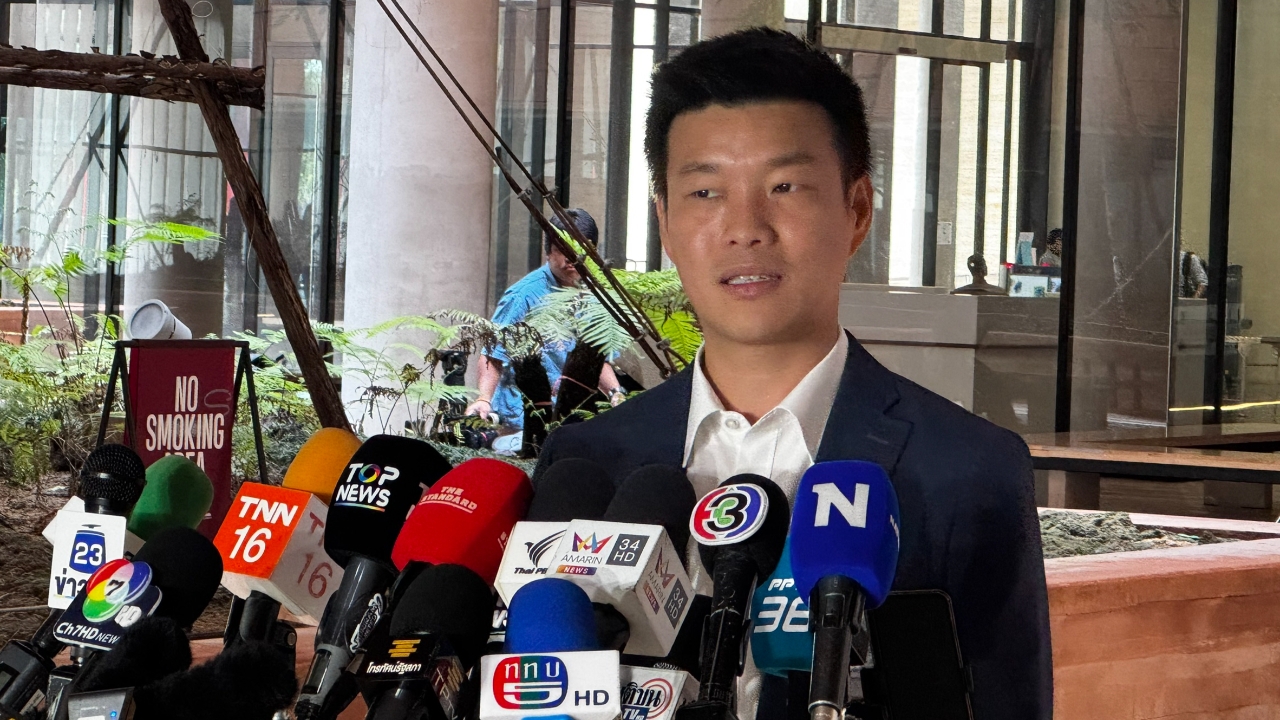
Nattapong, leader of the People’s Party, criticized Bhumjaithai’s constitutional amendment draft, saying it locks specifications to allow monopoly. He stated he does not intend to sign a second MOA and lamented having no bargaining power. He plans to submit the People’s Party's draft within 1-2 weeks.
On 21 May 2026, Mr. Nattapong Ruangpanyawut, leader of the People’s Party, spoke about the constitutional amendment requiring 20% opposition votes. Many expect the Kla Party might support Bhumjaithai’s draft. He said their duty is to uphold three principles: 1. Enable public participation at all stages, 2. Prevent any political party from monopolizing the process, 3. Avoid increasing the Senate’s (S) power in drafting the new constitution.
He said they must send these demands to all parties. The People’s Party is ready to endorse all drafts from parties aligned with these three principles. Despite needing 20% opposition support, some question whether the Kla Party is truly opposition. He cannot criticize Kla but also sends these demands to them, as with all parties, to maintain these three principles.
Regarding the prime minister’s claim that submitting the amendment draft reflects the people’s will, he disagreed. The people’s true will is for a new constitution that is the highest rule creating transparency and genuine public power. Thus, if the drafting process follows these three principles, it truly advances the people's will.
Asked if Bhumjaithai’s draft aligns with the People’s Party’s principles, Nattapong said he has seen some details and it violates all three principles. For example, it lacks a ballot allowing public choice of drafters. Although it claims no monopoly by allocating party proportions, it separates MPs and Senators.
He questioned whether any political group currently holds a Senate majority. If so, two of seven drafters would belong to that group plus their lower house MPs out of 500, exceeding half. This effectively results in a monopoly, he said.
Nattapong added that regarding the principle not to increase Senate power, the new constitution drafting is not an amendment, so it does not remove Senate power but rejects increasing it. He said Bhumjaithai’s draft violates all three principles and worries it won’t produce a truly people’s constitution.
Asked if they will reject Bhumjaithai’s draft, he said he hasn’t reviewed all details yet. The parliamentary process requires committee consideration. Political negotiation should aim to pass the draft most aligned with the three principles in first reading to negotiate further in committee (second reading). He will decide his vote based on future political context and party proposals.
Asked about the chance of signing a second MOA, Nattapong said they currently lack power to negotiate anyone to sign. Given political concerns that Bhumjaithai might dominate political institutions including MPs, Senators, and independent agencies, their only way is to base demands on the public, raise awareness, and submit amendments to Article 256, Section 15/1. Ultimately, a referendum will decide. If a draft passed in parliament appears monopolistic and detached from the people, the public can reject it in the future.
Regarding former Deputy Speaker Padipat Santipada’s suggestion that the government should directly appoint Mr. Newin Chidchob and family to write the constitution, Nattapong said this is Padipat’s opinion, which some may share. He reiterated the three principles and said any draft aligned with them, including the People’s Party’s, will guarantee no monopoly by any individual or even the People’s Party itself. He expects to complete and submit the People’s Party’s draft to the House Speaker within 1-2 weeks.