

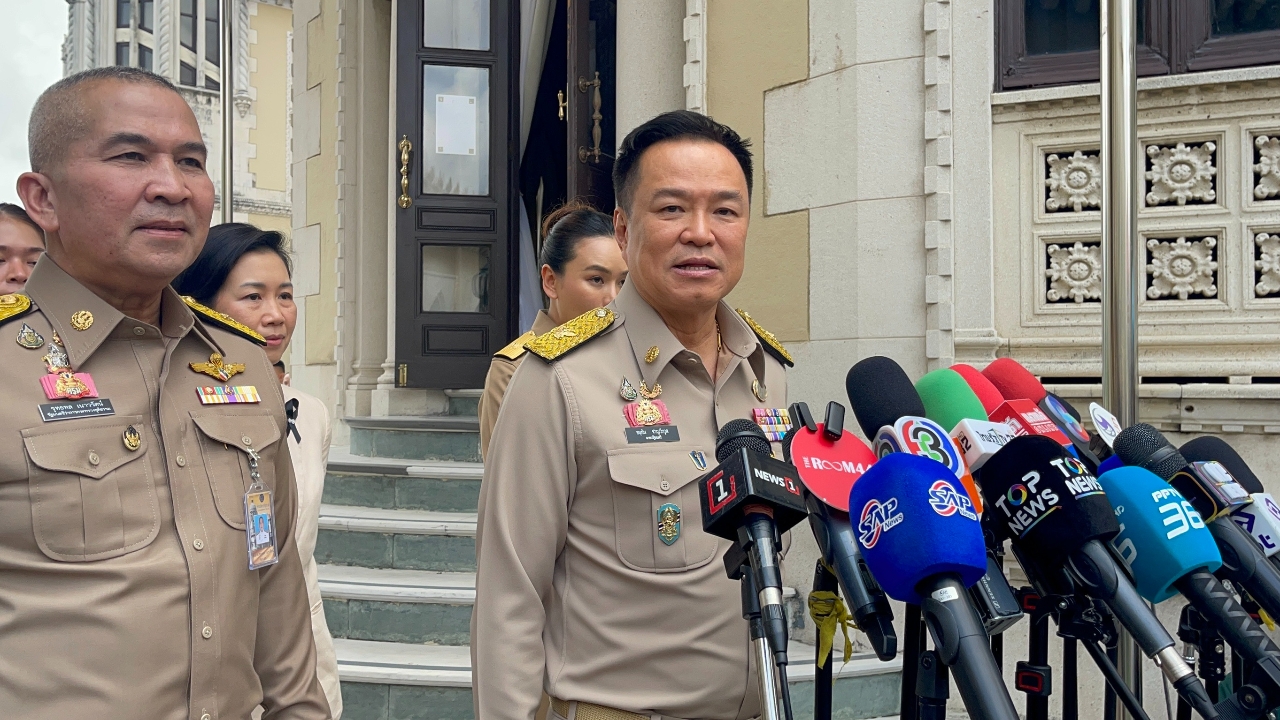
The Prime Minister leads a top economic team flying to Paris to discuss trade, AI, and fashion, declaring readiness to clarify the heated Thailand-Cambodia issue if the French president raises concerns.
On 21 May 2026, Anutin Charnvirakul, Prime Minister and Minister of Interior, announced his official visit to the French Republic from 21 to 27 May 2026. He described it as a great opportunity to meet major French entrepreneurs and investors. The highlight of the trip is a working dinner and informal talks with Emmanuel Macron, President of France.
The Prime Minister said that although the meeting is informal, it will be more valuable and productive than typical formal diplomatic encounters. The delegation size is limited to focus on substantive negotiations, including Deputy Prime Minister and Minister of Finance Ekniti Nitithanprapas, Deputy Prime Minister and Minister of Higher Education, Science, Research and Innovation Yossanan Wongsawat, and the Permanent Secretary of the Ministry of Foreign Affairs.
When asked about rumors of raising the Thailand-Cambodia dispute with President Macron, Anutin confirmed that if the French president inquires or shows interest in the issue, he is ready to respond immediately as the official responsible. He said security data and his personal experience are fully prepared, viewing this as a good chance to clarify the facts to the international community, especially France, which holds significant influence globally.
Regarding the main economic negotiation goals, the Prime Minister revealed a focus on future industries such as artificial intelligence (AI), clean energy, and enhancing trade value. He will also present Thailand’s readiness to serve as a key investment hub for foreign investors. Given France’s leadership in global fashion, he plans to showcase Thai raw materials, craftsmanship, and design to French businesses. While Thailand may still be developing brand recognition, its raw materials and skills are top quality. Food security is another area Thailand aims to highlight to build confidence among negotiation partners.
The Prime Minister emphasized the government’s trade negotiation stance and style, stating, “We do not use the term ‘bargaining.’ We absolutely do not bargain. This government does not secure trade deals through lobbying or bargaining, but through strength, readiness, and genuine buyer demand. We reject approaches that ask, ‘Can it be three baht? Or four or five satang?’ because that does not create any added value for the country.”