

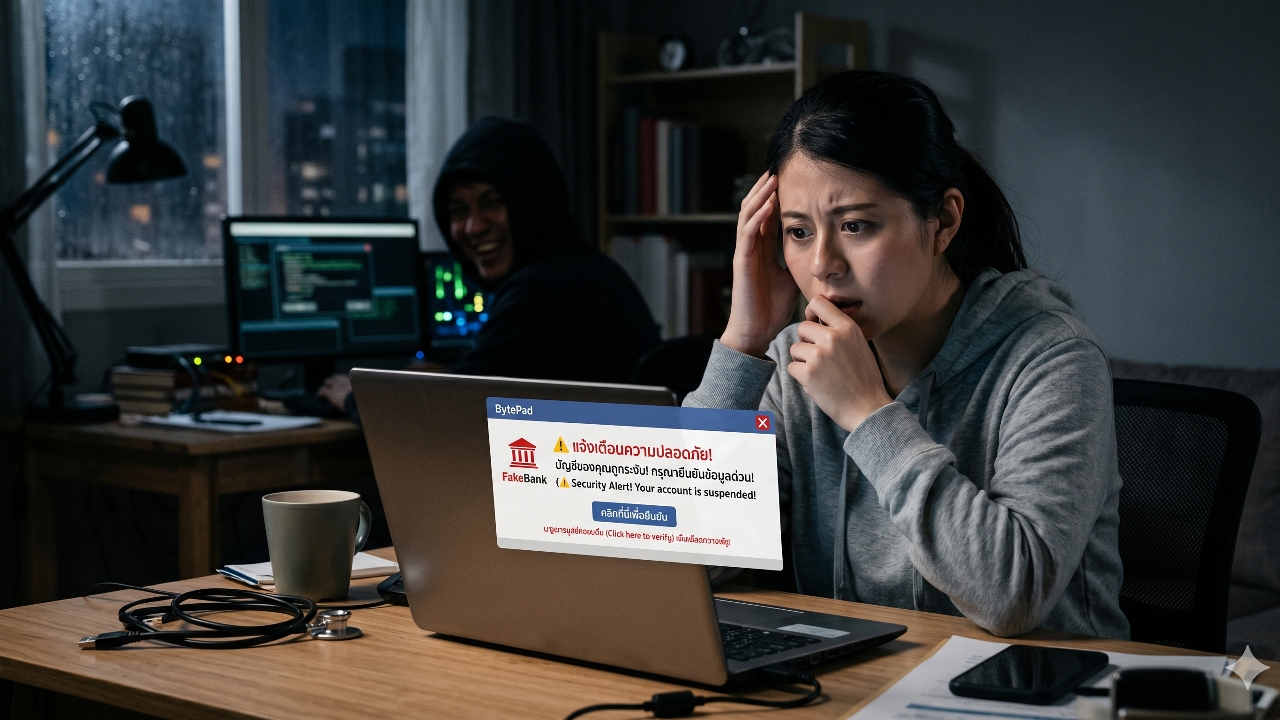
The Consumer Council announced good news that ETDA has introduced a new law to control advertisements on social media, but the bad news is that it will take another 180 days before it takes effect. They noted that 30 days would likely be sufficient.
On 21 May 2026, reporters reported that the Consumer Council posted on Facebook stating “The end of scammers placing fraudulent ads” ... but apologized that we must wait another 180 days. They added that the good news is ETDA has launched a new law to regulate social media advertising (especially the Fah app). This law requires advertisers to “verify their identity and undergo facial scanning.” This is to prevent impersonation used for scamming or fraudulent investment schemes.
But the bad news is that the law will take effect 180 days after the announcement (5 May 2026), which means early November 2026. The Consumer Council views this as “Isn't 180 days too long?” Since Thai people are scammed every day and money disappears every hour, while platforms continue to profit comfortably from advertising fees, they propose that 30 days would actually be enough now that the law exists.
They pointed out that the new law still has loopholes.
They also stated that this upcoming law has weaknesses, such as
- Data retention is too short: although an ad registration lasts up to one year, the law only requires platforms to keep advertiser data for 90 days.
- Lack of random checks: high-risk ads related to stocks, investments, and loans have no rigorous system for repeated inspections.
- No penalties for platforms: if Facebook does not comply with the law, there are no clear sanctions.
- Furthermore, the law does not require disclosure of the true client behind advertising agencies, preventing consumers from verifying credibility before making decisions.
They also expressed that platforms earn huge advertising revenue daily and should not leave consumers to face consequences alone. Laws must be stricter and platforms more accountable. They called for anyone hurt, financially or emotionally, by scam ads to share their stories and use #IWasAlsoScammed to demand accountability from platforms, urging people to stop remaining silent or ashamed and to stand up together.