

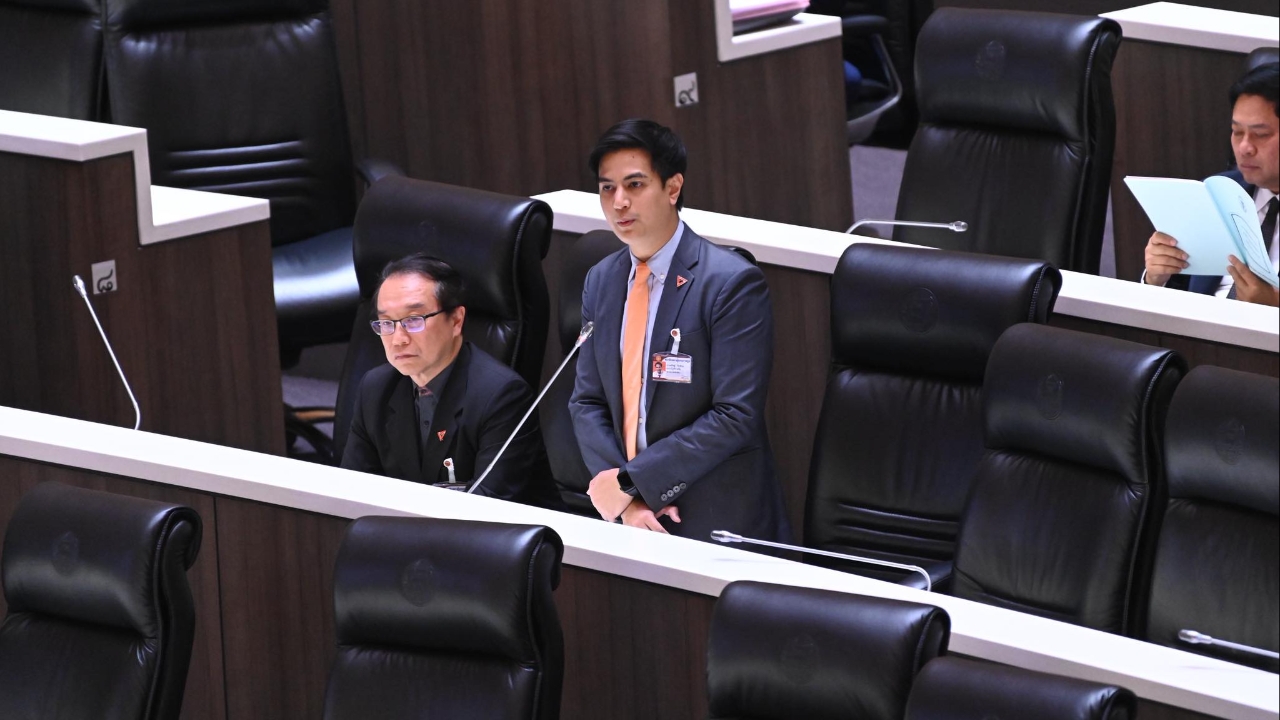
The Prachachon Party reveals a plan to push for constitutional amendments. "Ice Cream" hints at submitting two drafts to add a section on the Constitution Drafting Assembly, specifying 150 members elected by popular vote, removing the Senate's power.
On 25 May 2026, Mr. Parit Watcharasindhu, party-list MP of the Prachachon Party and Chair of the Opposition Whip Committee, disclosed plans to advance constitutional amendments. This week, the Prachachon Party plans to submit two draft amendments to add Section 15/1 on drafting a new constitution. The drafts adhere to three key principles: supporting public participation in electing drafters, preventing any single faction from monopolizing content, and not increasing the Senate's (S) power or giving it special conditions to decide on the new constitution's content. Full details will be finalized and MPs will sign off during the party meeting this Tuesday.
Regarding the structure of the Constitution Drafting Assembly (CDA) in both drafts, it is set at 150 members, divided between regional representatives and representatives of specific groups (occupational/social groups). All must be elected by the public. The difference lies in the screening system: Draft 1 has the public elect 150 CDA members who are then approved by parliament as a whole (no individual vetoes allowed). If parliament rejects them, a new election must be held. Draft 2 has the public elect 300 CDA members, from which parliament selects 150. Additionally, the CDA can appoint drafting committees, including experts or outsiders, with a work timeframe capped at 360 days. The CDA may continue its duties even if parliament is dissolved or its term ends.
Furthermore, the draft amendment states that the CDA has the authority to draft a completely new constitution, except changes to the form of government or state structure, which are prohibited under Section 255. Once the CDA completes the draft constitution, it must return it to parliament for approval, requiring a majority vote of all members (without special conditions related to the Senate's vote). Only after parliamentary approval will the draft constitution be put to a public referendum for final approval.