

Abhisit launched the "Srong Rat" platform, using AI to pilot an audit of government AI projects, uncovering more than 1,200 projects with a budget exceeding 4.2 billion baht, revolving around just three company groups with cross-shareholding and political party donations.
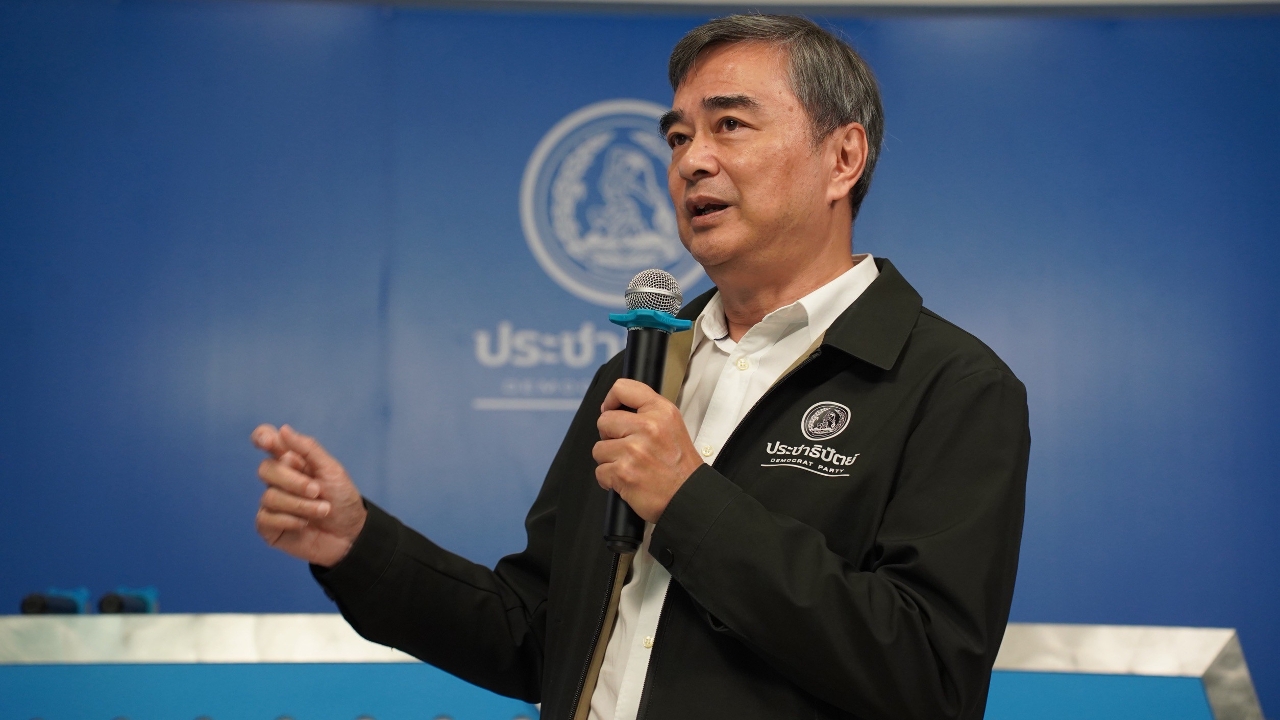
At 14:00 on 25 May 2026 at the Democrat Party headquarters, Mr. Abhisit Vejjajiva, party leader, together with Ms. Kadee Liaopairoj, party-list MP and deputy leader, held a press conference to launch the "Srong Rat" platform. This platform uses artificial intelligence (AI) to audit government agency budget projects, aligning with the Democrat Party's policy on its 80th anniversary and fulfilling its campaign promise to promote government transparency, especially in procurement, so that citizens can participate and scrutinize for economic benefit.
Mr. Abhisit stated that the Democrat Party is ready to use the "Srong Rat" platform, initially internally within the party, to monitor and audit budget usage and procurement in interesting government projects. They will collect data on government project groups for AI analysis. The first group under review is government AI-related projects, totaling 1,276 projects with a combined budget of 4.271 billion baht. Many projects have failed to yield benefits, such as the AI skills upgrading project for Thai people or the AI Passport project, which are at high risk of corruption. The party is concerned about potential corruption and the lack of a related government strategy, noting that government agencies claim these AI projects improve public access to information that citizens can already access.
Mr. Abhisit added that they will examine the terms of reference and project details, finding risks of corruption, inefficiency, and non-compliance with standards set by the Organisation for Economic Co-operation and Development (OECD). The government aims to join the OECD within two years. Their review found that despite a budget of over 4.2 billion baht, only three private companies are involved in all procurement projects. These companies are linked through cross-shareholding or executive relationships and have donated to certain political parties. As the opposition, the Democrat Party will use this tool to audit AI-related procurement and other projects, currently reviewing several with specific procurement patterns, especially in the Ministry of Higher Education, Science, Research and Innovation; Ministry of Education; and Ministry of Digital Economy and Society, where issues have begun to arise. Some ministers have delayed projects, and the party is monitoring changes in procurement formats. They invite citizens with information on irregularities or suspicious activities in government projects to report to the Democrat Party for investigation via the platform. Once stable, the system will be accessible to the public.
"I want to address the government, which recently held a meeting with the private sector and the Prime Minister, urging corruption prevention by adopting AI for oversight so that the government need not launch costly projects. Since the party has already used this platform, we request the government to disclose information for public scrutiny to meet OECD standards and enhance transparency. If severe corruption is found, it may lead to a no-confidence debate against the government. However, initially, legislative mechanisms such as parliamentary committees, question sessions, or motions can be used for oversight." Mr. Abhisit concluded.