

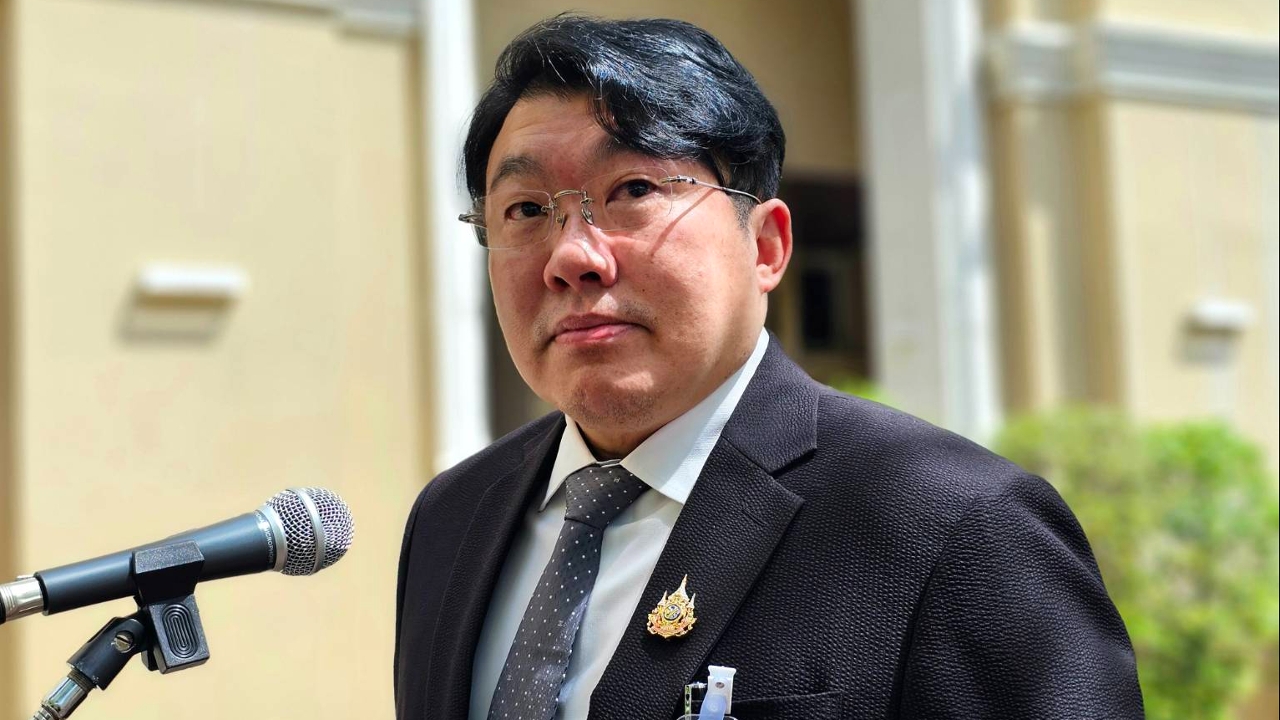
Siriphong plans to leverage technology to install automatic railway crossing barriers, replacing 100% of human operators, using a special fund budget to prevent recurring incidents. He emphasized this should have been done long ago and revealed that victim compensation is nearly complete.
At 10:00 a.m. on 26 May 2026 at Government House, Mr. Siriphong Angkasakulkiat, Deputy Minister of Transport, spoke about compensation for victims of the train-bus collision at Makkasan Intersection. He stated that compensation has been provided for 6 out of 8 victims by the Bangkok Mass Transit Authority (BMTA) and the State Railway of Thailand (SRT). Initially, families will receive 2,090,000 baht each, with an additional 300,000 baht pending from the Rights Protection Fund, which BMTA and SRT are arranging to request.
Mr. Siriphong said that for injured victims still hospitalized, BMTA and SRT have visited their families and are providing preliminary care. For other victims, actions will continue accordingly.
Mr. Siriphong also addressed legal proceedings, saying the Department of Rail has filed complaints against the train driver for negligence and against all individuals who parked vehicles on the railway crossing area for negligence and traffic violations.
When asked whether there would be a lengthy review process, especially since Parliament has been closely monitoring the issue, Mr. Siriphong said there is no need to review the lessons learned. The Ministry of Transport has never mentioned conducting such a review because it believes these measures should have been implemented long ago. He quoted Prime Minister and Minister of Interior Anutin Charnvirakul, who said that accidents are simply waiting to happen.
“When we drive through that area and see the traffic conditions, we think an accident is bound to happen someday. Even seeing motorists or motorcyclists ignoring the barriers highlights the need for proper management,” Mr. Siriphong said. Mr. Siriphong added.
He acknowledged that many locations nationwide serve as informal railway crossings where communities use the tracks as shortcuts, but safety equipment is often inadequate. These issues need immediate resolution. The Ministry of Transport has already discussed this, with the Rail Development Institute preparing plans for the SRT. They will use the Road Safety Fund budget to improve crossing points for road safety, starting in Bangkok and its vicinity before expanding nationwide. This includes installing signal lights or warning horns at many informal crossings currently lacking such measures.
Mr. Siriphong said that within the next 1-2 years, it will be necessary to implement automatic barriers or use technology because current signaling systems are standard but the barriers are manually operated by personnel. Although automatic systems exist, they are not yet fully implemented. The goal is to maximize safety and minimize human error.
When asked about the possibility of installing full-length metal barriers like in other countries to prevent motorcycles from passing under, Mr. Siriphong said this could be a good system, but practical details need consideration. Such measures may need to be combined with other solutions, and they are seeking the best approach.
When asked if the SRT's suggestion to increase staff managing crossings is feasible, Mr. Siriphong said that while it is one proposal, he believes technology is the best substitute for personnel. The problem has been that staff numbers were reduced without technological replacements. If more staff are hired, it should be in new formats, not long-term commitments, possibly as task-based contracts only.