

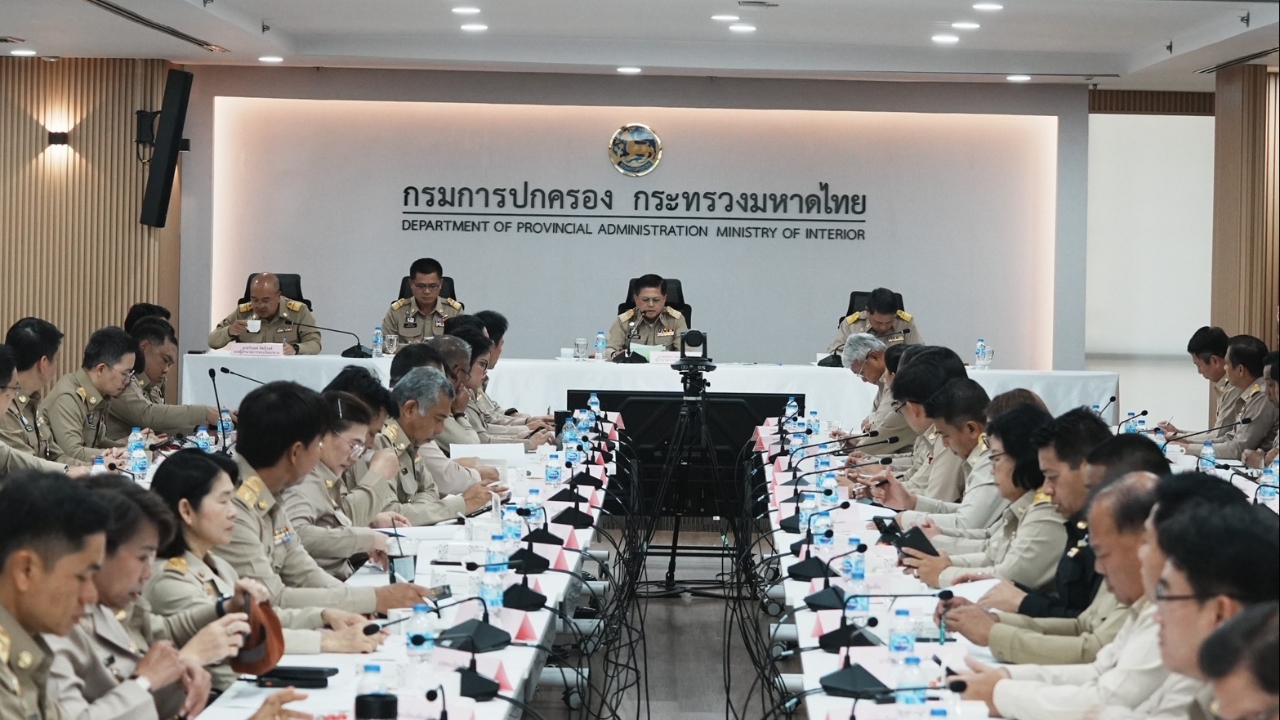
The Department of Provincial Administration has ordered a nationwide review of marriage registrations to prevent "sham marriages," aiming to stop foreign criminals from reestablishing themselves, warning that corrupt officials will face severe penalties.
On 22 May 2026 GMT+7, Mr. Naruetcha Khosasivilai, Director-General of the Department of Provincial Administration, signed a letter to all provincial governors, urging district, municipal, and local registrars nationwide to strictly enhance "measures to prevent corruption in marriage registration." This follows findings that criminal networks and foreign criminals increasingly use "sham marriages" as a tool to infiltrate and exploit Thailand improperly, threatening the security and credibility of the civil registration system. Complaints have also been received about some registration offices possibly not complying with the law.
The measures call for thorough screening of three key high-risk groups: 1. Foreign nationals, who must undergo strict passport and certification checks from their home countries; 2. Ethnic minority groups and indigenous peoples (categories 6 codes 50-72 and category 7); and 3. Unregistered individuals (codes 0-89 and 0-00).
Additionally, four anti-corruption mechanisms have been strengthened: real-time checks of marriage history to prevent multiple marriages; immediate separate individual interviews if suspicion arises to avoid collusion in testimonies; strict control over foreigners' single status certificates, which must be officially certified by the Ministry of Foreign Affairs; and a key highlight—the introduction of a new trilingual (Thai, English, Chinese) investigation record form (PK.14), which clearly states criminal penalties for false reporting.
The Director-General emphasized that if a registrar suspects a sham marriage, they may exercise discretion to deny registration immediately. Officials are strictly forbidden from soliciting any benefits beyond the legal fees. Any facilitation or corruption discovered will result in immediate and severe disciplinary action.