

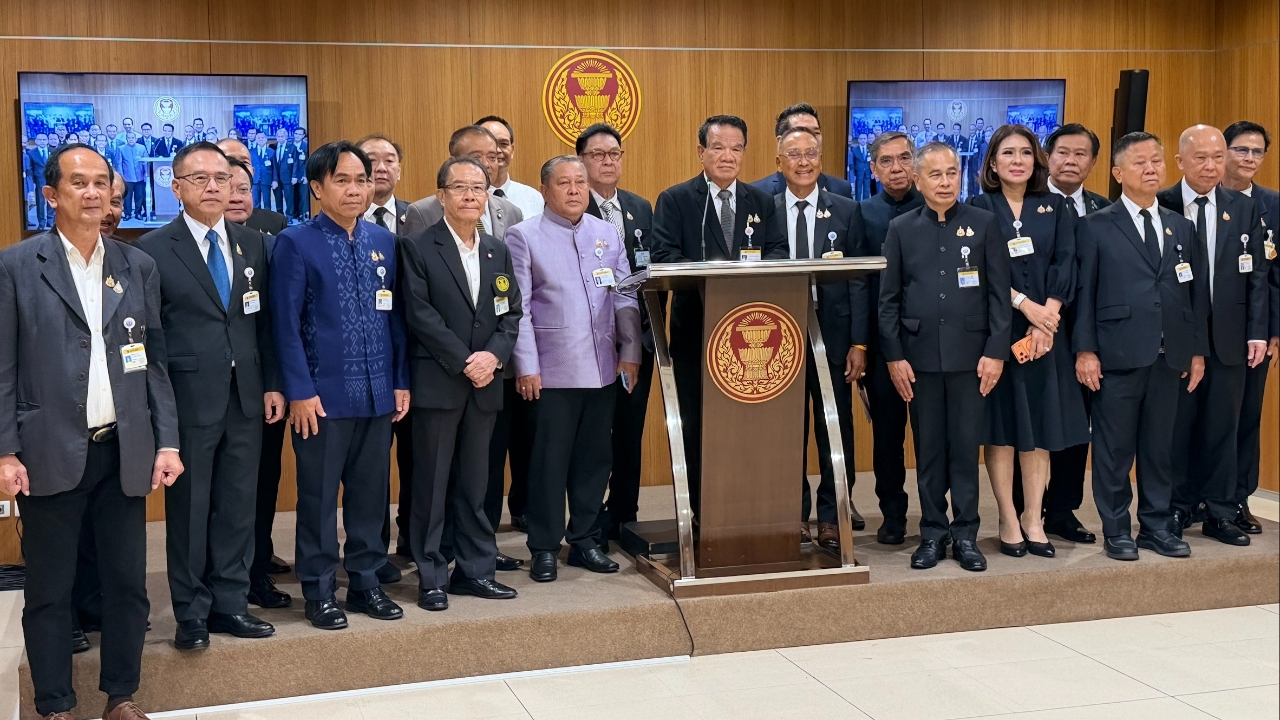
A senator is outraged, calling for prosecution under Section 112 against Piyabutr and Natthapong for disrespecting the Privy Council and spreading the rhetoric of "blue color dominating the country," which is destabilizing the institution.
On 26 May 2026, the Senate Special Committee for the Protection and Upholding of the Monarchy, led by Pol. Maj. Gen. Chatwatt Saengphet, a senator and deputy chairman of the committee, held a joint press conference responding to Piyabutr Saengkanokkul, Secretary-General of the Progressive Movement, who posted a message proposing the abolition of the Privy Council appointments after images showed nine Privy Councilors meeting with the Department of Disaster Prevention and Mitigation. They stated that the behavior of the People's Party and its leaders poses a danger to the constitutional monarchy under the King, aims to mislead public understanding of the Privy Council’s role, and intends to impact the institution. Such behavior has been ongoing since the Move Forward Party proposed amending Section 112. The committee will take strict legal action against those individuals and the People's Party to protect the institution.
Pol. Maj. Gen. Chatwatt also addressed the case of Natthapong Ruangpanyawut, a party-list MP and leader of the People's Party, who posted about the "blue color regime dominating Thailand." It is widely understood among the public that "blue color" refers to the monarchy. This action creates rhetoric aimed at shaking public confidence in the institution, constituting a violation of Section 112 of the Criminal Code. It is not ordinary criticism but covertly links colors and individuals around the monarchy in a hidden manner akin to "harming the ox by striking the yoke," attempting to evade the law.
Therefore, they call on relevant authorities to immediately investigate this behavior. They also warn that the actions of the party leaders this time could directly affect the Supreme Court's consideration of the cases involving 44 former MPs. Although the court has not ordered suspension from duty, it has clearly stipulated prohibitions against repeated offenses.