

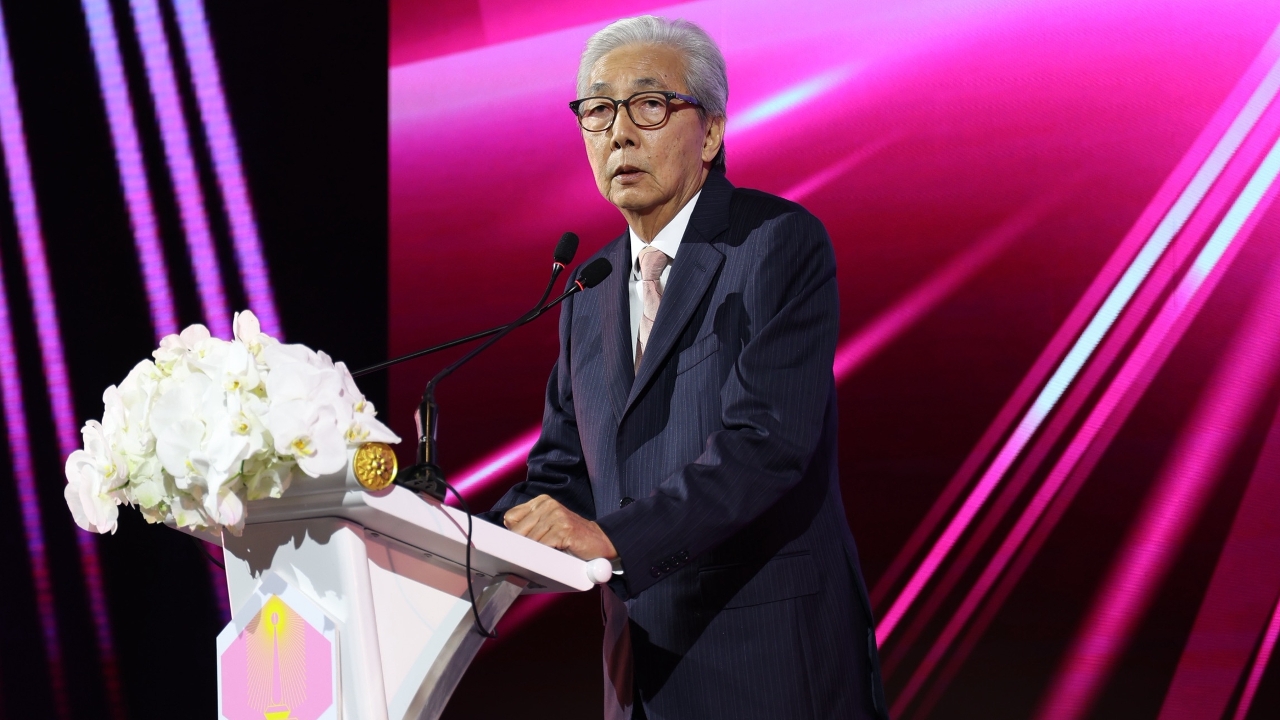
Somkid dissects the Thai economy facing a "crisis within a crisis," urging restructuring of prices to aid grassroots people, and points to opportunities to attract foreign investment in the second wave of the "Chotichuangchatchawan" era, scrutinizing closely to accept only quality GDP.
On 27 May 2026 at Dusit Thani Hotel, Mr. Somkid Jatusripitak, former Deputy Prime Minister, former Finance Minister, and former Commerce Minister, spoke at the TIAM UDOM Dinner Talk 2026 on "Preparing Udom for Economic Resilience," organized by the Alumni Association of Triam Udom Suksa School under Royal Patronage. He shared his vision and perspectives on the country's situation, the crises and economic opportunities amid current global challenges, while reflecting on deep-rooted problems and highlighting Thailand's investment prospects on the world stage.
Crisis Within a Crisis
Somkid began by pointing out that while the world is struggling, Thailand is facing a crisis within a crisis. Long-standing problems remain unresolved, including continuously slowing GDP growth, a manufacturing sector lacking value addition, widespread poverty, and severe inequality. These old issues collide with new crises like war and rising oil prices pushing inflation higher. The government is thus preoccupied with short-term fixes but should focus more on aiding grassroots people, farmers, and small and medium enterprises (SMEs), who are currently enduring severe hardships.
"Right now, we face fierce threats, but the real danger is that if old problems aren't solved, the future will be truly difficult. Thailand's problems are like pork meat with tough sinews—cutting them out is temporary as they keep coming back. Our country is like walking in circles, sometimes slipping backward. I want to say, don't lose hope. Thailand has gone through many crises; I've experienced many myself. Just keep your spirit and mind clear, and opportunities to move forward will always arise. But if we lose hope, nothing is worse. Our minds get stuck, and we cannot move on."
Calls for Oil Price Restructuring and Demands for Capital Governance
Somkid stated that the oil price structure is the root cause of high product prices. The government should not just fix problems by borrowing money to subsidize but address the core issue of oil pricing. If oil prices do not soar, product prices won't increase accordingly. Why does Thailand peg its oil prices to Singapore’s market when it can refine oil domestically at lower costs? Pricing should be reconsidered to reflect reality. In times of crisis, large oil companies with huge accumulated profits should consider reducing marketing fees to help the public. The Ministry of Finance, holding a 51% stake, should use its authority to direct price reductions to stabilize the situation rather than collecting taxes for the oil fund, which risks leakage. Instead, reducing oil taxes at the source to slow price increases would better ease the burden.
"Oil company executives and refinery managers must consider that modern business management involves social responsibility. Earning profits and bonuses won’t bring peace of mind if people are struggling so much."
New Investment Opportunities
Somkid continued that despite the crisis, he sees sparks of hope from the continuous surge in investment promotion applications (BOI) from various countries and industries. These industries were previously invited 6-7 years ago but declined, citing Thailand's unreadiness. Today, these investors are coming voluntarily without solicitation. This phenomenon represents a major opportunity reminiscent of the country’s prosperous 'Chotichuangchatchawan' era, like a second wave of investment rising.
However, Thailand must learn from past lessons and redesign its investment promotion approach. New measures should not rely solely on investment value but also consider benefits that address the country's future needs. Thailand must focus on quality GDP, not just quantity. It must reject gray area investors and act as the architect designing the country's direction, for example, by requiring investors introducing artificial intelligence (AI) to also help train and develop Thai personnel.
"We have learned this time. We no longer want quantitative GDP alone. The critical turning point is that incoming GDP must be quality GDP. What does quality mean? It means that among those applying, we won’t let indiscriminate investors in. We do not want gray Chinese capital. We need architects to design our future direction."
K-Food Lesson Contrasting with Thai Food
Somkid cited the success of Korean food (K-Food), which the South Korean government and private sector jointly promoted through the popularity of Korean dramas and pop music. Today, K-Food exports reach $13 billion, with the relevant ministry aiming for $21 billion next year. In contrast, Thailand has declared itself the world’s kitchen for 20 years, yet its promotional menu remains stuck on the same dishes like Pad Thai, Tom Yum Goong, and Som Tum, making it difficult to expand globally. Thailand lacks advancement through biotechnology and packaging. He also proposed adopting a Taobao Village model by involving foreign e-commerce platforms to teach villagers online sales and logistics management, elevating community products and alleviating poverty.
New Agreement Between Government and Civil Society
Therefore, to seize these opportunities, Thailand needs a strong-performing government that can build an investment ecosystem alongside a politically awakened civil society to monitor state operations.
"I dream that the Thai government will talk to the people, saying that our country is at a critical point where change and opportunity are coming, but problems abound. It’s time to commit fully and seriously, announcing a New Deal for a new future or a new agreement for Thailand’s future."
Mobilizing Talented People into Politics
At the end, Somkid urged alumni of Triam Udom Suksa School to move beyond their specialized expertise and actively participate in politics to bring about change for the country.
"I want to see Triam Udom students enter politics to make greater contributions to the country. If they are prepared and shaped to understand responsibility to themselves and society, that is the true contribution, and the real impact of Triam Udom will manifest immediately."
