

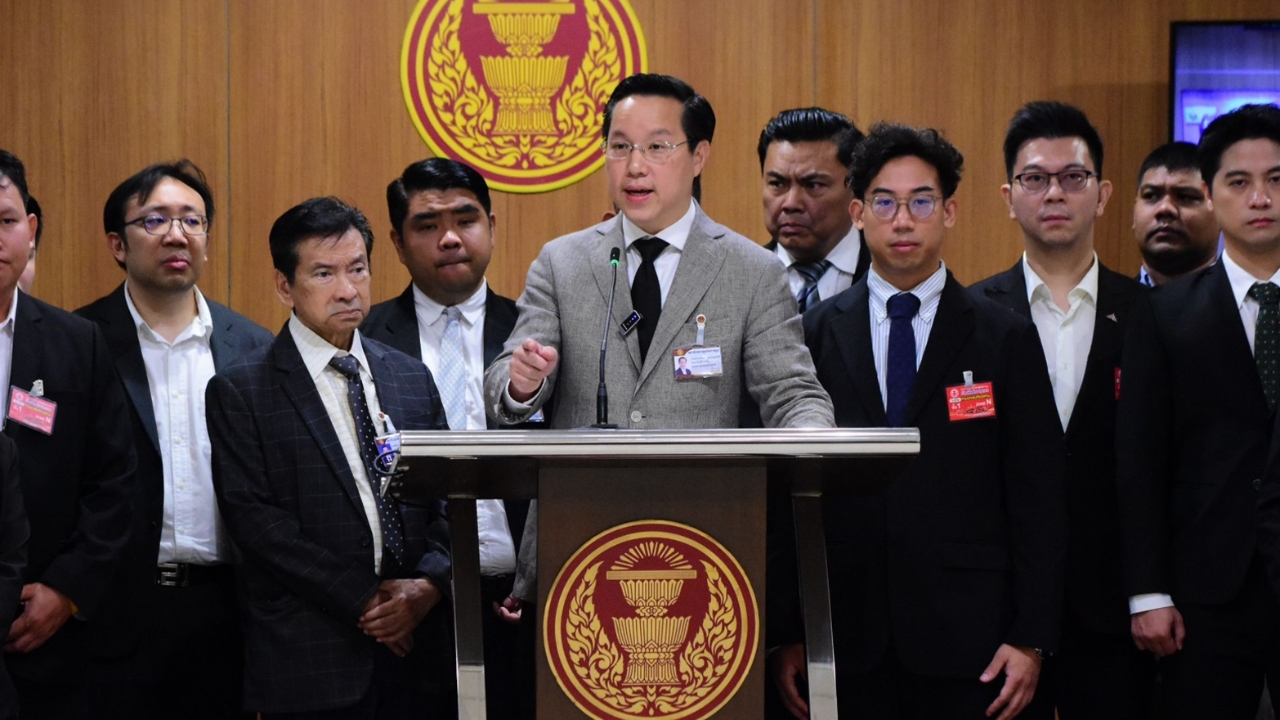
Attawit strongly opposes the export of jet fuel, urging the government to stop it. He exposes permanent officials in the Ministry of Energy for withholding information because they hold dual roles—both regulating and sitting on refinery management boards—thus benefiting from shared profits.
At 10:00 a.m. on 27 May 2026 at the Parliament, Attawit Suwanpakdee, party-list MP and deputy leader of the Ruam Thai Sang Chart Party, held a press conference opposing the export of JET A1 jet fuel. He said the National Security Council (NSC) announced the export of JET A1, claiming oil storage tanks were full and could not hold more. He called this a serious matter and demanded an immediate halt to jet fuel exports. Currently, the Persian Gulf conflict and the Strait of Hormuz remain closed. Today, JET A1 can be refined into multiple products, including diesel, gasoline, kerosene, and jet fuel. Many Thai refineries have already adjusted their refining formulas. However, permanent Ministry of Energy officials provided incomplete and inaccurate information to the NSC: first, the claim that storage tanks are full is false. The state enterprise BAF, which owns storage facilities at Suvarnabhumi and Don Mueang airports, still has about half its capacity available, so JET A1 is not genuinely in surplus nationwide. Second, the Ministry officials did not fully disclose that refineries have adjusted formulas to produce more JET A1 at the expense of diesel, which remains scarce domestically. Exporting JET A1 further increases refinery profits. This information was withheld from the NSC.
"The consequence is that approval was given to export JET A1 so refineries can sell fuel at higher global prices, when in reality the fuel should be reserved for domestic use in any form. Previously, I negotiated with domestic airlines, who were willing to reduce ticket prices if jet fuel costs were lowered. The plan was to stop basing prices on Singapore oil prices and reduce refinery prices, which would lower all fuel prices. Cheaper airline tickets would promote tourism growth. However, there is now a push to sell jet fuel to Vietnam, a tourism competitor to Thailand, transferring Thailand's energy security advantage to Vietnam, which faces energy challenges. Today, we risk giving away our strength to competitors. Therefore, I urge the government to review exports of JET A1 to Vietnam and the Philippines and request the Ministry of Energy officials to provide accurate and precise information to the government."
Attawit added that he previously spoke by phone with the Energy Minister, advising caution regarding jet fuel and urging a price reduction. He noted that since the minister was willing to reduce refinery prices, he asked why jet fuel prices were not also lowered to benefit domestic airlines and reduce ticket costs. Unexpectedly, permanent Ministry officials proposed to the NSC to allow jet fuel exports, resulting in multiple layers of profit: from formula adjustments and by selling at higher world market prices. This is unfair given the ongoing fuel shortages and abnormal conditions.
"I believe the Energy Minister is doing his best. The biggest concern is with permanent officials who wear two hats: one as regulators overseeing the bureaucracy, and another as refinery company board members. The decision to allow JET A1 exports increases refinery profits by reducing formula adjustment costs while selling abroad at higher prices, even to our tourism competitors. This is inappropriate. I have proposed taxing windfall profits from refineries, as Thai people are currently burdened with high energy prices, which is unfair. I warn the permanent officials that if they do not cancel this matter, I will continue to investigate and disclose who sits on which boards and what proposals they have made."