

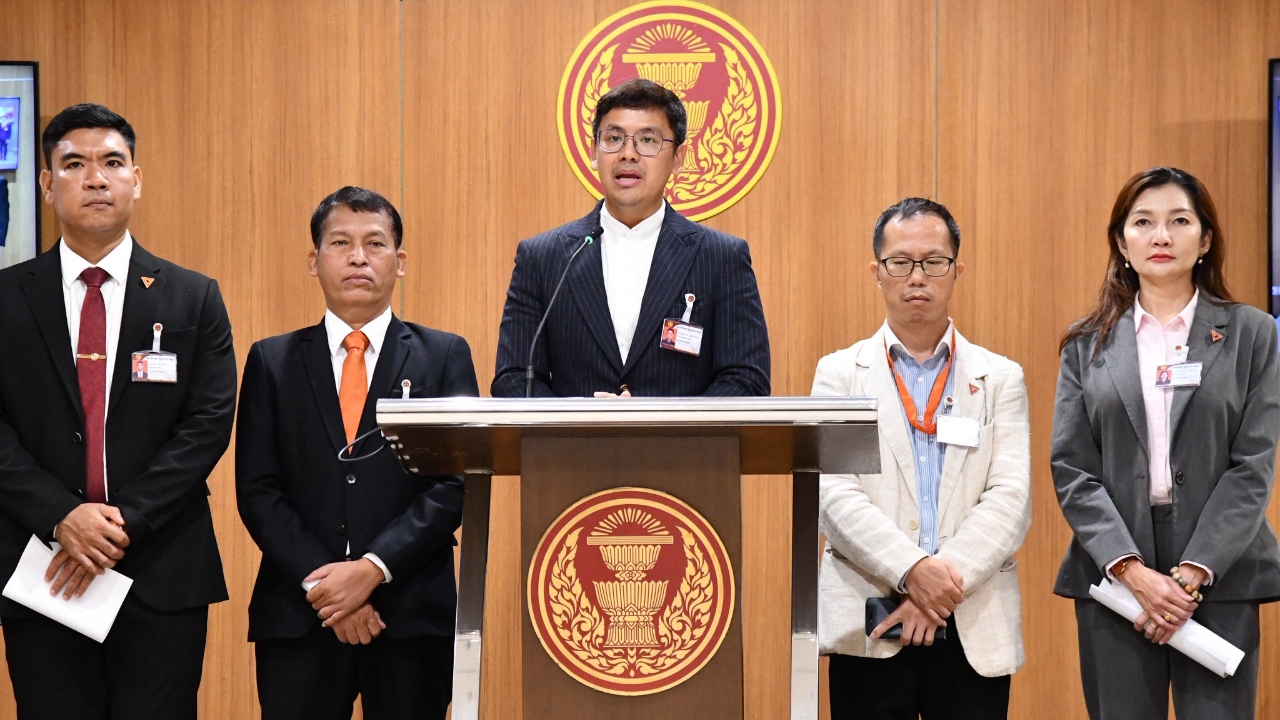
"Ekarat" urges the government to accept the draft military court reform bill, calls on coalition parties to honor their commitments, and clearly insists that military personnel who commit offenses against civilians must be tried in civilian courts, ending mutual amnesty among themselves.
On 27 May 2026, during a House of Representatives session, Mr. Ekarat Udomamnuay, an MP from the People's Party, proposed the Military Court Charter Bill, calling on all MPs from both government and opposition to jointly approve its principles to genuinely advance military reform.
Mr. Ekarat stated that this Military Court Charter draft includes 16 amended principles, most of which align with the Cabinet's draft. However, a key difference is that the Cabinet's draft lacks provisions on military court jurisdiction. He also questioned the Minister of Defense about what fears might underlie this, noting that true military reform to strengthen the armed forces must begin by listening to the people's voices.
"Society expects the military to be transparent and accountable, but military courts have often been seen as judging their own members, especially in corruption criminal cases. Why was this draft passed in the 26th Parliament before Mr. Anutin Charnvirakul became Prime Minister, yet a few months later, it is no longer accepted? I urge everyone to consider the public interest and collectively approve this draft," Mr. Ekarat said.
Mr. Ekarat continued that two key points in reforming the military courts are that military personnel who commit offenses against civilians must be tried in civilian courts. Society includes both good and bad people; if military offenders are tried in military courts, public trust will erode because it appears they are judging their own. Adjusting jurisdiction so these cases go to civilian courts will increase transparency, strengthen the military, and elevate the justice process to be equal to civilian courts. Currently, basic defendant rights in military courts, such as bail and appointing external lawyers, face many obstacles and rely on unclear subordinate regulations without clear legal frameworks.
Mr. Ekarat also noted that while the Cabinet’s draft allows victims to file lawsuits themselves, which is positive, it lacks thorough consideration. If hundreds of cases arise but the same old panel system remains without a pre-trial screening process, delays will occur. In contrast, the People's Party draft has comprehensively addressed these issues.
Mr. Ekarat appealed to government-side MPs, saying this draft matches content previously accepted by the Bhumjaithai Party and coalition partners. Moreover, the prior special committee chaired by former People's Party MP Mr. Wiroj Lakkhanaadisorn had nearly completed advancing this reform. He requested cooperation to approve this draft so that the time and budget spent will not be wasted.