

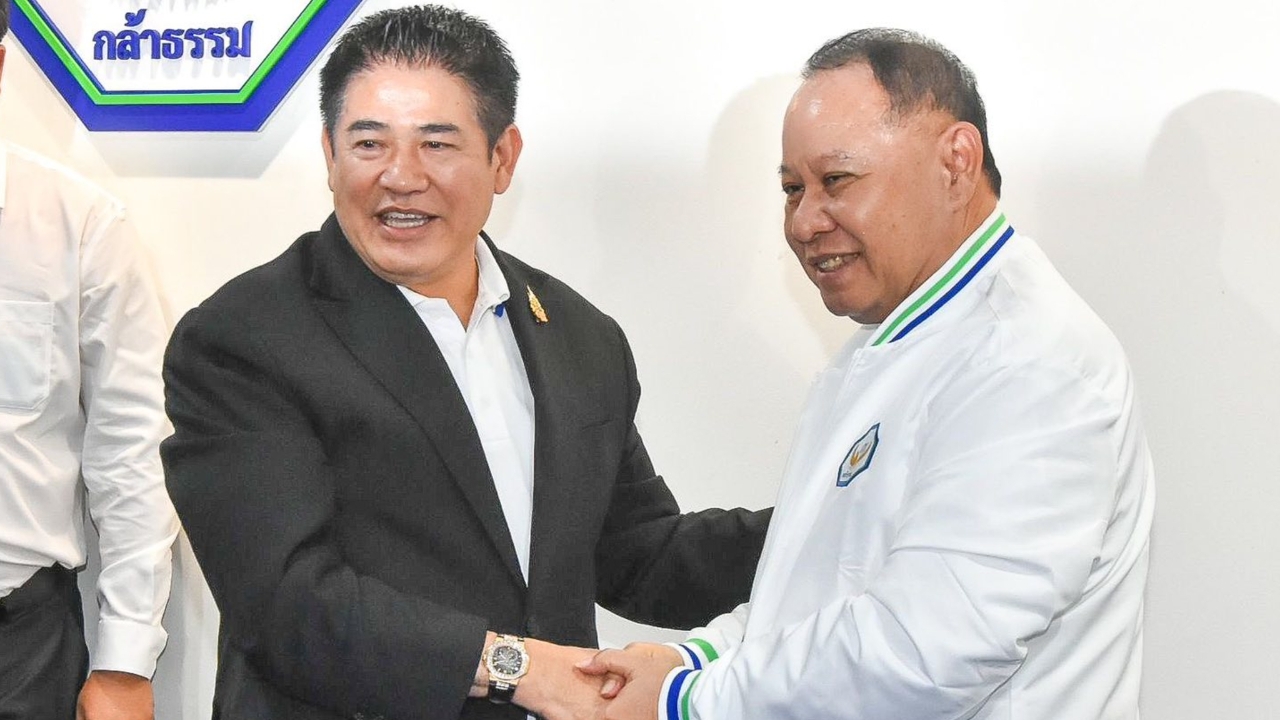
The Supreme Court has ordered a 10-year election ban for Ekarat Changlao, deputy leader of the Kla Tham Party, due to serious ethical violations in connection with embezzlement at the Khon Kaen Teachers' Cooperative.
On 27 May 2026, reporters reported that on 26 May, the Supreme Court issued a judgment in case number KMCJ 1/2568, red number 2/2569, between the National Anti-Corruption Commission as petitioner and Mr. Ekarat Changlao as respondent.
The petitioner filed a complaint stating that the respondent, a Member of Parliament, seriously violated ethical standards by, together with others, exploiting his position as manager of the Khon Kaen Teachers' Savings Cooperative Limited to embezzle cooperative funds and conceal his actions by forging fixed deposit account books. These forged documents were presented at the cooperative's annual general meeting to deceive members into believing the cooperative had the stated remaining balance, constituting serious criminal and ethical offenses.
After examining evidence, the Supreme Court summarized that the respondent, who served and formerly served as an MP for the Palang Pracharath Party elected on 24 March 2019, later joining the Bhumjaithai and Kla Tham parties, held his position up to the petition date.
Between roughly 2011 and 2019, the respondent and others took advantage of his role as manager of the Khon Kaen Teachers' Savings Cooperative Limited to withdraw 396 million baht on 16 August 2011, transferring it to the respondent's account. On 14 October 2011, they used cooperative funds to purchase five land plots totaling 6 rai 2 ngan 34.9 square wah for 106 million baht from Sukhumvit Asset Management Company Limited. The respondent registered ownership in his name and unlawfully mortgaged three of these plots to secure debt for Khwanrudee Limited Partnership, a cooperative debtor, through fraudulent means. Additionally, 290 million baht remained as the difference from the land purchase price. These actions constitute embezzlement, causing damage to the cooperative and its members, with the respondent directly benefiting financially.
From 2011 until 2019, the respondent and others altered the cooperative's deposit books to present at annual general meetings, leading members to believe the cooperative held about 400 million baht, when the actual balance was approximately 70,000 baht. This involved multiple instances of forgery, with the last alteration showing a balance of 431,941,984.59 baht as of 4 August 2019, when in fact only 79,774.16 baht remained. The respondent returned the deposit books to the cooperative in October 2019, after ethical standards for constitutional court judges, independent agency officials, the auditor general, and administrative heads of the constitutional court and independent agencies came into effect in 2018.
The facts from the investigation establish that the respondent and others committed criminal offenses including embezzlement, forgery of ownership documents, and use of forged documents. This shows disregard for the rule of law and failure to uphold the moral standards expected of public officials, causing damage to the reputation of a Member of Parliament. The intent and severity of the damage constitute serious ethical violations under specified provisions of the ethical standards.
The court ruled that the respondent seriously violated ethical standards under Section 235 (1), (3), and (4) of the Constitution of the Kingdom of Thailand, together with the 2018 Anti-Corruption Act Sections 81 and 87, and ethical standards for constitutional court judges and officials of independent agencies. The respondent is removed from office as Member of Parliament for Khon Kaen Province effective from 8 July 2025, the date the Supreme Court ordered his suspension. His election rights are permanently revoked, he is disqualified from holding any political position under Section 235(4) of the Constitution, and he is banned from voting for 10 years from the date of the Supreme Court's judgment.
