

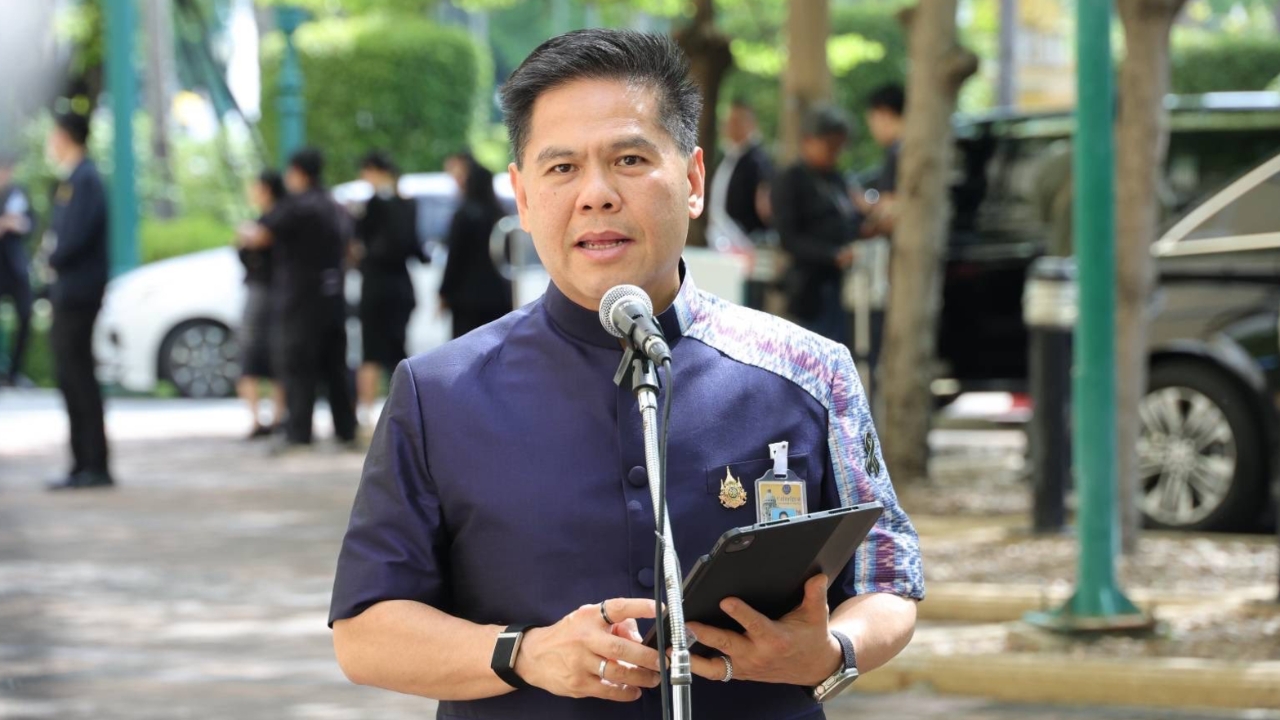
Minister of Industry Warawut orders strict safety measures for solar panels, accelerates the announcement of new standards, and instructs the Thai Industrial Standards Institute (TISI) to intensify controls on illegal electronic waste imports to prevent hazardous waste dumping sites.
On 2 June 2026 GMT+7, Warawut Silpa-archa, Minister of Industry, revealed that the Thai Industrial Standards Institute (TISI) is preparing to propose to the Industrial Product Standards Committee (IPSC) the addition of four more controlled standards related to solar products: direct current circuit breakers, fuses for solar power systems, electrical wiring for solar systems, and lithium batteries for energy storage systems. These standards are expected to be enforced within 2026 as part of ongoing support for renewable energy industrial product standards (TIS).
Furthermore, two new standards are being developed for solar system junction boxes and DC cable connectors (MC4 Connectors). These drafts will be submitted to the IPSC for approval by September 2026 GMT+7. The aim is to ensure public confidence in the safe installation and use of solar panels. Subsequently, TISI plans to officially announce these as controlled products with legal enforcement expected by September 2026 GMT+7.
Regarding cases of solar operators deceiving customers by installing non-standard solar panels, Minister Warawut stated that installations must be performed by licensed technicians with proper expertise. The Ministry of Industry is available 24/7 to receive reports of problems. He urged the public to verify the presence of the industrial standard mark (TIS) on the five upcoming regulated devices to ensure compliance.
On plans for future disposal of electronic waste from solar panels, Warawut said that within no more than two years, a significant volume of used solar panels will reach end-of-life. The Ministry will coordinate closely with the private sector, emphasizing the growing importance of solar panel recycling businesses, including battery and electric vehicle battery recycling. The Ministry is actively promoting the establishment of an industrial estate dedicated to solar panel recycling.
Addressing concerns that Thailand is viewed as a dumping ground for electronic waste, Warawut emphasized the government's strong focus on this issue, covering industrial waste, plastic waste, and electric vehicle batteries. The Ministry of Industry is pushing for the development of a battery recycling industry and will enforce stricter import controls. He requested TISI to collaborate with relevant agencies to detect and prevent illegal electronic waste imports.