

Two ministries of education have joined forces to upgrade three core subjects, aiming to cultivate Thai students as global citizens and resolve the issue of international school students unable to speak Thai. A meeting to discuss the new Education Act is set for 4 June 2026 GMT+7.
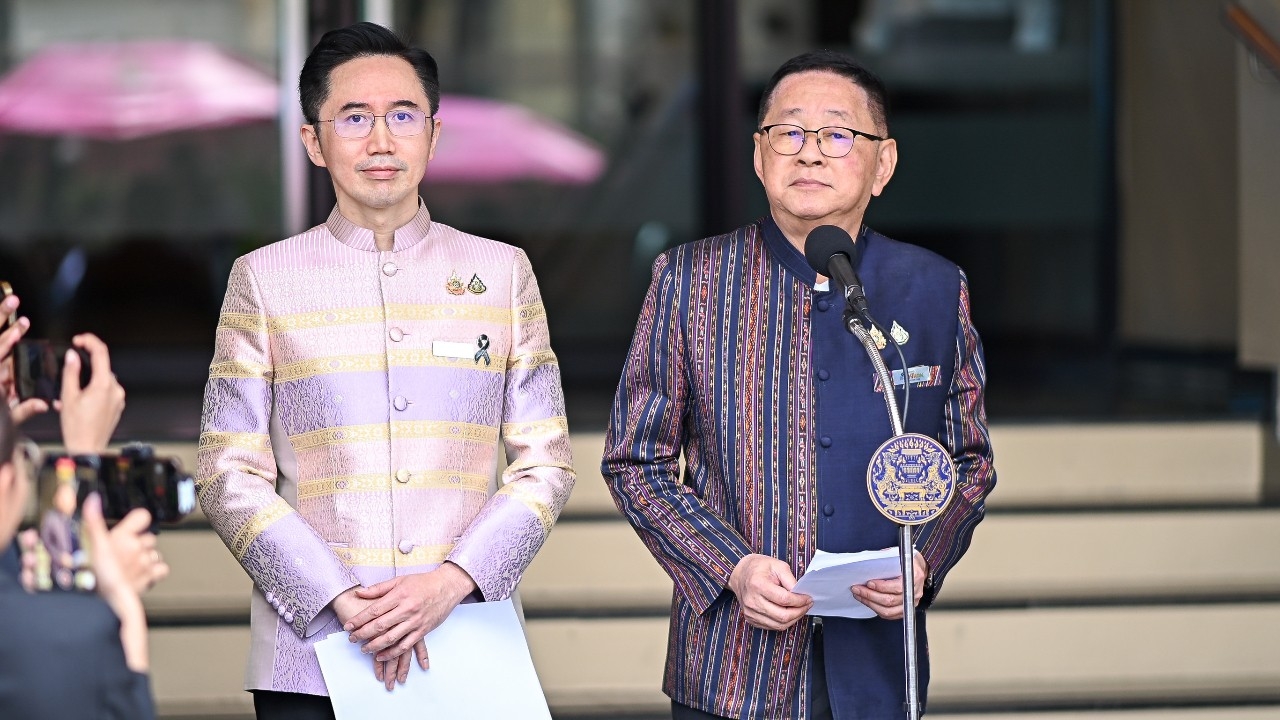
On 2 June 2026 GMT+7, Mr. Yotsanan Wongsawat, Deputy Prime Minister and Minister of Higher Education, Science, Research and Innovation (MHESI), teamed up with Mr. Prasert Chantraruangthong, Minister of Education, to jointly announce a significant educational policy direction. They aim to revise the core curriculum toward a "competency-based curriculum" to enhance teaching in three main subjects: history, civics, and Thai language, emphasizing that this will deepen and add meaningful content rather than reduce it.
Mr. Yotsanan revealed that true competency must be paired with full humanity. The modernization of history teaching will shift from "memorization" to "historical analysis methods" to help youth understand the nation's development and the role of the monarchy, which has continuously dedicated itself to the people. All countries with strong education systems teach children to know their roots, who they are, where they come from, and their societal responsibilities. Citizens who understand their country’s origins are ready to participate in nation-building.
The Minister of Higher Education added that the civics subject will focus on critical thinking while preserving Thai identity, incorporating activities that build teamwork, volunteerism, and leadership skills, enabling Thai children to compete on the global stage.
Mr. Prasert explained the ministry’s framework through three main mechanisms: emphasizing up-to-date content with in-depth analysis, training discipline and public-mindedness, and instilling eight desirable attributes. The Ministry of Education also supports teachers’ freedom to select teaching materials and integrate digital technology with real-world learning resources such as museums and communities to create out-of-classroom experiences.
Regarding the Thai language subject, the Minister of Education emphasized that preserving the mother tongue is preserving identity. Citing neuroscience research, he noted, "Children with a strong mother tongue foundation learn a second language faster and more effectively." Thus, promoting the Thai language builds a stable foundation and is not about competing with English.
Additionally, the government is preparing to address the issue of Thai youth in international schools lacking Thai language skills by collaborating with the International Schools Association to establish guidelines for supporting these students’ Thai proficiency without affecting the strengths or existing curricula of those institutions. The ministry has already issued directives to all schools. On Thursday, 4 June 2026 GMT+7, the first subcommittee meeting to draft the new National Education Act will convene, chaired by Professor Wisit Wisitsorasat, gathering experts to ensure concrete progress.