

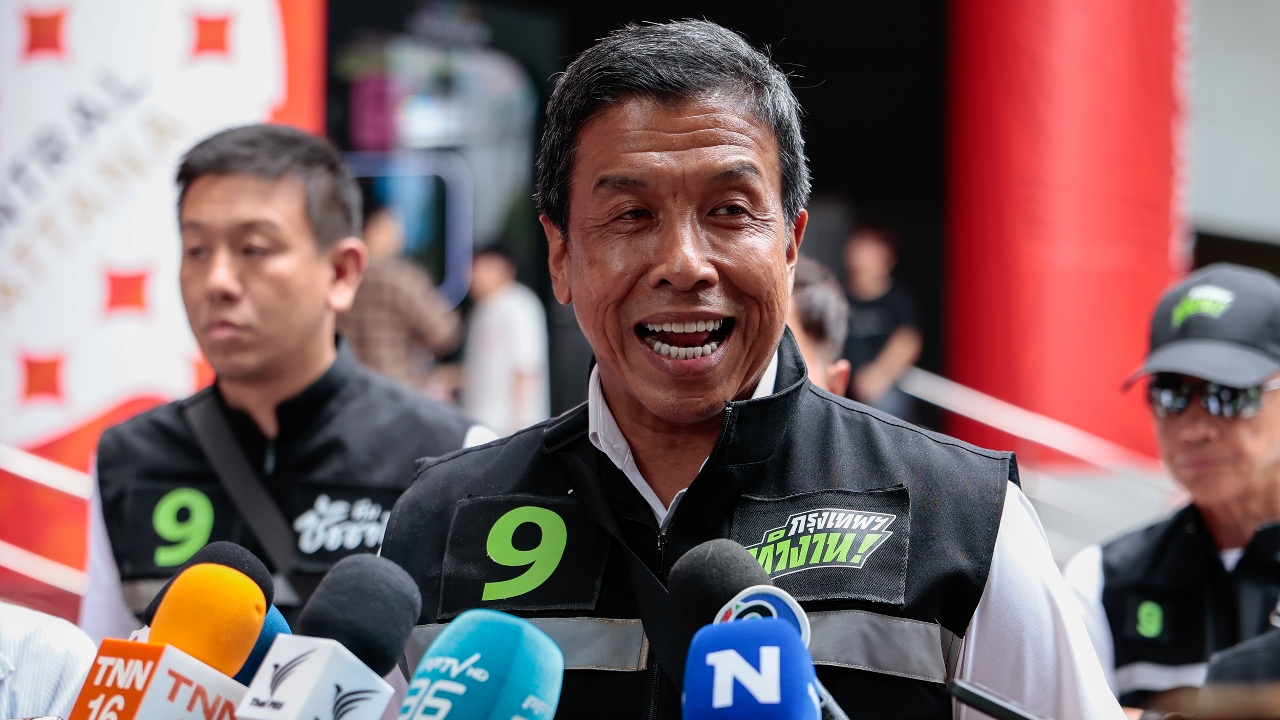
Chadchart highlights Bangkok's drainage policy after heavy rain exposed vulnerable points needing further fixes. Plans are to expand drainage pipes from 60 mm to 80 mm, add floor drains to speed water runoff, and dredge as necessary to use the budget efficiently.
On 2 June 2026, reporters said Chadchart Sitthiphan, candidate for Bangkok governor, number 9, along with Wisanu Sapsompol, former Deputy Governor of Bangkok, spoke during a campaign visit at Central Rama 9 about solutions to Bangkok's flooding caused by heavy rain in the Pathumwan area, where about 90 millimeters fell in a short time on 31 May.
Chadchart explained the main cause of the flooding was due to weather conditions characterized by a “Rain Bomb.” This involved heavy rain in inner Bangkok (Pathumwan district) reaching about 90 millimeters in a short period, exceeding the capacity of existing drainage pipes in many spots, which could handle only about 60 millimeters of rain.
Additionally, physical factors of the area played a role, with the main flooding point at the intersection of Banthat Thong and Phaya Thai roads, a site currently under construction for the Orange Line metro. This event revealed that Bangkok still has minor vulnerable points needing attention, including drainage pipe bottlenecks, insufficient water inlets from road surfaces, and clogged debris at grates. Some areas may require pipe expansion.
“Many existing pipes can only handle about 60 millimeters of rainfall, but in areas undergoing improvements, we will try to increase capacity to handle about 80 millimeters,” Chadchart said.
Meanwhile, Wisanu Sapsompol, former Deputy Governor of Bangkok, stated that flood solutions require a systemic approach—not just pipe expansion but addressing water intake points on road surfaces, adding water inlets, dredging pipes, managing debris at grates, and resolving bottlenecks in chronic problem areas.
Chadchart added that pipe expansion alone is insufficient because if the water intake channels from the road surface to the pipes are inadequate, water will still flow slowly into the pipes. Therefore, more intake points or floor drains next to roads are needed to allow water to drain from the road surface into pipes more quickly. Over the past four years, Bangkok has dredged more than 15,000 kilometers of pipes, while the city currently has about 6,900 kilometers of drainage pipes, up from about 6,400 kilometers initially.
Dredging should be based on the needs of each area, not uniformly done for all pipes every year. Areas with dense communities, shops, or heavy grease and debris buildup—such as Din Daeng and Huai Khwang—may require dredging two to three times a year, while less dense areas may need less frequent dredging to optimize budget use.
“I believe this event is an important lesson revealing weaknesses in the city's drainage system. Continuous fixes are needed, including pipe expansion where necessary, adding water inlets, dredging in vulnerable areas, and managing debris at grates to help Bangkok better handle heavy rain in the future,” Chadchart concluded.