

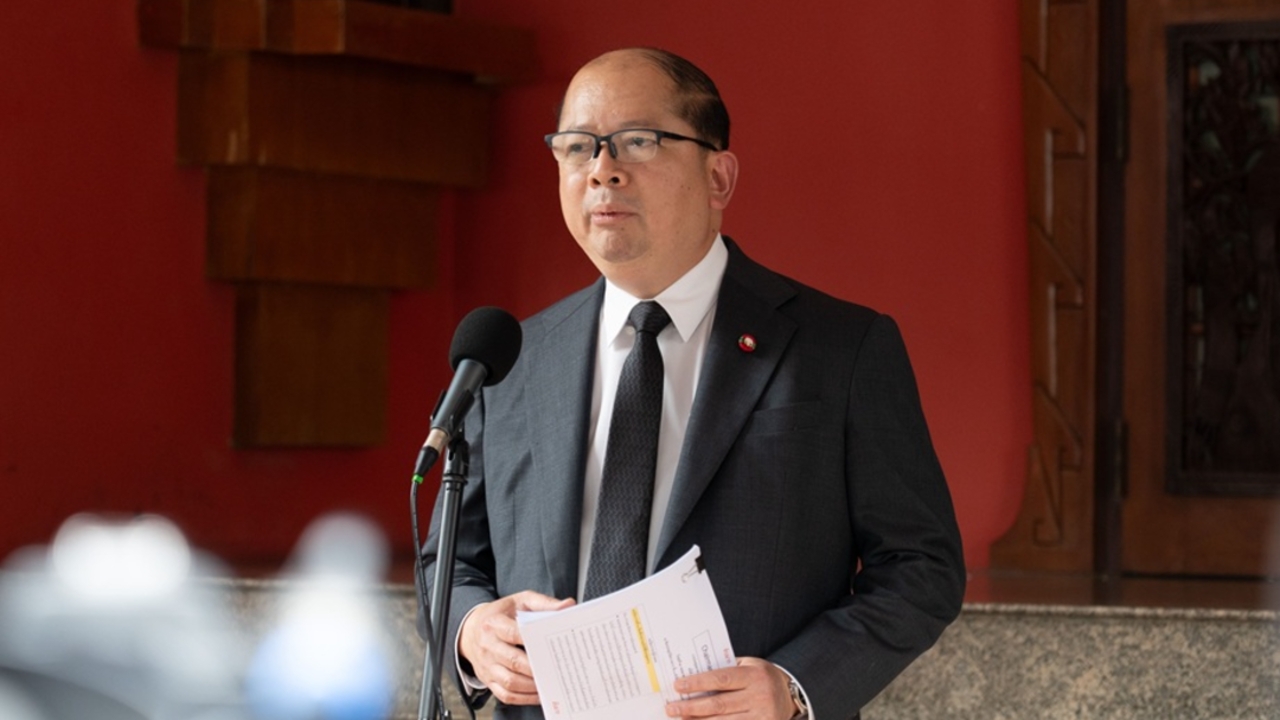
The National Security Council (NSC) Secretary acknowledged Lt. Gen. Pradorn's criticism but denied laxity in resolving security issues, pointing out their sensitive and confidential nature, and affirmed continued efforts to address the Thai-Cambodian border dispute and the southern border provinces' problems intensively.
3 June 2026 GMT+7 Mr. Chatichai Bangchuad, Secretary-General of the National Security Council (NSC). He spoke regarding the case of Lt. Gen. Pradorn Patanathabut a member of the Thai Sang Thai Party (TST) and former NSC Secretary-General, who criticized the current NSC Secretary-General and the Secretary-General of the Internal Security Operations Command (ISOC) for being lax and failing to resolve security problems, especially in Thai-Cambodian relations and the unrest in the southern border provinces, stating that he accepts the criticism but insists they are not complacent. Everything is governed by policies, strategies, approaches, goals, and responsible units, all established in NSC resolutions covering every issue, including security operations, which are sensitive and confidential. They have been actively pursued in line with NSC resolutions continuously, in cooperation with all sectors, including the Ministry of Interior and the armed forces.
“The government led by Prime Minister and Minister of Interior Anutin Charnvirakul advances these matters fully through the NSC and does not work as casually as Lt. Gen. Pradorn suggested. Moreover, security work involves many sensitive and complex issues that should not all be disclosed publicly, as adversaries might exploit the information.”
The NSC Secretary-General further stated that Thailand’s key strategy aims to protect sovereignty, reclaim Thai territory, and establish border security. The military approach allows necessary operations depending on the situation to defend sovereignty or deter Cambodian military force. Diplomatically, bilateral negotiations are prioritized to prevent third-party interference and maintain diplomatic relations to demonstrate sincerity in jointly resolving issues.
The Thai government has conflicts specifically with the Cambodian government but not with the Cambodian people. Measures are carefully designed to minimize impact on civilians on both sides due to the sensitivity of the situation and to avoid deep-rooted conflicts. Border management includes controlling border crossings, regulating exports to pressure Cambodia, and preventing smuggling and human trafficking that support transnational criminal gangs.
Mr. Chatichai revealed that responsibilities are systematically assigned: the military handles military operations; the Ministry of Foreign Affairs conducts negotiations and explains to the international community; the Ministry of Interior looks after the people and migration; and the Ministry of Commerce supports trade for small businesses near the border.
Simultaneously, the NSC has continuously monitored problem-solving at the local level and held both formal and informal discussions with security units to address issues. Additionally, NSC meetings to track and steer government policy on Cambodia are held intensely, at least once a month, with 18 meetings conducted in 2025.
Regarding the southern border provinces, the NSC Secretary-General said the government has adopted the “Understanding, Access, Development” strategy, emphasizing public participation. The 2025-2027 policy integrates government, citizens, and civil society, detailing objectives, goals, and responsible agencies, covering security, public safety, economic and social development, education aligned with local lifestyles, justice processes, and rehabilitation. After appointing a special government representative, coordination and unified action among agencies will be ensured.
Peace talks for the southern border provinces have been ongoing. Since the Prime Minister appointed Mr. Thanat Suwannanon, Director of the National Intelligence Agency (NIA), as head of the negotiation panel, small group discussions have continued steadily. .