

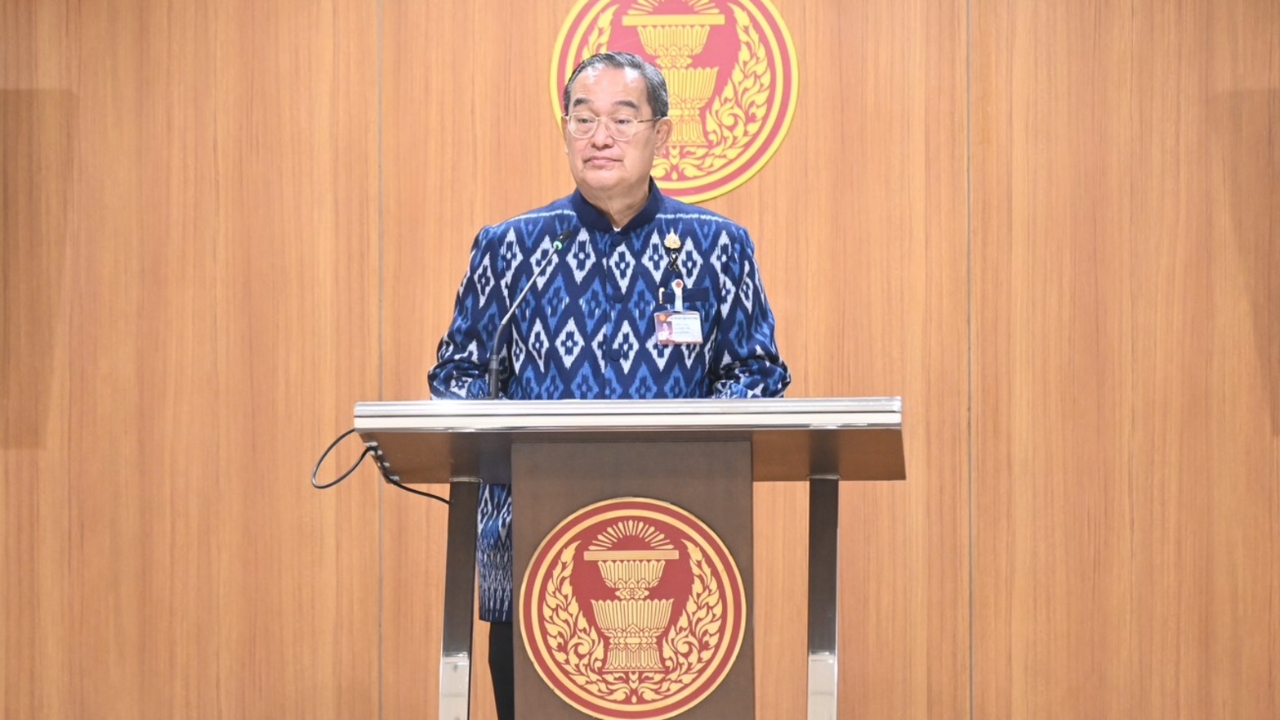
“Nikon” explained the reason Bhumjaithai Party withdrew its support for Pheu Thai’s constitutional amendment draft, citing concerns it might conflict with the Constitutional Court’s ruling. He affirmed this would not affect relations within the coalition government and boasted that Bhumjaithai’s own draft includes a year-long public consultation process.
At 09:30 on 4 June 2026 at the parliament, Nikon Jamnong, Bhumjaithai party list MP, addressed the decision of the Bhumjaithai party meeting to have its MPs withdraw their signatures supporting Pheu Thai’s proposed amendment to Article 256 of the constitution. After reviewing Pheu Thai’s draft, he expressed concern it might conflict with Constitutional Court ruling 18/2568 because Pheu Thai’s draft stipulates a 300-member Constitution Drafting Assembly (CDA) elected by the people. Although it allows the parliament to reduce this to 100 members, practical issues may arise, especially regarding the power balance between parliament and the public. Bhumjaithai’s own draft for amending Article 256 adheres strictly to the Constitutional Court’s ruling. Therefore, if coalition MPs support a draft that seems to contradict the court’s decision, it could create ambiguity about their stance. Consequently, the party decided its MPs should withdraw their signatures. As a leading party, Bhumjaithai must be cautious to avoid risks that could threaten government stability. Nevertheless, even with Bhumjaithai’s withdrawal, Pheu Thai still has over 100 MPs supporting the draft, allowing it to be submitted.
Nikon added that regarding relations with the public, he sees that the people have been involved in drafting the new constitution through three referendums: first, approving the new constitution; second, after amending Article 256; and third, after the new draft constitution was presented. This creates a strong bond and grants the people full authority. The party is sincerely committed to successfully amending the constitution. Thus, submitting any draft must avoid causing complaints or interpretations that could delay the process. Bhumjaithai’s draft mandates establishing committees to gather public opinions nationwide over one year, since simply electing the CDA members is insufficient; public consultation is necessary. Regarding Senator Noraset Prachayakorn’s meeting with Constitutional Court judges scheduled for 19 June, Nikon considered it positive. However, he stressed that such private consultations with individual judges are advisory only and do not constitute binding rulings by the full court panel.
When asked whether the withdrawal decision reflects Bhumjaithai’s indirect rejection of electing the Constitution Drafting Assembly members, Nikon said that proposing a problematic draft might cause failure. Even if it looks appealing and popular, their goal is not to campaign but to make the amendment feasible. If electing the CDA members directly by the people fails or is intended for other motives, it serves no purpose. The public already participates directly through referendums, but the ongoing process requires their approval by listening to public opinion for one year. He believes the constitutional amendment can still be completed within this government. Regarding voting, they will support Bhumjaithai’s draft. As for Pheu Thai’s draft, the party does not intend to reject it outright but objects due to problematic content. Although Bhumjaithai withdrew its support, Pheu Thai still has 189 signatures, so the draft remains viable and coalition relations are unaffected. When further asked about concerns that Bhumjaithai’s draft could lead to monopolization in parliament, Nikon responded that direct elections would face immediate complaints and rejection, citing a 2021 case where lobbying prevented constitutional draft approval due to ethical conflicts with the Constitutional Court ruling. He clarified that Bhumjaithai’s draft aims to represent all voices, including minorities and senators, ensuring all opinions are considered.