

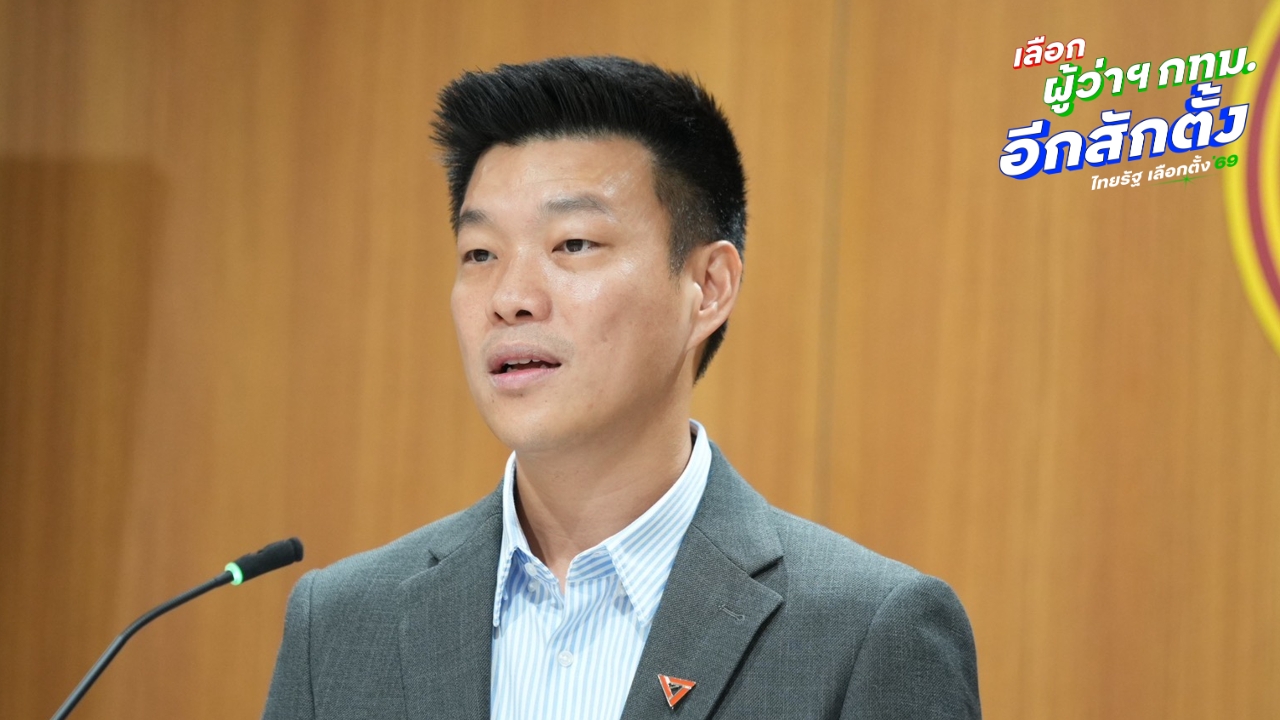
Nattapong said he would not elaborate further on the appointment of Surapol as chairman of the Bangkok governor strategy committee. He declined to comment on whether there would be a review, saying the role is appropriate and Surapol does not have decision-making power in political matters. He confirmed that he had indeed approached Surapol to run for governor and is not worried by Piyabutr's angry post, as it does not violate the party's principles.
On 5 June 2026 at the parliament, Nattapong Ruangpanyawut, party-list MP and leader of the Prachachon Party, commented on the ongoing dissatisfaction surrounding the invitation of Surapol Nitikraiphon, former Thammasat University rector and former National Legislative Assembly member in 2006, to serve as chairman of the Bangkok governor strategy advisory committee. He said that he or party representatives such as Pichorn Chaowaphatwong, party secretary-general, Rangsiman Rome, party-list MP and deputy leader, or candidate Chaiwat Sathaworawijit have already explained the matter thoroughly. There is no reason for him to add more, especially since Surapol himself has publicly explained his position to some extent. Therefore, he preferred not to elaborate further on this issue.
When asked how he would respond to Surapol’s statement that he had not changed his principles, leading some to believe he still supports the coup, Nattapong said it is better to stick to his and the Prachachon Party’s core stance. Their principle is opposition to coups. They aim to ensure that ultimate power truly belongs to the people. As for each individual’s principles when joining them,. Those joining their movement may share broad common goals, such as wanting the country and its politics to improve, though methods may differ. He believes these political nuances allow various individuals to participate, whether inside or outside the core group. For example, Surapol’s role is to provide advice on Bangkok’s administration. If one has followed Surapol’s media appearances, they would see he offers thoughtful insights on Bangkok’s management and presents valuable perspectives.
“Regarding differing political stances, it’s not necessary to agree on everything. Surapol does not have a role in decision-making within the Prachachon Party’s administration. Therefore, I believe there should be no problem and that we can work together,” Nattapong said.
When pressed about the party's firm opposition to coups,Nattapong replied,that one must consider the past: the 2006 and 2014 coups were connected events that divided society into large opposing groups with significant conflicts. To improve Thailand’s politics and society, he and the Prachachon Party focus on the present context, where political power and economic interests are monopolized by a small elite. To overcome this entrenched power, even those who once defined themselves as staunch democrats may need to support people with very different views. This is a critical challenge.
Asked if this approach risks alienating the party’s grassroots supporters and academics like Pavin Chachavalpongpun, associate professor at Kyoto University’s Center for Southeast Asian Studies and a political refugee, Nattapong said he understands Pavin’s and other academics’ concerns. Many identify as democrats and feel uneasy about Surapol joining the Prachachon Party. However, he wants everyone to understand their key goal is to defeat the entrenched political monopoly. Thus, they must broaden their coalition and remain open without losing their core identity.
When asked if the Prachachon Party itself helped create the entrenched political monopoly known as the 'Blue Regime' through the MOA incident, Nattapong said he would rather ask a question back: at that time, no one knew how the 8 February election would turn out. They saw pre-election civil service transfers and allegations of support for the Blue Regime, as well as opaque vote counting on election day. No one anticipated the final result. The party’s decision then—to vote for Anutin Charnvirakul, leader of the Bhumjaithai Party, as prime minister per the MOA—was intended to open the door to drafting a new constitution to change the country’s highest laws. Ultimately, improving Thai politics starts with constitutional reform.On the question of whether the party will continue to conduct oversight, amid views that its scrutiny is merely symbolic, Nattapong said oversight continues, citing the case of Khao Kradong land, where party members are still gathering evidence and pursuing investigations. They simply seek the most appropriate channels to do so..
When asked if this strategy risks pushing away long-time supporters, especially academics like Pavin Chachavalpongpun who have voiced opposition, Nattapong acknowledged understanding their concerns about Surapol’s involvement. He reiterated their commitment to defeating the entrenched Blue Regime monopoly, emphasizing the need to expand alliances and remain open while preserving their identity.
“As I’ve said, our goal is to defeat the Blue Regime,”
the entrenched political monopoly controlled by a few in the country. Therefore, we must expand our coalition and be open without losing our identity,” Nattapong said. .
When asked if he has spoken with Piyabutr Saengkanokkul, secretary-general of the Progressive Movement, who has made some heated public comments, Nattapong said he is not concerned by Piyabutr’s posts, which do not violate their working principles. He understands that some democrats may oppose Surapol joining or question the process, and they accept that feedback while trying to communicate for better understanding.
When pressed if he thought Piyabutr’s reaction might stem from pressure, Nattapong said they communicate normally but have not discussed this issue specifically. He respects Piyabutr as a professor and values their occasional consultations with each other.
Asked if he personally feels pressured by the current attacks on the party, Nattapong said he prefers to say he understands the criticism. He and his party colleagues continue working fully. They recognize that during the election some moments caused disappointment, as the results were not what they hoped. But they do not dwell on that disappointment or work from despair alone. They continue to drive many initiatives in parliament.
Asked if there will be any reconsideration of Surapol’s role in the party, Nattapong said Surapol’s position as chairman of the Bangkok policy strategy committee is appropriate, as he has no other party roles or involvement in major political decisions. Surapol is knowledgeable about Bangkok’s issues, and the current role suits him well.
When asked about some party members feeling other positions might be more appropriate, following party processes and respecting those who have worked within the party, and concerns about bringing in someone with opposing views, Nattapong acknowledged internal processes need improvement. He noted that inviting people to work together sometimes involves compromises due to differing circumstances. Some may hesitate to join the orange party due to various personal costs. They strive to design the most open process possible, not intentionally hiding anything, but must balance the needs of those joining the movement.
Asked if Surapol was invited to run for Bangkok governor under the Prachachon Party banner, Nattapong confirmed this is true. However, the party’s priority is to find candidates withexperienceand deep understanding of Bangkok’s structural problems. He believes that after the election, whoever becomes governor will continue the improvements made by Chatchart Sithiphan in enhancing bureaucracy and addressing local issues. No one will undo what Chatchart has done. But Bangkok residents deserve more, including structural reforms such as revising the Bangkok Metropolitan Act, resolving referral healthcare issues, and waste management. These require a different kind of management team, with strong stances, coordinated work, and willingness to confront wrongdoing.