

Sihasak affirmed that Thailand will not be forced into compulsory conciliation proceedings after Cambodia unexpectedly submitted a maritime boundary case under UNCLOS, criticizing this move for shutting the door on trust and affecting land border negotiations.
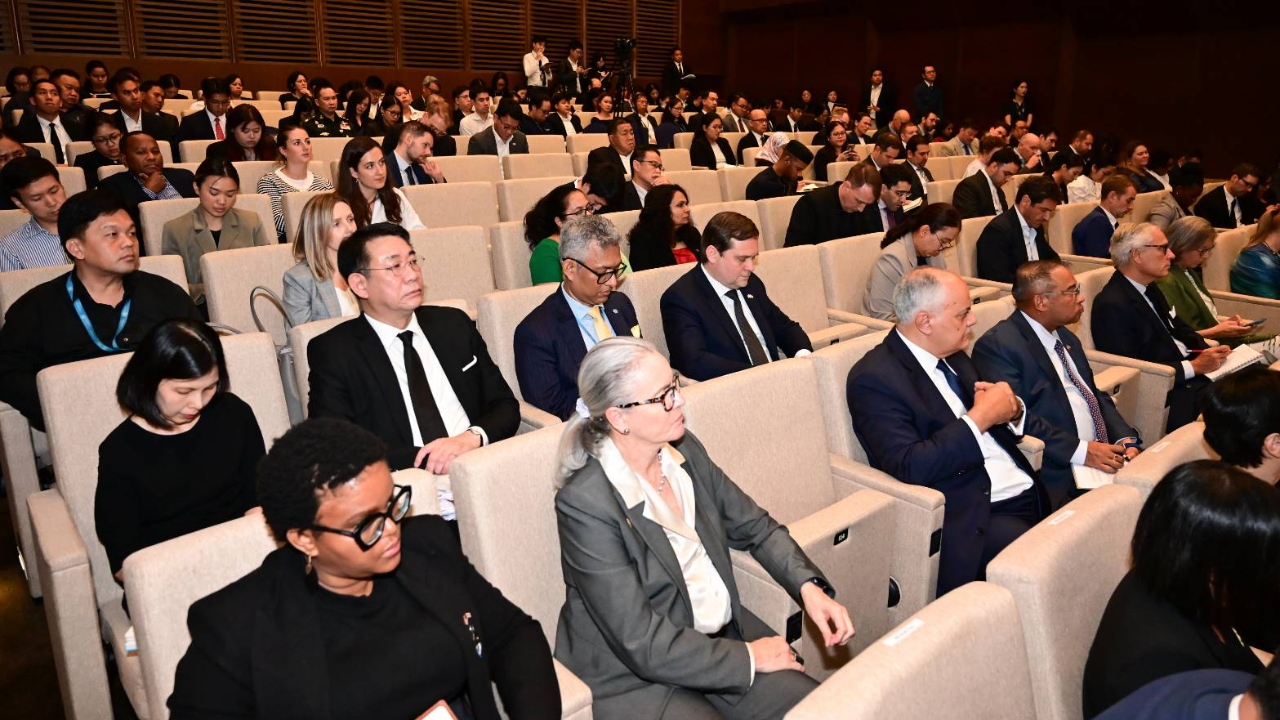
On 5 June 2026 GMT+7, Mr. Sihasak Paukkeetkhao, Deputy Prime Minister and Minister of Foreign Affairs, held a briefing for 67 diplomats and representatives of four international organizations regarding Cambodia's official submission of its maritime boundary dispute into compulsory conciliation under the United Nations Convention on the Law of the Sea (UNCLOS) on 2 June. Cambodia justified this by claiming that Thailand's cancellation of MOU 44 left no channel for bilateral negotiations between the two countries.
Mr. Sihasak expressed surprise at Cambodia’s action, noting that in previous bilateral talks—especially the recent meeting between Thai Prime Minister Anutin and Cambodian Prime Minister in Cebu, Philippines, during the ASEAN Summit—Thailand had clearly explained that the cancellation of MOU 44 was due to no progress over more than 20 years. Both countries should instead directly start negotiations on maritime boundaries or continental shelves first, and if no progress is made, then consider further steps under UNCLOS. Cambodia's hasty choice contradicts the mutual intent of both leaders to gradually restore relations and build trust.
Furthermore, Cambodia's move directly impacts progress on land boundary and border issues, as the intention to restore relations requires simultaneous advancement both on land and at sea. Cambodia’s decision to abruptly choose this path effectively closes the door to building trust, forcing Thailand to reconsider the entire situation. Nevertheless, Thailand insists it will not be dragged into Cambodia’s conditions. Thailand disagrees with Cambodia’s proposed scope of conciliation, including temporary measures for benefit-sharing and joint resource development, viewing joint development as outside this framework. Thailand will formally submit a letter expressing its disagreement with the process, scope, and benefit-sharing proposed by Cambodia.
Regarding response preparations, Thailand has already appointed two highly experienced and internationally recognized maritime law experts as conciliators, though their names remain confidential as the appointments require Cabinet approval. Subsequently, each side’s two conciliators will jointly select a fifth conciliator to serve as the committee chair, a process expected to take about one month. Thailand may legally choose not to accept this process, but doing so would allow Cambodia to proceed and appoint conciliators on Thailand’s behalf. Ultimately, the outcome of this process is not legally binding and may lead back to bilateral negotiations. Mr. Sihasak believes that if Cambodia had been willing to engage in direct, friendly talks from the start, an agreement could have been reached more quickly and smoothly.