

The Ombudsman Chair convened 16 agencies to set measures to help address the crisis of Thailand's fragrant coconuts, establishing standards for "genuine coconut water" and proposing that the Ministry of Industry enforce mandatory standards to punish producers of fake coconut water instead of voluntary guidelines.
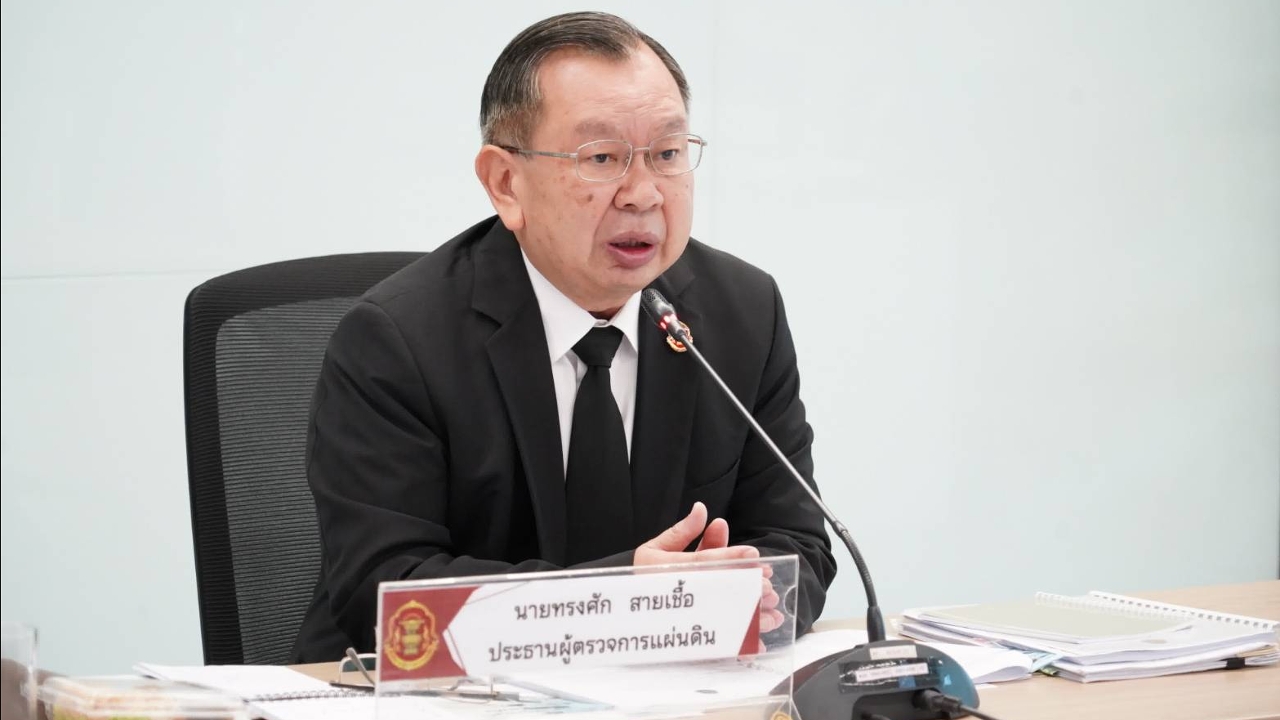
On 5 June 2026 GMT+7, Mr. Songsak Saicheua, the Ombudsman Chair, along with Mom Luang Pundrik Samiti and Mr. Wathanyu Tipyamonta, advisers to the Ombudsman Chair, Mrs. Navarat Sathapornananont, Director of Investigation Bureau 3, and the team convened a meeting with 16 agencies. They discussed solving problems related to business operations using nominees to conceal multinational capital, cooperation to depress purchase prices of fragrant coconuts, counterfeiting and adulteration of fragrant coconut water, and urgently setting measures to address and prevent these issues comprehensively.
Mr. Songsak Saicheua, Ombudsman Chair, revealed that from discussions in March and fact-finding visits to Samut Songkhram and Ratchaburi in April, they found not only a severe price crisis for fragrant coconuts but also counterfeiting and adulteration of fragrant coconut water. Moreover, there is the expansion of multinational nominees, where foreign investors use Thai agents as fronts to dominate the coconut market cycle—from purchase through processing factories to agricultural land holdings—which seriously harms the coconut water market and the reputation of Thai coconut products.

Therefore, to devise the most comprehensive corrective and preventive measures, the Ombudsman urgently met with relevant agencies, including the Ministry of Industry, Department of Industrial Works, Excise Department, Revenue Department, Department of Medical Sciences, Department of Health, Department of Local Administration, Department of Internal Trade, Food and Drug Administration, Office of Agricultural Economics, Thai Industrial Standards Institute, National Bureau of Agricultural Commodity and Food Standards, Office of the Consumer Protection Board, National Nuclear Technology Institute, Consumer Organizations Council, Samut Songkhram Province, related local agencies, and complainants.
The meeting resolved to set the following management directions: 1. Upgrade and establish standards for "genuine coconut water" The current limitation is the absence of legal measures clearly defining the proportions or mixtures that classify "100% genuine coconut water" or coconut water mixed at various ratios (for example, the FDA may have a preliminary standard of 20%). There are also challenges in measurement and verification. As a short-term measure, it was proposed that the Ministry of Industry consider revising the Thai Industrial Standards (TIS), which are currently voluntary, to become "mandatory standards" as an interim solution. This would provide legal criteria to control and penalize producers of counterfeit coconut water.
For the long-term measure, the Ombudsman will send a letter to the Minister of Public Health to consider establishing a special joint committee (including the FDA, Department of Medical Sciences, National Nuclear Technology Institute, etc.) to support the development of permanent standards, inspection systems, and workflow charts throughout the supply chain. The structure is expected to be clear within 12–15 months. The meeting also considered definitions of "counterfeit coconut water" and classification criteria, dividing into groups with no coconut water content at all (using water or groundwater mixed with chemicals and artificial flavorings) and groups with genuine coconut water contaminated or mixed with unauthorized substances.

2. Revise detection procedures (SOP: Standard Operating Procedure) and close loopholes for illegal factories The inspection process (SOP) will be adjusted to utilize "multidisciplinary teams" and increase random inspections every 3–4 months. These inspections will emphasize multiple time periods, including nighttime, because there is information that some factories secretly produce at night to avoid daytime inspections. Transportation and endpoint inspections must implement control systems to allow systematic traceability of coconut water products to their final destinations.
Control of small factories (< 50 workers / < 50 horsepower), which are not covered by the Industrial Works Act, falls under local administrative organizations (LAOs). The meeting proposed reviewing licensing criteria, supervision, and enhancing legal authority for LAOs to temporarily suspend production or decisively shut down illegal factories.
3. Reform price structures and "curb foreign nominees"
During the lowest price period at plantations, prices plunged to 3–5 baht per coconut (smaller sizes dropped to less than 1 baht, approximately 50–80 satang). Currently, prices have risen to an average of 13–15 baht per coconut (smaller sizes around 8–9 baht). However, farmers believe a fair and sustainable price should be above 17 baht. The distorted price mechanism results from price collusion by foreign companies operating coconut collection centers as "nominees" and market share loss to counterfeit coconut water. Eliminating counterfeit coconut water would increase demand for genuine coconuts, helping stabilize prices.
Legal measures to control foreign capital include proposing that the Ministry of Commerce review regulations under the Foreign Business Act B.E. 2542 (1999) by considering listing coconut cultivation and processing businesses under restricted categories (List 1, 2, or 3) to strictly limit or control foreign shareholding. Currently, foreign-operated collection centers exporting 100% have loopholes in shareholding controls (49% foreign, 51% Thai) that are ineffective. Additionally, plans to develop Thai capacity are needed by assigning the Department of Internal Trade, Ministry of Commerce, to create long-term plans to upgrade Thai-owned processing factories, which currently number over 200 but mainly operate as OEMs under foreign capital. Efforts will also develop the capabilities of farmer groups, cooperatives, and community enterprises to manage the business throughout the supply chain independently.
