

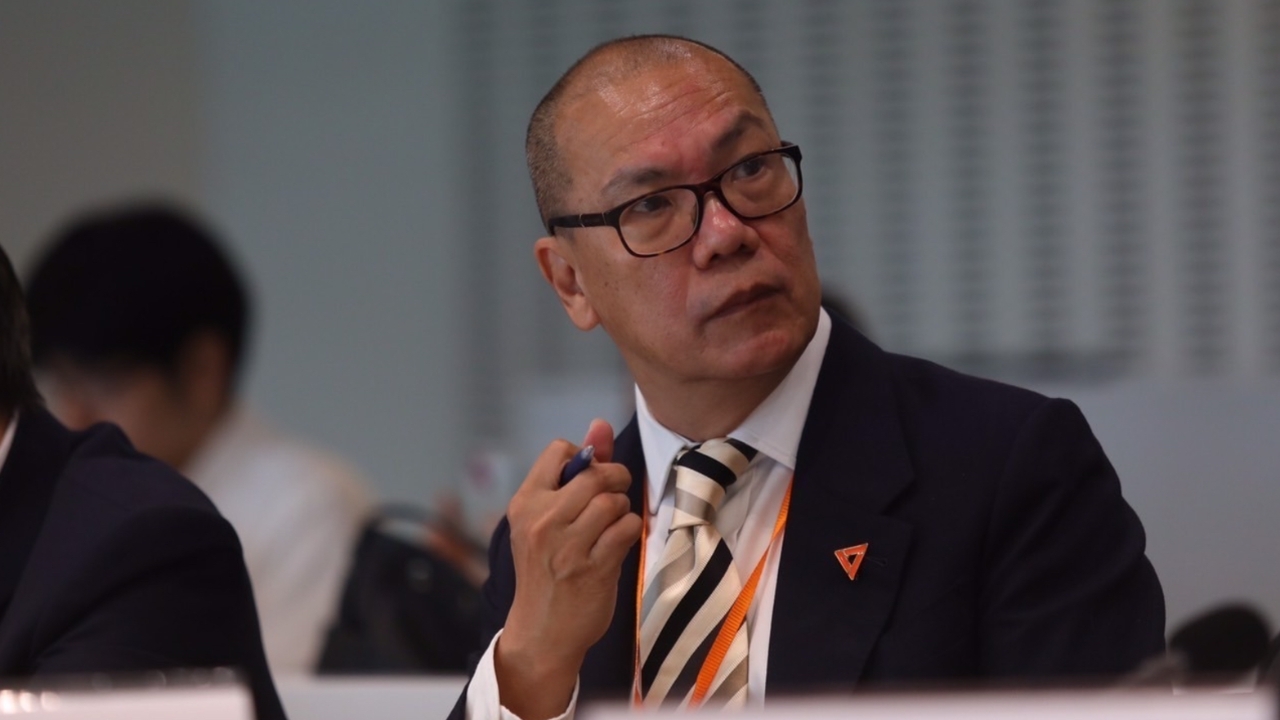
Sorasak, a Prachachon Party MP, advises the government to carefully enter the compulsory conciliation process under UNCLOS and to select Thai legal conciliators with international expertise to protect national interests rather than appointing less qualified individuals who might not assertively defend the country.
On 6 June 2026, Mr. Sorasak Somrakaisarakit, party-list MP from the Prachachon Party, commented on the issue concerning Mr. Sihasak Puangketkaew, Deputy Prime Minister and Minister of Foreign Affairs, who held a press conference for diplomats from 67 countries and international organizations to explain Cambodia's submission to compulsory conciliation under the United Nations Convention on the Law of the Sea (UNCLOS).
Mr. Sorasak stated that the Foreign Minister’s claim that "Thailand was not dragged into this but participated confidently" might be a political statement to lessen the impact. Legally, the term "compulsory" means Thailand has no right to refuse. If Thailand does not appoint conciliators within 21 days, the United Nations will appoint representatives on Thailand's behalf regardless.
Mr. Sorasak further raised three important strategic points for consideration.
First, Thailand’s unilateral termination of the MOU 44, citing negotiations under a “new context” but failing to propose a concrete negotiation framework, resulted in no operational framework between the two sides. This allowed Cambodia to immediately claim legitimacy on the global stage that Thailand closed the door to bilateral talks, justifying Cambodia’s refusal to wait for Thailand’s next move.
Second, Mr. Sihasak’s assertion that the compulsory conciliation process will be limited to maritime boundary delimitation and rejection of Cambodia’s attempt to include the Joint Development Area (JDA) issue overlooks UNCLOS Articles 74(3) and 83(3). These articles clearly state that while boundary agreements are pending, parties must try to establish “provisional arrangements of a practical nature,” which effectively means the JDA.
Third, the Foreign Minister’s statement that “this process takes two years, but bilateral talks might conclude sooner” raises questions. Since the government itself claimed that bilateral talks under MOU 44 had stalled for over 20 years leading to its termination, how can there be confidence that talks without a framework will conclude within two years?
Regarding the Foreign Ministry’s reference to the Timor-Leste and Australia dispute model, which involved compulsory conciliation lasting about two years with a non-binding outcome before returning to bilateral talks, Mr. Sorasak urged careful consideration. Although the conciliators’ decision was not immediately binding, it established norms and global pressure that compelled Australia, the larger party, to eventually concede and sign an agreement with Timor-Leste. Therefore, the Thai government must study this thoroughly rather than dismissing the process because its outcomes are non-binding.
Finally, Mr. Sorasak emphasized that within the 21-day deadline to submit the names of two international legal conciliators representing Thailand, the Prachachon Party strongly hopes the government will select genuinely internationally skilled experts rather than lawyers unwilling to challenge demands. They must possess up-to-date knowledge of maritime law developments and adopt a proactive diplomatic strategy. Thailand must not become a defendant in the eyes of the world. Significant budget resources will be spent on this process, so the government must protect the nation’s interests as everyone expects.