

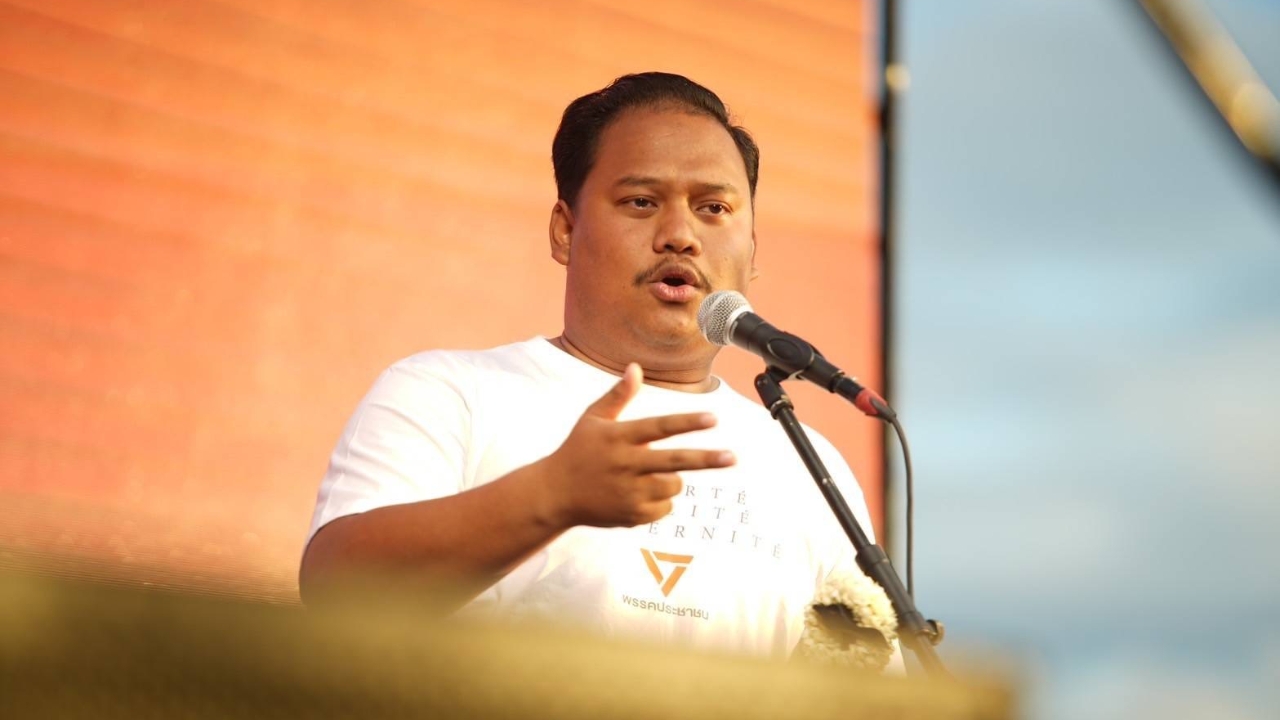
Natcha Boonchai-insawat, a Prachachon Party party-list MP, criticized the government for remaining trapped by the "benevolent elder" mindset that narrowly defines poverty, causing many to be excluded and worsening conditions for vulnerable groups after releasing new screening criteria for the latest round of state welfare card recipients.
On 6 June 2026, Mr. Natcha Boonchai-insawat, a party-list Member of Parliament from the Prachachon Party, commented on the Ministry of Finance's explanation of the new screening criteria for state welfare card recipients, which stated the card is designed to help "the truly poorest people." He said this thinking reflects an outdated welfare approach that still views citizens from a top-down perspective, with the state deciding who is poor enough and who deserves assistance.
"The government is acting as if poverty is a test that citizens must pass, when in fact the state's duty is to guarantee a good quality of life for the people, not to set up checkpoints to exclude individuals from the system."
Thailand has learned from past policies that heavily rely on strict screening, where many genuinely struggling citizens fall through the cracks because they fail to meet certain state-imposed conditions. Meanwhile, many others waste time, miss opportunities, and lose dignity due to repeated verification of their poverty status.
The main problem is the government views poverty as an individual issue, when in reality it stems from structural problems such as rising living costs, stagnant incomes, soaring household debt, inequality in access to public services, and an unstable labor market.
Many people today may not fit the government's definition of the "poorest," but they live paycheck to paycheck without savings or security, and a single crisis could push them into poverty immediately. This group also deserves the state's attention, rather than being left waiting indefinitely for aid.
"The government is creating a new divide between the poor and the poorer, saying those struggling but 'not enough' must wait, even though many citizens are already burdened by high living costs and debts."
Mr. Natcha added that a more concerning issue is that the government seems not to have learned from past mistakes. Strict screening policies have repeatedly caused genuine beneficiaries to be excluded, sometimes leading to tragic consequences where people face hardships beyond remedy.
Instead of using these lessons to improve welfare coverage, the government is reverting to the old approach of trying to exclude as many people as possible to reduce beneficiary numbers and claim administrative success.
Regarding the issue of verifying tax deduction rights for supporting parents, Mr. Natcha said the state has the right to check for misuse, but should not use isolated cases as justification to burden and cause suspicion throughout the system, as the most affected are the elderly and families already facing economic difficulties.
"The government should ask why so many elderly people still have to rely on the state welfare card to survive, rather than questioning who else can be excluded from the system."
Mr. Natcha also stated that the real problem with current welfare policy is that the government does not seriously address structural issues but prioritizes political gains over outcomes for the people.
When a policy's goal is not to solve problems but to gain popularity, improve image, or seek praise for the government, the mechanisms focus on publicity rather than improving citizens' quality of life. Assistance should not be about mercy from those in power but a basic right accessible to all equally and with dignity.
Mr. Natcha emphasized that Thailand needs to move beyond the "benevolent elder" mindset that decides who deserves help toward creating a welfare state that reduces exclusion, destigmatizes poverty, and fairly guarantees everyone’s rights.
"People should not have to repeatedly prove they are poor enough just to earn the right to a better life. The state's role is not to decide who deserves help but to build a system that leaves no one behind from the start."