

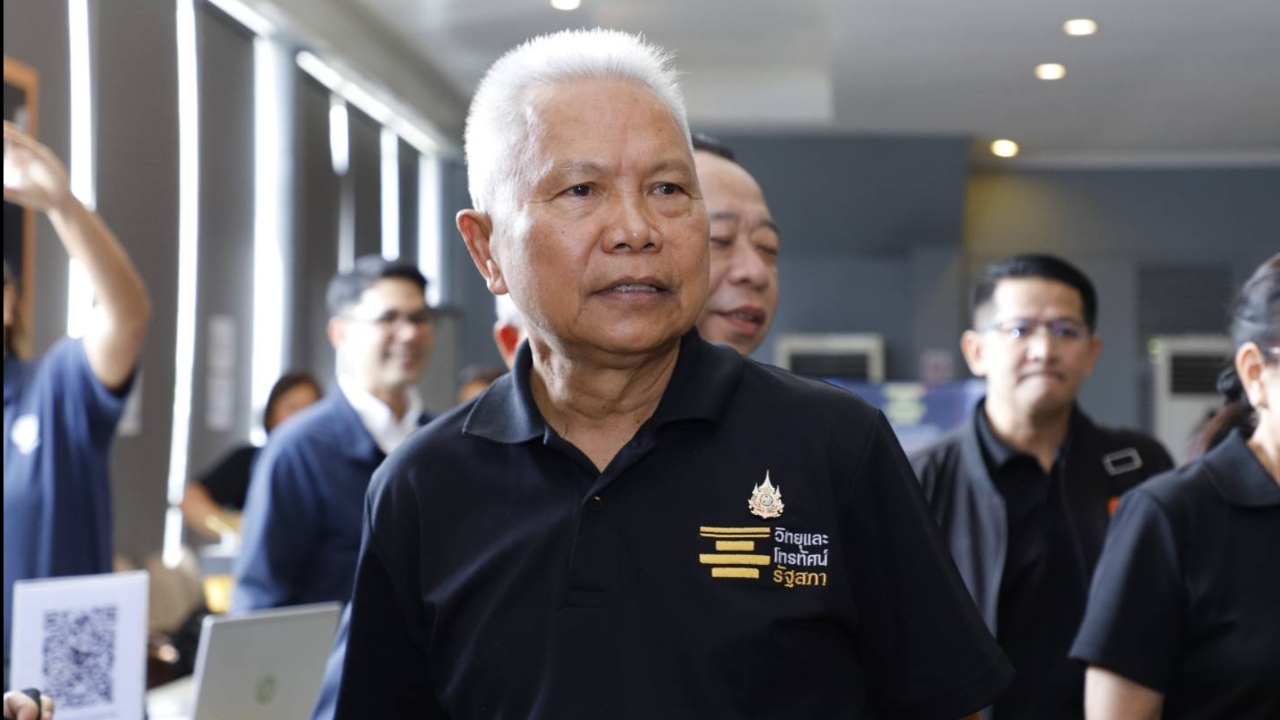
Sophon, Speaker of the Parliament, launched a project to open the Parliament grounds for citizens and agencies to sell products, creating income to stimulate the economy. He intends for it to become a landmark like foreign parliaments and serve as an exercise area, the lungs of Bangkok residents, and a place for relaxation.
On 6 June 2026, Mr. Sophon Sarum, Speaker of the Parliament, presided over the opening ceremony and delivered a keynote speech titled “Thai Parliament: Connecting the Power of the New Generation, Strengthening Community Networks.” He also participated in activities with the audience and viewers in Buriram Province as part of a project to enhance the image and public participation of the Parliament Radio and Television Station for fiscal year 2026.

The event was organized by the Secretariat of the House of Representatives and the Parliament Radio and Television Station at the Alvarez Hotel conference room in Nai Mueang Subdistrict, Mueang District, Buriram Province. Attendees included Mr. Siroj Paetphan, Secretary-General of the House of Representatives; Mrs. Jongduan Sutthirat, Deputy Secretary-General; Air Force Sergeant Major Saksit Pusirorungsi, Director of the Parliament Radio and Television Station; along with hosts, reporters, announcers, program producers, students, community development volunteers, local leaders, and over 300 people from Buriram and nearby provinces.
The purpose was to disseminate knowledge and understanding of politics and governance in a democratic system and the operations of the Parliament, including the missions of the House of Representatives, the Senate, and the Secretariat. It also aimed to promote public participation in the democratic process and publicize the roles, missions, and achievements of the Parliament Radio and Television Station and the Thai Parliament.

Mr. Sophon said in an interview that amid the current economic crisis, the Parliament has large facilities ready to serve as a venue for the public and agencies to sell products and generate income. Importantly, they plan to reshape the Parliament’s image as the 'lungs' of the people and a landmark, similar to foreign parliaments which serve as national symbols and tourist attractions. The Thai Parliament, especially with its prominent and beautiful location, is no less impressive but requires landscaping adjustments to suit functional use.
“My idea is that the Parliament should become a place for exercise for Bangkok residents, the lungs of the city, and a place for relaxation. We will expedite this process, starting with initiatives that require no budget. For example, yesterday, more than 2,000 civil servants participated in a volunteer activity,” he said.

He added that for people to truly believe in democracy, it must be tangible and not just empty words. People are growing weary when some factions only engage in rhetoric. In times of economic crisis, citizens want to see practical work that solves their problems. Therefore, they focus on all beneficial matters, including the economy, living conditions, and justice, to help people understand that democracy must be livable. A successful democracy moves forward without conflict through dialogue and negotiation. When opposing views—whether from the opposition or government—are discussed and resolved, progress is possible. If decisions are imposed by force, conflicts will persist. The challenge is how to adjust attitudes so that those with differing opinions accept each other's views.

Mr. Sophon continued that if people only accept their own views and reject others’, that is not democracy but dictatorship, which is wrong. He does not want decisions made solely by voting but prefers dialogue and mindset adjustments for true patriotism. Regarding past conflicts, when issues couldn't be resolved in Parliament, protests took to the streets, which was unproductive and held the country back. Things have changed; members of Parliament have evolved considerably. While they may be beyond the Speaker’s full control and parliamentary rules are still used, changes in organizational culture and working methods are evident, as he described.