

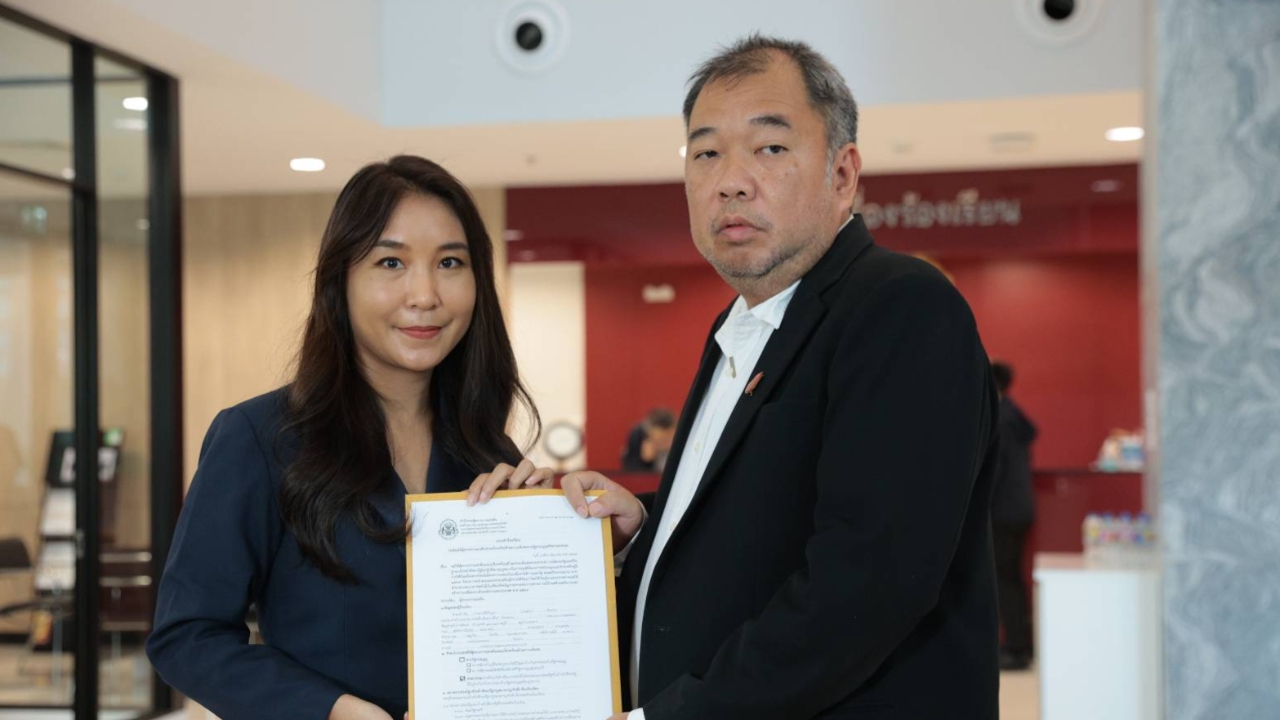
'Sirikan' submits a complaint to the Ombudsman to investigate the government's use of 18.8 billion baht from the energy crisis loan to top up poor people's welfare cards, alleging violations of law and fiscal discipline. She emphasizes not setting wrong precedents and expresses concern about future public debt increases.
8 June 2026 GMT+7 Ms. Sirikan Tansakul, party-list MP and Deputy Leader of the People’s Party, visited the Office of the Ombudsman to submit a letter requesting that the case be forwarded to the Administrative Court for review regarding the project under the Royal Decree granting the Ministry of Finance authority to borrow funds to address the impacts of the energy crisis and support the country’s energy transition in 2026, also known as the 400-billion-baht loan decree. Specifically concerning the project to support and assist low-income individuals through the State Welfare Card program, with a budget of 18.8 billion baht, questioning whether the use of loan funds for what is a regular budget expenditure violates the law.
Ms. Sirikan stated: This project is different from the “Thai Chua Thai Plus” program or the additional 700-baht top-up to the State Welfare Cards, which are new measures during the energy crisis. The 18.8 billion baht used by the government is for existing welfare benefits that cardholders are already entitled to. The government can allocate these funds through its normal budgeting process, and annual budgets have already been assigned, though insufficient. This does not justify using loan funds intended for aid to citizens, businesses, and farmers under the crisis response plan.
According to Section 5 of the loan decree, loan spending must be used specifically to help citizens, entrepreneurs, and farmers affected by the energy crisis, not for normal circumstances. The decree’s explanatory notes clearly state loan funds should only be used when regular budget allocations are insufficient and urgent. Although the Ministry of Finance has tried to present borrowing as merely an additional funding source, the decree clearly defines its objectives. Furthermore, Sections 53 and 54 of the State Fiscal and Financial Discipline Act require loan funds to be used strictly for their designated purposes.

Ms. Sirikan added that when the opposition parties submitted a case to the Constitutional Court, it concerned whether the decree could be issued under Section 172 of the Constitution. Section 173 grants the Constitutional Court authority to interpret the decree’s constitutionality, focusing mainly on economic stability. The court has accepted the case, and the Cabinet has submitted a response, which they will oppose in writing.
This current submission follows after the decree was approved by the Cabinet and enacted. Budget spending must comply with Cabinet resolutions, which constitute administrative authority for project approvals. This review examines whether such spending is lawful, including the decree’s Section 5, the Fiscal Discipline Act, and the Constitution.
Ultimately, the goal is to prevent loan funds from being used to finance the State Welfare Card benefits, emphasizing that this investigation will not suspend payments already made to beneficiaries, as the government can source funds elsewhere. The regular budget process is ongoing, and funds can also be reallocated via the Budget Transfer Act or through Section 45 of the Budget Procedures Act, which holds over 50 billion baht in central reserve funds for emergencies or necessary expenses. This submission merely requests a review of the Cabinet’s 19 May 2026 resolution and a correction of the funding source.
The Deputy Leader of the People’s Party also stated that a government’s lack of funds or fiscal shortfall does not justify arbitrary use of loan funds. The government must manage its budget within allocations approved by the House of Representatives and Senate. Using loans indiscriminately sets a harmful precedent that, in future crises requiring urgent targeted aid, the government might misuse special crisis loans for normal expenditures, leading to excessive borrowing.

Moreover, annual budgets often exceed parliamentary approval, establishing a negative precedent. Increasing borrowing due to unnecessary reasons will eventually raise public debt, burdening the entire population and causing widespread hardship.
At the conclusion, Ms. Sirikan noted: Although the government claims State Welfare Card holders are vulnerable groups affected by the energy crisis, this cannot justify using loan funds for existing welfare benefits. These are not new additions specifically addressing the crisis and thus do not fall under Section 5’s scope, which limits loan use to energy crisis-related emergencies. Existing welfare support should not be mixed with new aid measures.
If the government must borrow to cover regular budget shortfalls, the decree should explicitly state that loan funds may be used when government revenue is insufficient due to the energy crisis. Since the decree does not specify such conditions, borrowing for this purpose is not permissible.