

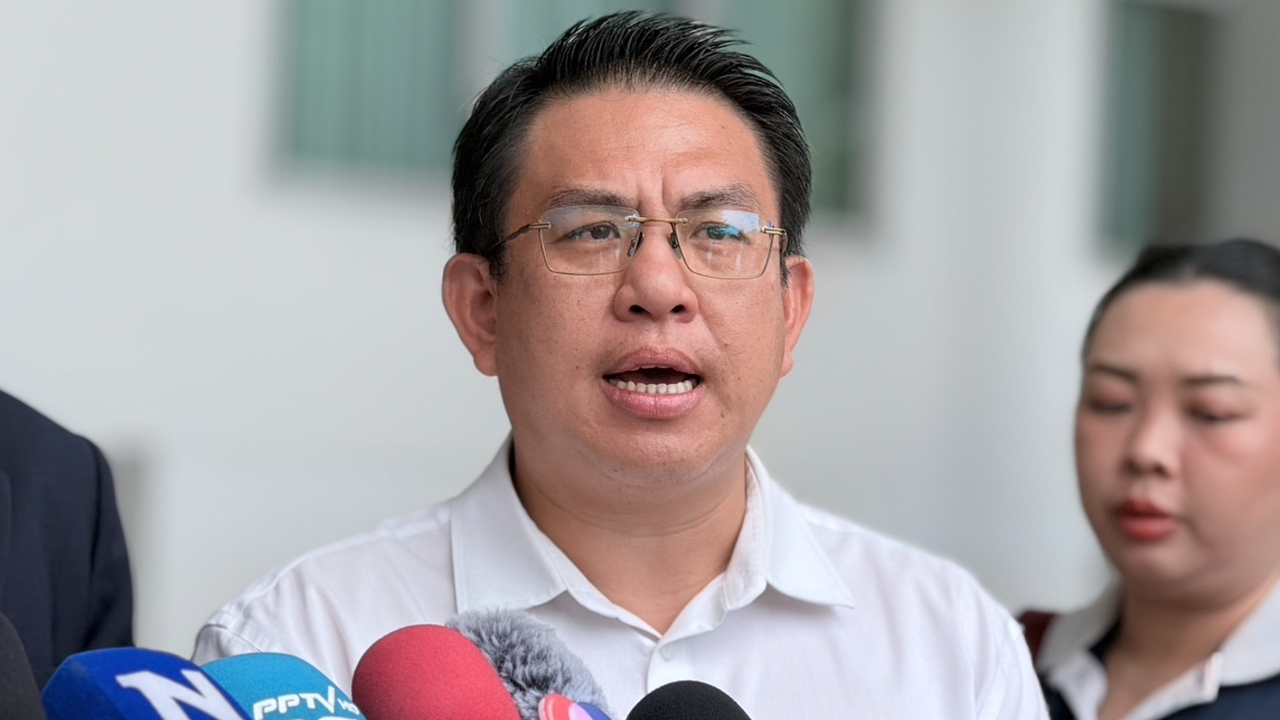
Wiroj praises the government for agreeing to review the tax deduction criteria on the state welfare card, observing that the government focused only on numbers, contrary to family values, risking turning it into a disloyal welfare card.
At 09:35 on 9 June 2026, at the National Anti-Corruption Commission (NACC) office, Mr. Wiroj Lakkhanaadisorn, deputy leader of the People's Party, commented on Deputy Prime Minister and Finance Minister Mr. Akniti Nitithanprapas's statement that the prime minister had ordered a review of the cancellation of the tax deduction criteria for parental care eligibility under the state welfare card. Wiroj said he welcomed the prime minister's order to review, as the issues are different. However, in truth, the value of the tax deduction is not substantial when calculated. The deduction for caring for parents aims to strengthen family institutions, encouraging children to care for their elders through tax incentives. Yet, those who are devoted to their parents end up being penalized; many have joked that the welfare card has become a "disloyal welfare card."
Wiroj added that while he understands the finance ministry's position, focusing solely on numbers is insufficient. The ministry might think that since these people care for their parents, the state need not support them. But if they considered the true purpose of the policy and the tax deduction criteria, they would understand. Moreover, mathematical calculations show the benefit is not large, and the income threshold for benefiting from the deduction is over 400,000 baht, which many do not earn.
"It's good that the review is underway; otherwise, the state welfare card might have turned into a disloyal welfare card," Wiroj said. , Wiroj said.
When asked if the review might only affect this year and the criteria could return next year, Wiroj said it is important to understand two reasons why there was strong opposition: first, the government misunderstood the tax deduction's purpose, which is to encourage children to care for their parents and strengthen family quality, a key principle beyond just money. This misunderstanding caused public opposition. Second, if changes are to be made, they should start the following year, not retroactively applied to deductions already claimed.
Wiroj continued that if the government truly wants to communicate this issue, it can do so but must be straightforward. It should provide clear calculations to the public about which option is more beneficial and inform taxpayers clearly before filing taxes. For example, if a tax deduction is claimed, parents would not receive the state welfare card. Ultimately, this requires a process of public understanding. It's not impossible to change, but the government must communicate honestly and sincerely. Approaching this purely mathematically is possible but insufficient.
Wiroj questioned whether the government has better ways to raise revenue before revoking tax deductions to increase income. He acknowledged that while revoking deductions might raise revenue, most of the country's tax base comes from consumption taxes like VAT. Few middle-class taxpayers benefit much from personal income tax deductions. So, revoking these deductions would likely yield little revenue, and he suggested finding other revenue sources instead.
Wiroj also warned the public that one criterion excludes those earning over 100,000 baht annually from welfare card eligibility. Many people in difficult family situations wonder why they do not receive the state welfare card. Investigations found some were deceived by brokers into opening 'ghost' bank accounts through which large sums of illicit money—sometimes hundreds of thousands or millions of baht—were transferred. This might reasonably lead the government to consider them not poor due to the large sums passing through, which could be linked to criminal activities.
"I want to warn the public that the cost of opening 'ghost' accounts is very high. If anyone suspects they have been tricked or accidentally opened such accounts they do not use, they should contact their bank to close these accounts. This action may not only affect their eligibility for the welfare card but could also lead to legal prosecution," Wiroj said. , Wiroj said.